
How do we observe the invisible friction that dictates the lifespan of a ship or the performance of a microscopic machine? At the scale of nanometers, surfaces that appear smooth to the naked eye are actually complex, shifting landscapes of chemical and mechanical activity. The scientific challenge lies in capturing these fleeting interactions without disturbing the very environment we seek to measure.
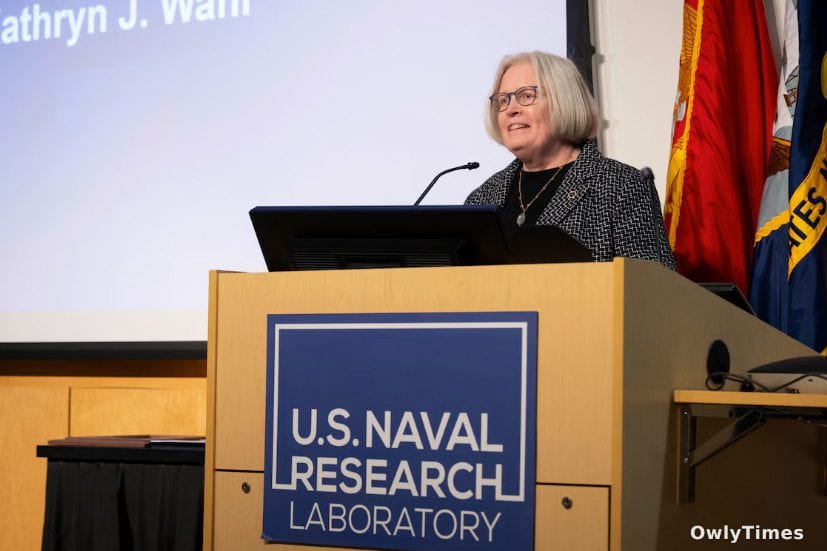
According to the St. Olaf College news release, Kathryn Anderson Wahl, a member of the class of 1987, has been recognized for solving a piece of this puzzle. As a senior researcher at the U.S. Naval Research Laboratory (NRL), she was awarded the 2025 E.O. Hulburt Annual Science Award. This honor, one of the highest bestowed upon a civilian researcher at the institution, acknowledges her pioneering work in the fields of adhesion, lubrication, and nanoscale contact mechanics.
Bridging the Gap Between Observation and Theory
Headlines often frame such awards as a celebration of individual brilliance, but the reality of the research is far more methodological. Wahl’s work fundamentally changed the field of tribology—the study of interacting surfaces in relative motion—by integrating optical spectroscopy with traditional mechanical testing equipment. This approach allowed her team to move beyond theoretical models and directly observe the structural changes within sliding interfaces as they occurred.
The study found that by pairing these technologies, researchers could finally visualize how layered lubricants degrade under real-world physical stress. While previous methods provided data on the outcome of wear, Wahl’s experimental design illuminated the process itself. This shift from observing the "aftermath" of friction to witnessing the "action" of it represents a significant leap in material science.
From Nanoscale Mechanics to Underwater Challenges
Beyond the mechanical bench, Wahl’s research has tackled the biological persistence of biofouling, particularly the tenacity of barnacle adhesion. This is not merely a theoretical curiosity; for the Navy, biofouling represents a significant operational hurdle, increasing drag and maintenance costs for naval platforms. By applying a multidisciplinary lens—merging chemical, biological, and materials science—her team decoded the mechanical mechanisms that allow these organisms to anchor themselves in underwater environments.
While the research has led to the development of the Johnson-Kendall-Roberts (JKR) method, a now-standard tool for teaching nanoscale contact stiffness, there are limitations to consider. The transition from controlled laboratory observations to the unpredictable, high-pressure, and corrosive environment of the open ocean remains a complex hurdle for any antifouling technology. Laboratory-grown samples often behave differently than materials exposed to the full spectrum of marine variables, meaning that the scalability of these new adhesives is a process currently undergoing long-term evaluation.
The Future of Interfacial Engineering
The significance of this work, as noted by Capt. Randy Cruz, the commanding officer of the NRL, lies in the practical resolution of a long-standing engineering bottleneck: the mystery of underwater adhesion. By demystifying the chemical "glue" used by marine life, the research provides a roadmap for designing more effective, environmentally friendly antifouling surfaces.
The next phase of this research will likely center on the refinement of these next-generation adhesives for broader naval applications. The trajectory of this technology will be determined by the next series of field-testing results, which will indicate whether these lab-validated mechanical insights can successfully withstand the sustained operational pressures of long-term maritime deployment. As the U.S. Naval Research Laboratory continues to integrate these findings into naval operations, the durability of these materials under real-world conditions will serve as the primary metric for the success of this breakthrough.





