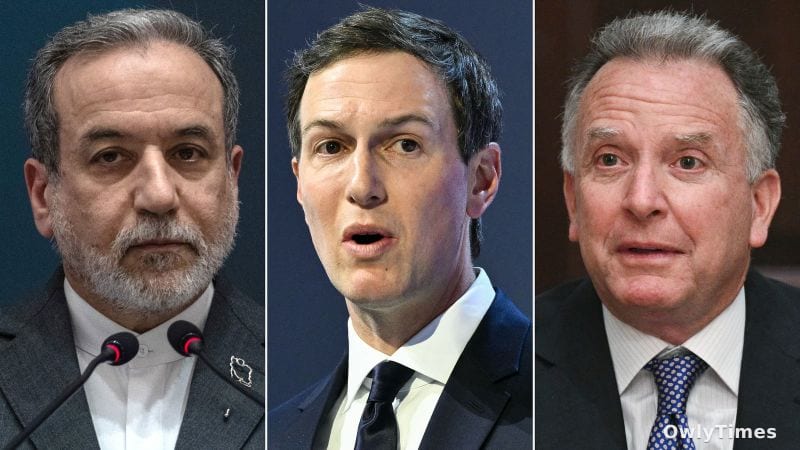

The simultaneous pursuit of nuclear negotiations with Iran and peace talks regarding Ukraine, both converging in Geneva today with Steve Witkoff and Jared Kushner at the center, isn’t a coincidence – it’s a calculated demonstration of leverage. The Trump administration is operating on a principle of maximalist diplomacy, attempting to resolve two seemingly disparate conflicts through a single, high-stakes gambit. This isn’t about finding solutions in isolation; it’s about establishing the United States as the indispensable actor, capable of brokering outcomes on multiple fronts, and signaling that capacity to both adversaries and allies. The timing, coinciding with a shutdown of the Department of Homeland Security over immigration policy, further underscores a willingness to operate with internal disruption as a backdrop to project external strength.
The core calculus is simple: present Iran and Russia with parallel tracks, each contingent on demonstrable concessions. For Iran, the focus remains narrowly on the nuclear program, despite President Trump’s public musings about regime change and the administration’s desire to broaden the scope of negotiations to include ballistic missiles and regional proxy networks. This narrowed focus, while seemingly conceding ground, allows for a faster, more achievable agreement – one that can be presented as a win, even if it falls short of broader strategic goals. The deployment of significant US military assets to the Middle East, as reported by CNN, isn’t merely a contingency plan; it’s a visible pressure tactic, reinforcing the message that the cost of intransigence is high. Who benefits? The US, by appearing proactive and in control. Who loses? Iran, facing continued economic pressure and the threat of military action if talks fail. The historical parallel here is the Cuban Missile Crisis – a demonstration of resolve coupled with a diplomatic opening, albeit on a vastly different scale.
The situation in Ukraine presents a different set of challenges. Russia’s overnight attacks on Ukrainian energy and civilian infrastructure, occurring hours before the Geneva talks, are a pointed reminder of the realities on the ground. Ukraine’s Foreign Minister Andrii Sybiha’s call for stronger sanctions and a ban on Russian participation in global events is a predictable response, but it also highlights the limitations of diplomatic pressure. The third round of negotiations, following previous meetings in Abu Dhabi, suggests a willingness to continue dialogue, but Russia’s actions demonstrate a lack of genuine commitment to de-escalation. The US, by mediating these talks alongside Oman’s Foreign Minister Badr Albusaidi, is attempting to position itself as a neutral arbiter, despite its strong support for Ukraine. This is a delicate balancing act, aimed at preventing further escalation while maintaining pressure on Russia.
Original reporting: CNN.
The domestic political context is crucial. The shutdown of the Department of Homeland Security, stemming from the ongoing fight over immigration reforms, creates a vulnerability for the administration. Border czar Tom Homan’s assurance that ICE enforcement won’t be affected is a damage control measure, but the optics of a government partially paralyzed while attempting to navigate complex international crises are unfavorable. This internal struggle weakens the US position, potentially emboldening both Iran and Russia to push harder in negotiations. The administration is attempting to compartmentalize these issues, presenting a united front on foreign policy despite domestic discord. However, adversaries are adept at exploiting perceived weakness. The last round of talks in Oman, described as “very good” by Trump and “a good start” by Iranian officials, quickly revealed substantive differences, particularly regarding uranium enrichment and the inclusion of ballistic missiles in any agreement. This pattern suggests a high probability of continued deadlock.
The political chess move to watch next isn’t the outcome of these specific negotiations, but rather the administration’s response to potential failure. Will President Trump follow through on his threat of military action against Iran? Will he escalate sanctions against Russia, even at the risk of further destabilizing the global economy? Or will he attempt to salvage a diplomatic solution, even if it means making concessions that are politically unpopular at home? The answer will reveal the true extent of his commitment to this strategy of maximalist diplomacy and the limits of his willingness to project strength in a world increasingly defined by uncertainty. The four-year anniversary of Russia’s full-scale invasion of Ukraine next week will serve as a stark reminder of the stakes involved, and the potential consequences of miscalculation.





