
The calculated risk of direct regime targeting, long considered a red line in U.S. foreign policy, was crossed this weekend with the confirmed killing of Iranian Supreme Leader Ayatollah Ali Khamenei. This wasn’t a spontaneous escalation; it was a meticulously planned operation, leveraging months of CIA intelligence gathering and shared with Israeli counterparts, designed to exploit a fleeting window of opportunity. The move isn’t simply about neutralizing a perceived threat – it’s about fundamentally reshaping the power dynamics in the Middle East, even at the cost of immediate instability. Who benefits and who loses from this dramatic shift is a complex equation, but the initial calculus suggests a gamble on accelerating regime change, with Israel positioned to gain the most from a weakened Iran.
The operation, utilizing B-2 stealth bombers armed with 2,000 lb bombs – a demonstration of force echoing last summer’s “Operation Midnight Hammer” targeting Iranian nuclear facilities – wasn’t solely about military capability. The choice of the B-2, the largest B-2 operational strike in U.S. history according to the former Chairman of the Joint Chiefs of Staff, was a signal. It was a message to Iran, its proxies, and the wider world that the U.S. was willing to deploy its most potent assets, and that the rules of engagement had fundamentally changed. This contrasts sharply with the Obama-era strategy of indirect engagement and negotiated constraints, and represents a return to a more assertive, and arguably riskier, approach. The timing, coinciding with a perceived vulnerability within the Iranian regime, was critical.
The intelligence component, as revealed by a source confirming to CBS News, was the linchpin. Months of tracking Khamenei’s movements culminated in knowledge of a Saturday morning meeting of senior Iranian officials, providing a concentrated target. This isn’t a case of collateral damage; it’s a precision strike predicated on detailed, actionable intelligence. The rapid relay of this information to Israel, accelerating the timeline for a strike, underscores the deepening strategic alignment between the two nations. This level of intelligence sharing, while not unprecedented, signals a new level of operational integration, effectively outsourcing aspects of U.S. policy to a key regional ally. The question now is whether this reliance on Israeli intelligence will create new dependencies and potential vulnerabilities.
President Trump’s pronouncements – declaring the operation “ahead of schedule” and hinting at an “off-ramp” – reveal a carefully constructed narrative. The “ahead of schedule” claim is a rhetorical tactic, designed to project control and competence, while the mention of an off-ramp suggests a desire to de-escalate, but only on U.S. terms. Trump’s assessment that the operation could have caused a “huge price increase with respect to oil” if it had failed highlights the economic stakes involved. The OPEC Plus decision to increase oil production by 206,000 barrels a day is a preemptive attempt to mitigate potential price shocks, but it’s unlikely to fully offset the geopolitical risk premium now baked into the market. The tension lies in balancing the desire for regime change with the need to maintain global economic stability.
This article draws on reporting from CBS News.
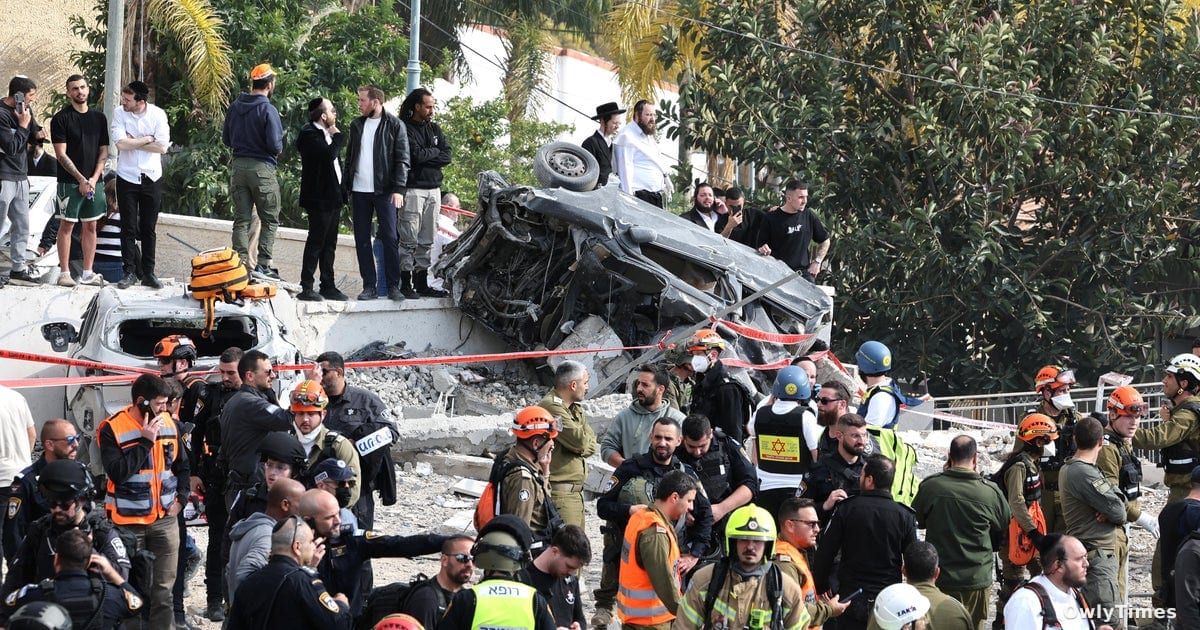
The immediate fallout is a flurry of retaliatory strikes from Iran, targeting U.S. bases and allies across the region, including claims of hitting the USS Abraham Lincoln – a claim dismissed by CENTCOM as a “lie.” The attacks on Oman, with a port and tanker targeted, represent a significant escalation, drawing a previously neutral nation into the conflict. This widening of the conflict zone is a dangerous development, potentially triggering a regional war. The Iranian Foreign Minister’s assertion that “nothing has changed” in Iran’s military capability is a defiant message, but belies the likely disruption to command and control structures caused by the loss of key leadership. The formation of an interim leadership council, while presenting a façade of stability, masks the underlying power struggles that are undoubtedly unfolding within the regime.
Historically, direct targeting of national leaders has yielded unpredictable results. The U.S. assassination of Iraqi leader Abu Bakr al-Baghdadi in 2019, while eliminating a key terrorist figure, did not dismantle ISIS. Similarly, the killing of Iranian General Qassem Soleimani in 2020 triggered a retaliatory missile strike on U.S. forces in Iraq, bringing the two countries to the brink of war. This current situation is far more significant, however, as it involves the supreme leader, the ultimate authority in Iran. The parallel to the 1979 Iranian Revolution, where the removal of the Shah created a power vacuum filled by a radical Islamist regime, is a sobering one. The risk is that this operation, intended to destabilize Iran, could inadvertently empower even more hardline elements.
Senator Ted Cruz’s admission of advising President Trump not to “miss this opportunity” reveals the ideological undercurrent driving this policy. The belief that the Iranian regime was “teetering” and that now was the time to act reflects a long-held hawkish view within the Republican party. However, the assumption that the Iranian people will automatically rise up, as Trump suggested, is a dangerous oversimplification. The Iranian population is deeply divided, and the regime retains significant support, particularly among its loyal base. The U.S. Embassy’s warning to Americans in Bahrain to shelter in place, and the inability to offer evacuation assistance, underscores the logistical challenges and the limited capacity for protecting U.S. citizens in the region.
The political chess move to watch next isn’t about further military strikes, but about the internal dynamics within Iran. Will the interim leadership council fracture, leading to a power struggle between competing factions? Or will a unified front emerge, capable of resisting U.S. pressure and continuing the regime’s aggressive policies? The answer to that question will determine whether this operation truly represents a turning point in the Middle East, or simply a prelude to a more protracted and dangerous conflict. Specifically, monitor the Assembly of Experts’ process for selecting a new supreme leader – who they choose, and how quickly, will reveal the true direction of Iran’s future.





