
Is the digital revolution finally going to save us from the medieval reality of waiting 24 hours to know if our local swimming hole is toxic? The tech industry loves to brag about AI predicting stock market fluctuations or generating synthetic poetry, but the real story here isn't the hype of generative models—it’s the mundane, life-saving application of predictive analytics to public health infrastructure that has been stuck in the 20th century.
The Lag in Our Water Infrastructure
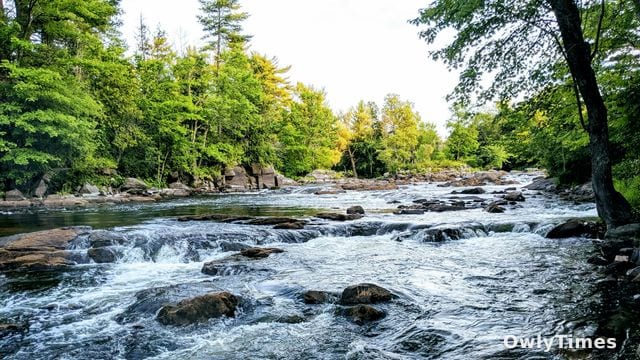
For decades, checking if a river or beach is safe has relied on a process that is essentially an archaeological dig. You take a sample, send it to a lab, and wait 18 to 24 hours for the results. By the time that notification hits your phone, you’ve likely already spent a full day splashing in water that could be teeming with Escherichia coli.
Researchers led by Assistant Professor Nasrin Alamdari at the FAMU-FSU College of Engineering are looking to replace this "test and wait" cycle with a forward-looking framework. Published in Water Research (doi: 10.1016/j.watres.2025.125030), their work uses AI to analyze environmental and hydrometeorological data to flag contamination risks before they manifest into a public health crisis.
The model achieved approximately 85% accuracy in identifying unsafe conditions. This isn't just a marginal gain; it represents a fundamental shift from reactive damage control to proactive management.
Lessons from the Big Creek Spill
The urgency of this shift became clear during the 2023 Big Creek sewage spill. When the Big Creek Water Reclamation Facility suffered a malfunction, the contamination was rapid and devastating to downstream recreational waters.
"The 2023 Big Creek sewage spill is an example of how a sudden treatment failure can rapidly contaminate downstream recreational waters," says Ali Salou Moumouni, a graduate researcher on the project. The AI model is designed specifically to capture these sudden events by ingesting data points like turbidity, streamflow, and rainfall history.
By calculating these inputs, the system can issue warnings up to a day in advance. For a family planning a weekend trip, that 24-hour buffer is the difference between a healthy outing and a bout of gastrointestinal illness.
The Urbanization Penalty
The research also highlights a sobering trend regarding our physical environment. Between 2007 and 2023, the study area saw impervious cover—surfaces like concrete and asphalt that prevent water absorption—climb from 24% to 28%. This shift is more than a planning statistic; it directly correlates to more volatile and polluted runoff.
As Imtiaz Syed Usama, another graduate researcher on the team, notes, every development decision is now an implicit decision about water quality. When the ground cannot soak up rainfall, E. coli levels spike within hours. Traditional, slow-moving lab tests simply cannot keep pace with these surges.
"Our model flips the script: by combining rainfall, streamflow, turbidity and other hydrometeorological data, it helps predict E. coli risk in near real time and up to a day ahead, including during extreme weather," says Nasr Azadani Mitra, a graduate researcher at RIDER.
A Shift Toward Real-Time Resilience
The economic stakes are as high as the health risks. Unexpected beach closures force hotels and outfitters to swallow losses, while municipalities scramble to pay for emergency testing and public notifications. Proactive alerts offer a way to stabilize these local economies by replacing erratic, last-minute panic with data-backed planning.
The next readings of water quality in urbanized watersheds, measured against the accuracy of this model’s predictive warnings, will show whether this framework can successfully scale from research to everyday municipal operations. If it succeeds, the days of finding out you were swimming in contaminated water only after the lab results arrive may finally be numbered.