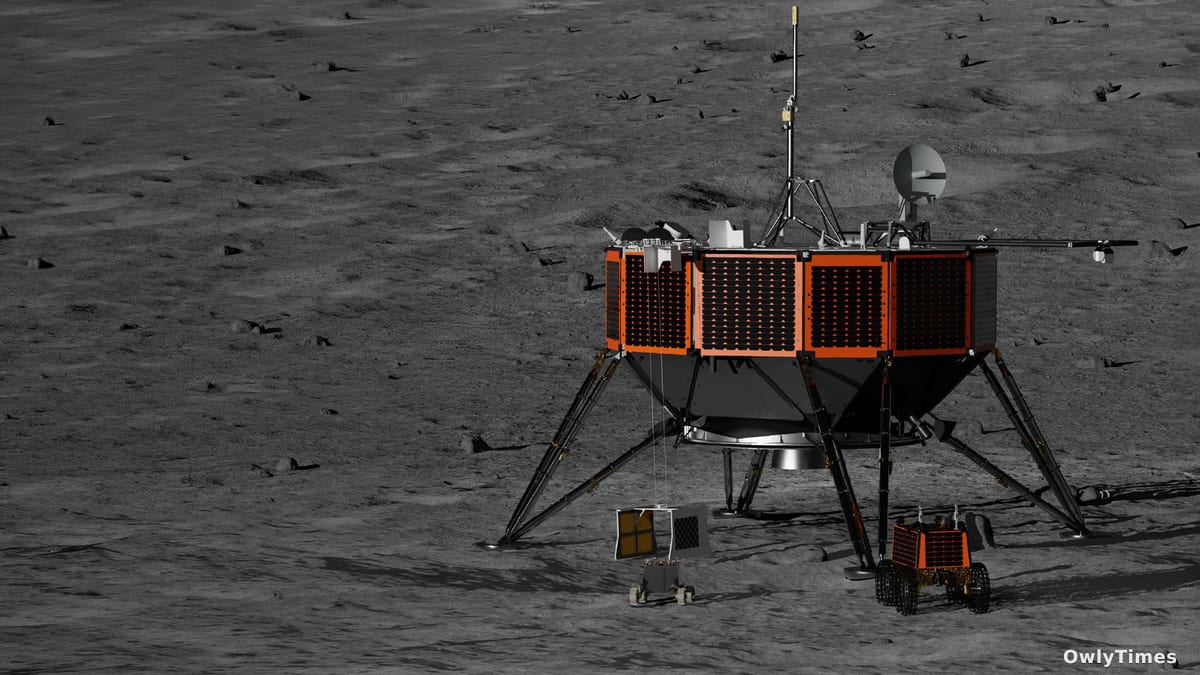

The Moon is about to get a lot more crowded, and not just with robotic explorers. On March 27, 2026, NASA announced a $180.4 million contract with Intuitive Machines of Houston for a lunar delivery mission slated for 2030. While headlines tout this as another step towards returning humans to the Moon under the Artemis program, the significance lies in a subtle but crucial shift: NASA isn’t just going back to the Moon, it’s building a sustained presence there, and increasingly, it’s relying on commercial partnerships to do so. This isn’t simply about planting a flag; it’s about establishing a logistical network, understanding the lunar environment in granular detail, and preparing for the challenges of long-term habitation – a prelude, as NASA officials emphasize, to eventual human missions to Mars.
The upcoming mission, the fifth under NASA’s Commercial Lunar Payload Services (CLPS) initiative, will deliver seven payloads – five from NASA and two international contributions – to the Moon’s South Pole. The collective weight of these instruments, 165 pounds (75 kilograms), belies the complexity of the science they aim to conduct. The focus isn’t on grand, sweeping discoveries, but on meticulous data collection regarding the lunar regolith (surface soil), the radiation environment, and the impact of landing procedures themselves. Joel Kearns, deputy associate administrator for exploration at NASA Headquarters, framed the mission as a progression of lunar science, emphasizing the goal of “long-term sustainability.” This is a key phrase, signaling a move beyond short-term exploration to a more permanent, resource-conscious approach.
One of the most immediately practical investigations will be conducted by the Stereo Cameras for Lunar Plume Surface Studies (SCALPSS). This isn’t a new instrument – it flew on both Intuitive Machines’ IM-1 mission and Firefly Aerospace’s Blue Ghost Mission 1 – and that’s precisely the point. SCALPSS captures imagery of the exhaust plume generated during landing, allowing scientists to model how these plumes interact with the lunar regolith. As NASA anticipates more frequent and heavier landings, understanding this erosion and ejecta is critical to protecting future payloads and habitats. The data gathered isn’t just academic; it directly informs the design of landing systems and surface operations, minimizing disruption to the lunar environment. This iterative approach – testing, refining, re-testing – is a hallmark of the CLPS program.
Beyond the immediate concerns of landing, several payloads address the long-term habitability of the Moon. The Near-Infrared Volatiles Spectrometer System (NIRVSS), for example, will analyze the lunar soil for the presence of water ice and other volatile compounds. While NIRVSS successfully collected data in flight during the Astrobotic’s Peregrine Mission One in 2024, this upcoming mission will allow for a more focused, in-situ analysis at the South Pole, a region believed to harbor significant ice deposits. The Lunar Vehicle Radiation Dosimeter system (LVRaD), developed by the Korea Astronomy and Space Science Institute, will quantify the radiation environment, a major obstacle to long-duration lunar stays. These aren’t simply scouting missions; they are essential steps in assessing the resources available and the risks involved in establishing a permanent lunar base.
Reporting from nasa.gov informs this analysis.
However, it’s important to acknowledge the limitations of this approach. The CLPS program, while innovative, has faced challenges. The Peregrine mission, carrying NIRVSS, experienced a propulsion system failure shortly after launch, limiting its scientific return. While the instrument itself functioned, the mission’s overall objectives were compromised. This highlights the inherent risk of relying on commercial partners, particularly those still developing their capabilities. Furthermore, the relatively small payload capacity of these missions – 165 pounds total – means that scientific investigations must be highly targeted and efficient. The data collected will be valuable, but it represents only a small fraction of the information needed for a comprehensive understanding of the lunar South Pole.
The inclusion of “Sanctuary on the Moon,” a time capsule of human civilization, developed by Grapevine Productions in France, also raises questions about priorities. While a symbolic gesture, the scientific value of this payload is minimal compared to the other instruments. Its inclusion underscores the broader cultural and philosophical dimensions of lunar exploration, but also highlights the potential for missions to be influenced by non-scientific considerations. The Australian Space Agency’s “Roo-ver,” integrating the Multifunctional Nanosensor Platform (MNP) developed by NASA’s Goddard Space Flight Center, represents a successful international collaboration, but also demonstrates the complexity of coordinating multiple partners and technologies.
Looking ahead, the success of this mission hinges not just on the safe delivery of the payloads, but on the quality and interpretability of the data they collect. The next critical step will be integrating this data with existing lunar datasets, creating a more comprehensive picture of the South Pole environment. More importantly, NASA needs to demonstrate that the CLPS program can consistently deliver reliable and cost-effective lunar landing services. The agency is already planning future CLPS missions, and the lessons learned from this 2030 delivery will be crucial in shaping the future of lunar exploration. The question now isn’t if we will return to the Moon, but how we will build a sustainable and scientifically productive presence there – and whether the commercial partnerships championed by NASA can truly deliver on that promise. Will the data from these missions reveal sufficient resources to make a lunar base economically viable, or will the challenges of the lunar environment prove too daunting? That’s the question scientists, policymakers, and the public will be watching closely in the years to come.