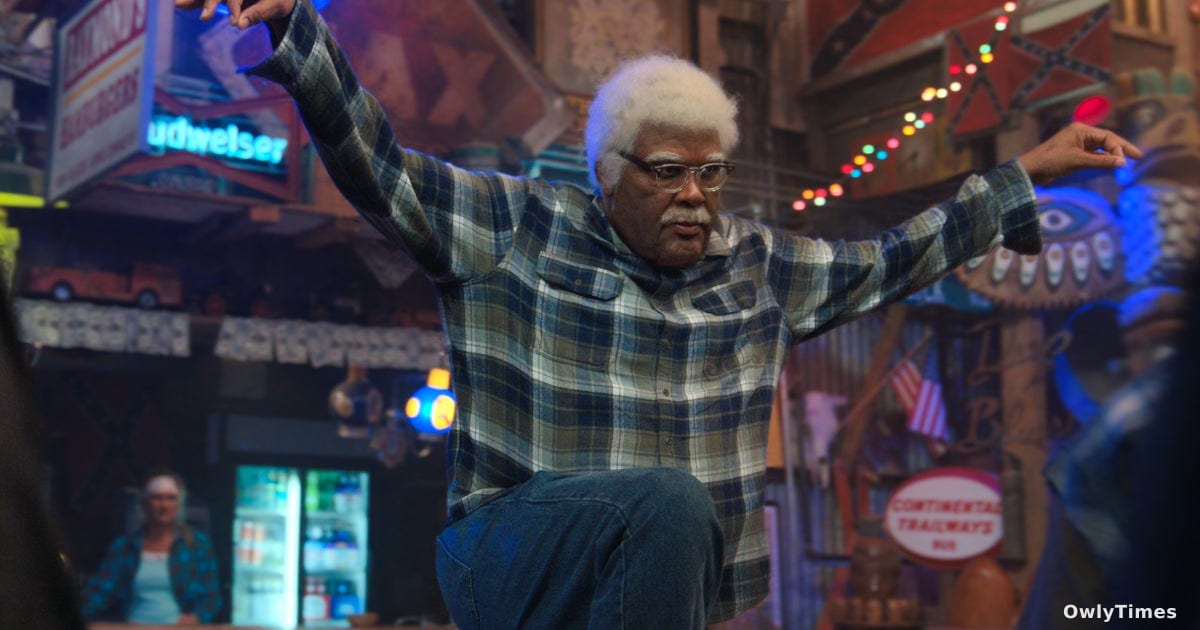

The chipped Formica of a roadside diner, the smell of stale coffee and regret – that’s where Tyler Perry seems to find his sweet spot. And right now, that sweet spot is dominating Netflix’s charts. “Joe’s College Road Trip,” a spin-off from his massively successful Madea franchise, is currently riding high as one of the streamer’s most-watched titles. But this isn’t just about another win for Perry; it’s a fascinating snapshot of where American entertainment is right now, a craving for uncomplicated, often raunchy, comfort in a moment of intense cultural anxiety. It’s a reminder that sometimes, audiences don’t want to be challenged, they want to laugh.
The film follows the predictably chaotic journey of Jermaine Harris as B.J., guided (or rather, relentlessly harassed) by Tyler Perry’s Joe, a character born from the writer-director’s stage persona. The plot – a cross-country road trip brimming with “rowdy shenanigans and life lessons” – is hardly groundbreaking. But that’s precisely the point. In a landscape saturated with prestige television and meticulously crafted dramas, “Joe’s College Road Trip” offers a deliberate escape. It’s a cinematic equivalent of comfort food, and its success speaks volumes about a desire for uncomplicated entertainment. The cast, including Amber Reign, Bethany Anne Lind, and comedian Ms. Pat, delivers on the expected broad humor, and audiences are responding in droves.
This piece references the huffpost.com report.
This isn’t happening in a vacuum. While Perry’s film thrives on Netflix, other streaming services are showcasing very different flavors. Hulu’s top draw is “Predator: Badlands,” a sci-fi action thriller starring Dimitrius Schuster-Koloamatangi and Elle Fanning, tapping into the enduring appeal of the action genre. Prime Video is leaning into melodrama with “Love Me Love Me,” an Italian romance inspired by Stefania S.’s novel, featuring Mia Jenkins and Pepe Barroso Silva. And Peacock is banking on nostalgia with “Song Sung Blue,” a musical drama starring Hugh Jackman and Kate Hudson as a Neil Diamond tribute band. The sheer diversity of trending titles across these platforms highlights a fragmented audience, each seeking a specific emotional or intellectual fix.
Beyond the headlines of streaming wars and viewership numbers, a clear tension is emerging. The industry has spent years chasing “prestige” – the awards, the critical acclaim, the water-cooler moments. But the success of “Joe’s College Road Trip” suggests a counter-current, a significant segment of the audience actively rejecting that pursuit. It’s a demographic that isn’t necessarily interested in deconstructing societal norms or grappling with complex moral ambiguities. They want to be entertained, and they’re perfectly happy with a well-executed, if somewhat predictable, comedy. This isn’t to dismiss the value of sophisticated storytelling, but to acknowledge that it’s not the only story. The numbers are telling: while “Predator: Badlands” and “Love Me Love Me” are performing well, they aren’t dominating the conversation in the same way Perry’s film is.
The streaming landscape was initially touted as a democratizing force, offering something for everyone. Now, it’s revealing a more nuanced reality: a fractured audience with increasingly divergent tastes. The algorithm, designed to cater to individual preferences, is simultaneously reinforcing those preferences, creating echo chambers of entertainment. Will studios continue to prioritize prestige projects, hoping to capture awards and critical acclaim, or will they increasingly cater to the demand for accessible, feel-good content like “Joe’s College Road Trip”? The answer will likely shape the future of streaming, and determine whether the industry continues to chase artistic recognition or simply gives the people what they want.