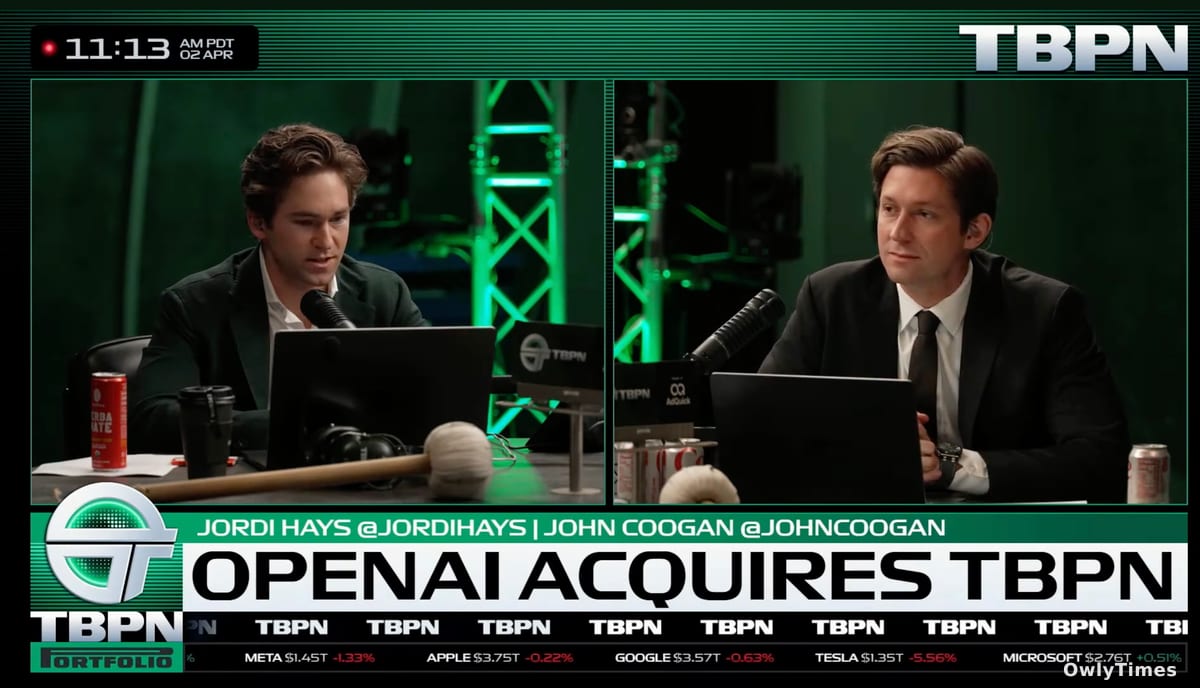

Is the future of tech journalism just… marketing? That’s the question swirling after OpenAI’s Thursday acquisition of the Technology Business Programming Network (TBPN) for a sum reported in the “low hundreds of millions of dollars” by the Financial Times. The immediate reaction – accusations of a media outlet “selling out” to Big Tech – is understandable, but misses the mark. The real story here isn't a betrayal of journalistic principles – it’s the blatant acknowledgement that, for many in Silicon Valley, genuine scrutiny is a nuisance to be bought, not a challenge to be overcome.
Launched in October 2024 by John Coogan and Jordi Hays, TBPN quickly gained a niche following, not for its investigative prowess, but for its access. The show, styled after ESPN, became a favored haunt for tech titans like Mark Zuckerberg, Larry Ellison, and Sam Altman, all eager for a friendly forum devoid of tough questions. As the New York Times’ Mike Isaac aptly put it, TBPN treats “techno-capitalism like a Fantasy Football league.” This isn’t journalism; it’s a carefully curated echo chamber, and OpenAI clearly recognizes its value. The audience size, always small, was never the point – it was the influence wielded within the tech world itself.
This article draws on reporting from defector.com.
This acquisition isn’t an anomaly, but a logical extension of a decades-long trend. Peter Thiel’s calculated destruction of Gawker demonstrated the willingness to weaponize legal battles against critical media. Elon Musk’s banning of journalists from Twitter after acquiring the platform signaled open hostility. But OpenAI’s move is different. It’s not about silencing dissent; it’s about owning the conversation. Today’s AI companies, built in a media landscape already weakened by years of decline, see journalism not as a necessary evil, but as an obstacle to be circumvented, or better yet, absorbed. They’re not just disrupting industries; they’re actively dismantling the infrastructure of accountability.
The timing is particularly telling. OpenAI is gearing up for an initial public offering, and public perception matters. Despite the transformative potential of AI, widespread anxieties persist – concerns about job displacement, energy consumption, and the broader societal impact. Fidji Simo, OpenAI’s CEO of applications, framed the acquisition as a need for “a real, constructive conversation” about AI, but that’s marketing speak for “we need to improve our image.” OpenAI is preparing a policy push to “rethink the social contract,” and TBPN, now fully integrated, will be a key engine for spreading techno-optimism. The show’s existing audience – largely composed of those benefiting from the tech boom – is a starting point, but the goal is broader: to convince a skeptical public to embrace a future shaped by superintelligence, even if it means accepting dimmer horizons.
The contract reportedly includes provisions guaranteeing TBPN’s “editorial independence,” a claim that rings hollow. What good is independence for a show that, even before the acquisition, functioned as a sophisticated PR operation? Coogan and Hays themselves admitted they “don’t consider themselves journalists,” identifying instead as “tech-positive.” This isn’t about protecting journalistic integrity; it’s about maintaining the illusion of it. OpenAI wants a media outlet that looks and feels like journalism, but operates as an extension of its marketing department. It’s a carefully constructed simulacrum, designed to shape the narrative without the messy interference of actual reporting.
The implications extend far beyond OpenAI. This acquisition sets a dangerous precedent, signaling to other tech giants that buying influence is a viable strategy for managing public perception. Expect to see more acquisitions of niche media outlets, more “sponsored content” masquerading as news, and a further erosion of trust in traditional journalism. The question isn’t whether this will happen, but which tech company will be next to attempt a similar maneuver. Watch closely for a surge in “independent” tech podcasts and streaming shows, funded by the very companies they claim to cover. The future of tech coverage isn’t about informing the public; it’s about controlling the story.