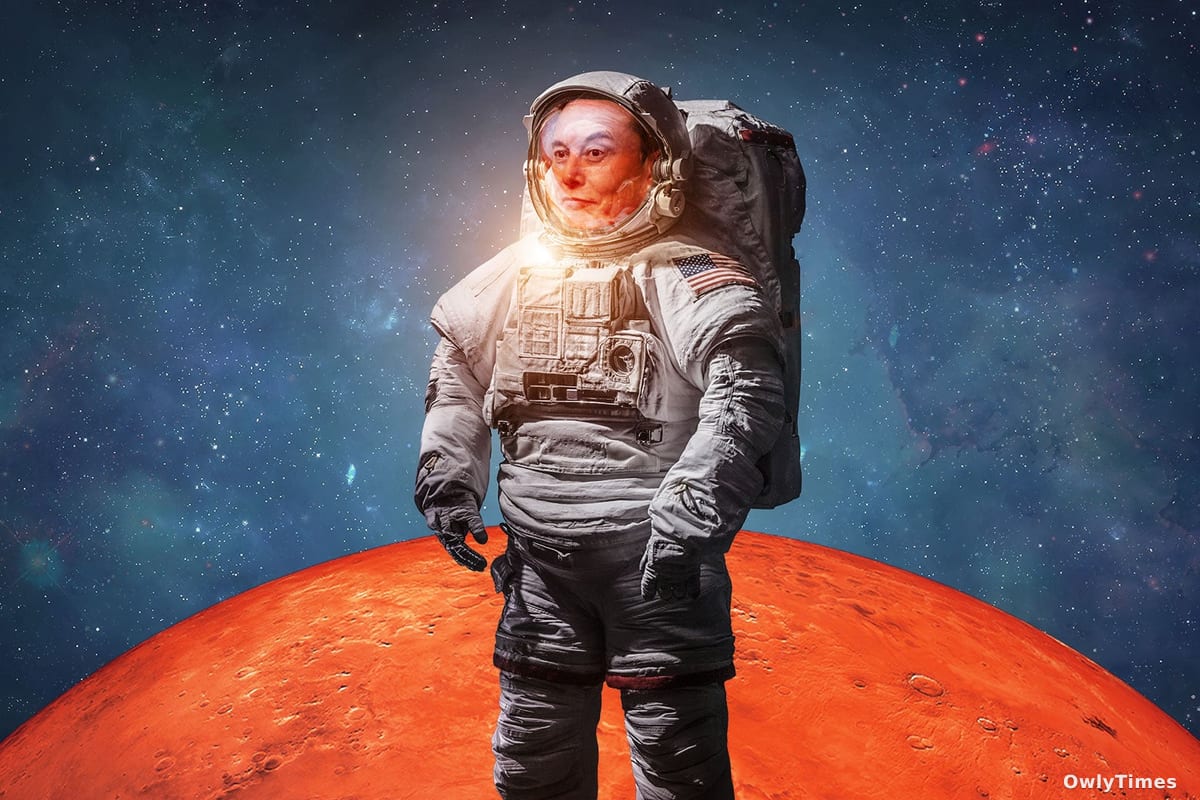

The enduring human fascination with space travel, fueled by generations of science fiction, often overshadows a stark reality: venturing beyond Earth’s protective embrace poses profound and largely unresolved threats to human health. While Elon Musk’s recent shift in focus from Mars colonization to lunar ambitions might appear driven by technological hurdles or economic considerations, a growing body of research suggests a more fundamental reason – the human body is simply not equipped for extended periods outside of Earth’s gravity and atmosphere. This isn’t a question of if we can reach other planets, but at what cost to the health and longevity of those who undertake the journey.
The narrative surrounding space exploration frequently emphasizes innovation and triumph, but headlines often gloss over the granular details of physiological stress. Reports celebrating potential lunar habitats, for example, rarely address the fact that even short stays in space induce measurable and potentially irreversible damage. A 2017 NASA estimate, frequently cited but often simplified, projected that a three-year mission to Mars would expose astronauts to 3,600 X-rays worth of radiation – a dose 30 times higher than the annual limit for nuclear energy workers. While the immediate risk of acute radiation sickness is mitigated by mission planning, the long-term consequences, particularly increased cancer risk and organ damage, remain a significant and largely unaddressed concern. The comparison to 240-480 X-rays received during a six-month stint on the International Space Station underscores the exponential increase in exposure during a Mars-length voyage.
Beyond radiation, the challenges of confinement and isolation are well-documented, though often framed as psychological hurdles rather than physiological ones. The “Habitat” podcast series, mentioned as an example of research into group dynamics, highlights the importance of mitigating psychological stress, but doesn’t fully capture the systemic impact of prolonged isolation on immune function and hormonal balance. These factors, while not immediately life-threatening, can exacerbate the effects of other space-related stressors, creating a cascade of negative health outcomes. The focus on psychological support is vital, but it’s a reactive measure addressing symptoms, not a preventative solution to the underlying physiological disruption.
Source material: slate.com.
Perhaps the most insidious threat is the impact of microgravity. It’s easy to visualize astronauts floating weightlessly, but the reality is a complex disruption of nearly every bodily system. The immediate effects – nasal congestion due to fluid shifts – are merely the tip of the iceberg. Recent studies, including a 2024 investigation into kidney function, demonstrate that even one month in microgravity can cause permanent alterations to kidney pathways, leading to irreversible damage. This isn’t simply a matter of astronauts returning with slightly weakened kidneys; the research suggests a fundamental and lasting change in organ function. Similarly, six months in space has been shown to inflict arterial and endocrine damage comparable to a decade of aging on Earth.
While researchers are exploring countermeasures – exercise regimens, medications to combat bone loss (like bisphosphonates, shown to partially mitigate bone density loss in a 2019 study), and even pharmacological interventions to address arterial stiffness and insulin resistance – these are largely palliative. Every proposed solution is, as the article points out, a “stopgap measure” designed to manage symptoms during relatively short missions. The consensus within the scientific community is that the ultimate solution to microgravity-induced disease is a return to Earth’s gravity. We lack even preliminary data on the effects of year-long or multi-year exposure, and extrapolating from shorter missions carries significant uncertainty.
The current state of research reveals a critical tension: our ambition to explore space far outpaces our understanding of how to protect human health during such endeavors. The focus remains on keeping astronauts healthy during missions, not on ensuring their long-term well-being after returning to Earth, or, more realistically, on enabling sustainable long-term habitation beyond our planet. The article rightly points out that every study reviewed emphasizes the necessity of returning to Earth to reverse the damage inflicted by space travel. This raises a fundamental question: if the price of space exploration is a significantly shortened lifespan and a legacy of chronic health problems, is the pursuit truly justifiable?
Looking ahead, the next crucial research steps involve longitudinal studies tracking the long-term health of astronauts, coupled with more sophisticated modeling of the cumulative effects of radiation, microgravity, and isolation. But beyond simply documenting the damage, we need to invest in truly innovative solutions – perhaps artificial gravity systems, advanced shielding technologies, or even genetic modifications to enhance human resilience to the stresses of space. More immediately, however, we should be asking ourselves: what will be the health profile of the first generation of individuals who spend a year or more on the moon? Will the observed physiological changes be reversible, or will they represent a new baseline for human health in space? The answers to these questions will not only determine the future of space exploration, but also redefine our understanding of the fundamental limits of human adaptability.





