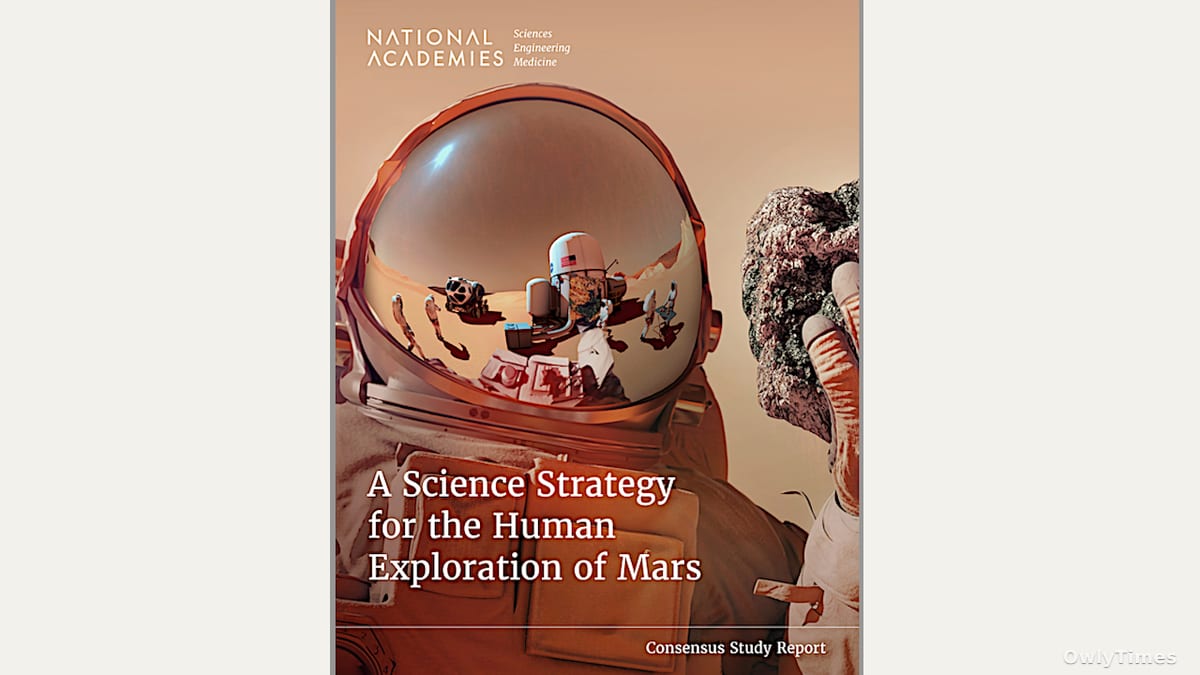

The ambition to send humans to Mars isn’t simply a technological challenge; it’s a fundamentally scientific one. While public imagination often focuses on the daring feat of interplanetary travel, the core justification – and the driving force behind NASA’s planning – is the potential for groundbreaking discovery. A recently released report from the National Academies of Sciences, Engineering, and Medicine, “A Science Strategy for the Human Exploration of Mars,” doesn’t detail how we’ll get to Mars, but rather, meticulously outlines why we should go, and what questions must be prioritized once boots are on the ground. This isn’t a case of science following exploration; it’s science actively shaping it.
The report, commissioned by NASA and culminating over a year of work by a 58-member committee of experts and input from another 54 speakers and 300 participants in town halls, arrives at a crucial juncture. The United States, guided by its National Space Policy of 2020, has explicitly committed to returning to the Moon as a stepping stone for eventual human missions to Mars. The Artemis Accords, an international agreement championed by NASA, further solidifies this commitment to collaborative, peaceful exploration. But a clear vision of the scientific return on investment – beyond simply planting a flag – was needed. Linda T. Elkins-Tanton and Dava J. Newman co-chaired the committee, navigating the complex task of prioritizing scientific objectives across disciplines as diverse as astrobiology, atmospheric science, and human factors.
Original reporting: astrobiology.com.
What the report actually finds, contrary to some initial headlines suggesting a singular, definitive plan, is a set of four prioritized “campaigns” – not rigid itineraries, but flexible frameworks for maximizing scientific output. These campaigns aren’t mutually exclusive; rather, they represent different emphases, and the ultimate landing site and mission architecture will likely incorporate elements from multiple. The highest priority campaign focuses on searching for evidence of past or present life, a pursuit that naturally dominates the conversation surrounding Mars. However, the report stresses that understanding Mars’s habitability – its potential to support life – is just as crucial, even if no life is found. This involves detailed geological analysis, atmospheric studies, and investigations into the planet’s subsurface environment. The other campaigns address understanding Mars’s climate history, unraveling the evolution of its interior, and studying the effects of the Martian environment on human health – a critical consideration for long-duration missions.
The committee deliberately avoided prescribing specific technologies or mission designs. Instead, they focused on the “functional capabilities” needed to achieve these objectives. This is a subtle but important distinction. As Elkins-Tanton notes in the report’s preface, the science drives the technology, not the other way around. The committee recognized that technological advancements – particularly in areas like artificial intelligence and robotic assistance – will inevitably reshape how science is conducted on Mars. By focusing on what needs to be done, rather than how, the report aims to remain relevant as technology evolves. This approach also acknowledges the ongoing development of NASA’s “Moon to Mars Architecture,” ensuring the Mars strategy remains aligned with broader agency goals.
However, several limitations to consider temper the report’s immediate impact. The study, completed in October 2025, relies on current understandings of Martian geology, atmospheric conditions, and potential hazards. New discoveries – from orbital missions like the Mars Reconnaissance Orbiter or future robotic landers – could significantly alter the prioritization of these campaigns. Furthermore, the report acknowledges that budgetary constraints and political realities will inevitably influence mission planning. The ambitious scope of these campaigns requires sustained funding and international collaboration, neither of which is guaranteed. The report also doesn’t address the ethical considerations surrounding potential discovery of life, a topic explored in a separate appendix, but one that demands ongoing discussion.
Looking ahead, the next critical step is for NASA to integrate these scientific priorities into its mission architecture and technology development roadmap. Specifically, the agency must begin to define the specific landing sites that will best address these campaigns, and to develop the instruments and capabilities needed to conduct the necessary investigations. A key question to watch for is how NASA balances the competing demands of scientific return, cost, and risk. Will the agency prioritize the highest-risk, highest-reward campaign focused on life detection, or will it opt for a more conservative approach focused on understanding Mars’s habitability? The answer will not only shape the future of Mars exploration, but also define the legacy of this generation’s pursuit of scientific discovery beyond Earth.





