
When the Environmental Protection Agency (EPA) initiated plans to revoke its authority to regulate climate pollutants last summer, it prompted a swift response from the National Academies of Sciences, Engineering and Medicine. The organization, chartered by Congress in 1863 to provide objective scientific counsel, fast-tracked a consensus study to evaluate the current state of climate science. The resulting report concluded that the link between human-caused greenhouse gas emissions and environmental harm is now “beyond scientific dispute.”
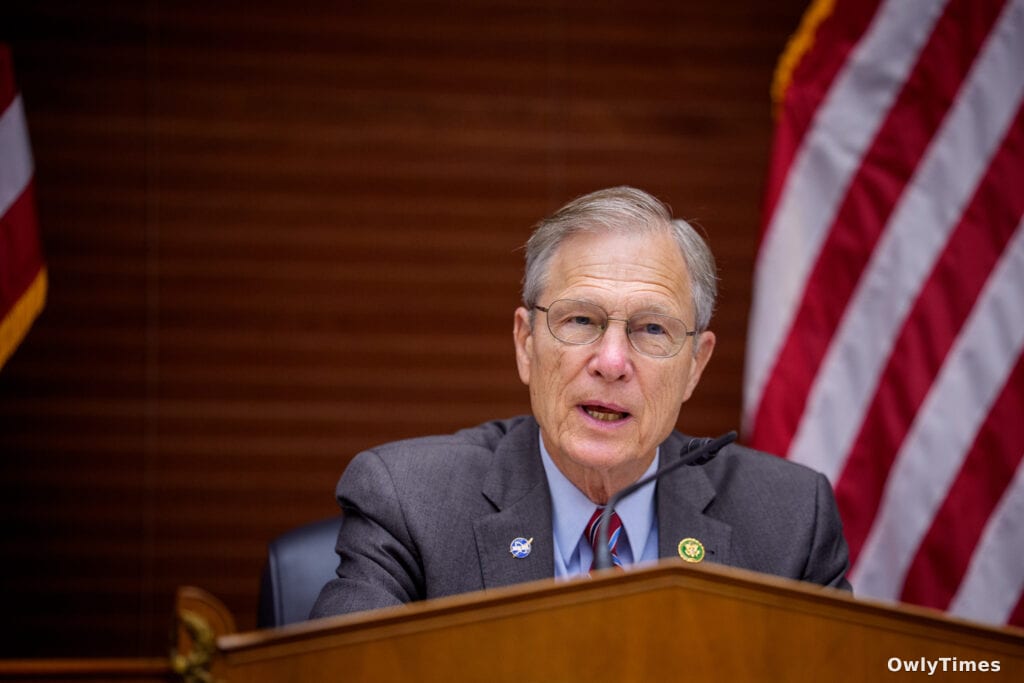
However, a significant tension has emerged between the scientific community and the House Committee on Science, Space and Technology. Republican leaders of the committee are now questioning the “formation, funding and expedited timeline” of the expert panel that produced the study. At the heart of this conflict is a fundamental disagreement over the stability of climate evidence: the Trump administration argued that the EPA’s 2009 endangerment finding—the bedrock for regulating vehicle emissions under the Clean Air Act—was based on an “unreasonable” analysis of the scientific record, while the National Academies’ report asserts that our understanding of climate risk has only grown more certain.
Understanding the Evidence Gap
Headlines frequently frame this dispute as a clash of political opinions, but the underlying scientific reality is rooted in how we quantify environmental damage. Physicist Drew Shindell, a professor at Duke University who contributed to the consensus report, notes that the science has moved from the tentative models of 2009 to a highly granular, localized understanding of risk.
“Much of the understanding of climate change that was uncertain or tentative in 2009 is now resolved, and new threats have been identified,” the report states. Shindell explains that whereas earlier models focused on broad temperature trends, today’s data allows researchers to map specific outcomes, such as agricultural crop responses to rainfall variations and the direct connection between rising insurance costs and specific catastrophic weather events. Despite these advancements, the committee leadership has sent two letters to Marcia McNutt, president of the National Academy of Sciences, demanding internal correspondence and donor information to investigate potential conflicts of interest.
Financial Ties and Institutional Scrutiny
The scrutiny from the House science committee carries its own context: campaign finance records show that the three Republican leaders spearheading this investigation have collectively received nearly $550,000 in donations from the oil and gas industry. This raises a critical question about the motivations behind the probe. While the committee questions the impartiality of an expert panel—which included members from both academia and industry—they have remained silent on whether their own financial backing influences their oversight of scientific institutions.
The committee has also pointed to a past controversy regarding a climate science chapter in a Federal Judicial Center manual, alleging it was “retracted” due to bias. Legal scholar Michael Green of Washington University in St. Louis disputes this, noting that a retraction implies a failure in scientific validity. He maintains that the chapter was pulled under political pressure, not because the science within it was ever in question.
Limitations to Consider
It is important to acknowledge that the National Academies’ study was conducted on an accelerated timeline to meet the EPA’s deadline for public input. Critics, including members of the House Committee on Oversight and Government Reform, have suggested that such speed creates the risk of predetermined outcomes. However, the panelists relied on a deep reservoir of existing work, including reports from the Intergovernmental Panel on Climate Change (IPCC) and the National Climate Assessment (NCA), which had already established a consensus among a much larger group of global experts.
Moving forward, the relationship between the National Academies and the House Committee on Science, Space and Technology remains in a state of flux. The National Academies have stated they look forward to addressing the committee's concerns, even as McNutt has publicly lamented the increasing political divisiveness surrounding scientific inquiry. The next reading of the committee’s official inquiry—and whether they choose to release the internal documents they have demanded—will indicate whether this dispute remains a matter of procedural oversight or evolves into a broader challenge to the role of independent science in federal policy.