
Beyond the Pop Culture Phenomenon: What’s Really Happening with “Meat Sweats”
For decades, the sensation of a warm flush and sudden sweat after a hearty barbecue has been playfully dubbed “meat sweats,” a term popularized in shows like Friends and even parodied in advertising campaigns like Arby’s “Meat Sweats Defense” deodorant launched in 2022. But beyond the cultural references, a legitimate scientific question lingers: is this a real physiological response, or simply a humorous exaggeration of feeling full? The answer, as often happens in biology, isn’t a simple yes or no. It’s a nuanced interplay of metabolic processes, sensory perception, and individual variation, and recent attention to the phenomenon highlights a growing public interest in understanding the body’s complex reactions to food.
This article draws on reporting from dallasnews.com.
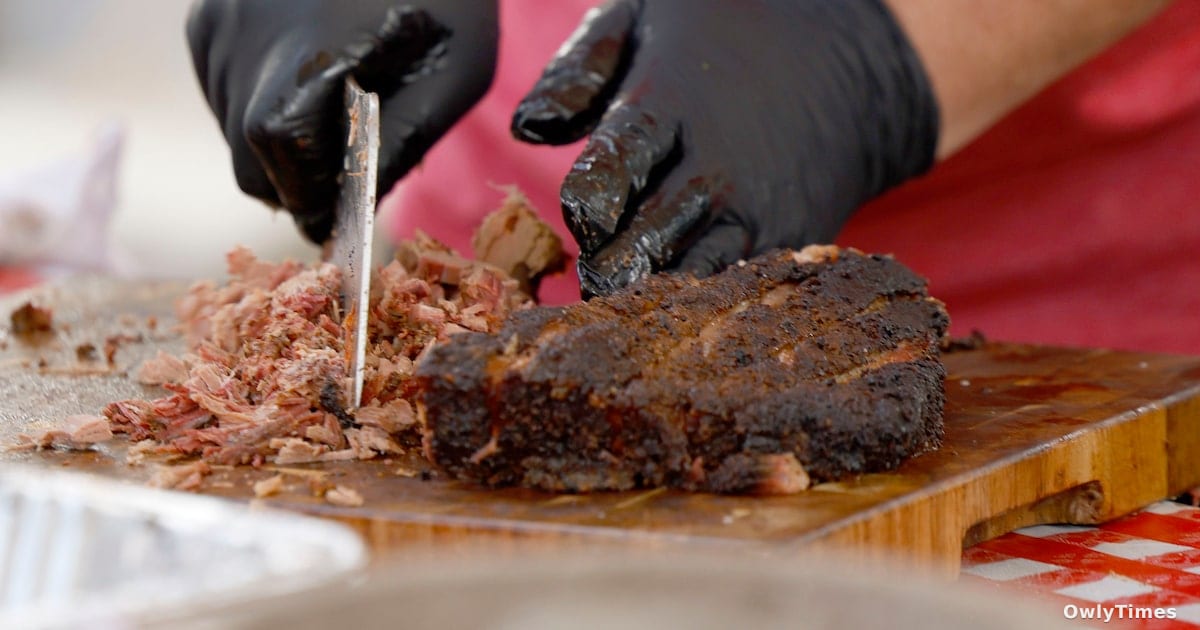
The core of the “meat sweats” discussion revolves around diet-induced thermogenesis – the energy expenditure associated with processing what we eat. While all food requires energy to digest, breaking down protein is demonstrably the most demanding task for the body. Lorenzo Brightman slicing ribs at Sweet Georgia Brown illustrates a common scenario: a protein-rich meal requires the body to disassemble long chains of amino acids into usable components. This process isn’t passive; it actively increases metabolic rate, a phenomenon called postprandial thermogenesis, and as a byproduct, generates heat. The body’s natural response to this increased internal temperature is to initiate cooling mechanisms, primarily through increased blood flow to the skin and activation of sweat glands. So, that flushed face and glistening forehead after a plate of brisket might not be embarrassment, but a perfectly normal thermoregulatory response.
However, it’s crucial to distinguish between the physiological explanation and the popularized term. The sensation isn’t a formally recognized medical condition, and the intensity varies significantly between individuals. A key study from 1999, involving just eight women, demonstrated that a high-protein diet resulted in greater calorie expenditure compared to a high-fat diet. While statistically significant for that cohort, the small sample size necessitates caution when generalizing these findings to the broader population. Furthermore, the study didn’t specifically measure subjective experiences like “sweating” or “flushing,” only energy expenditure. Headlines proclaiming “meat sweats are real” often oversimplify this data, implying a universal and dramatic response where the research suggests a measurable, but potentially subtle, metabolic shift.
Interestingly, research suggests the experience isn’t solely about the protein itself. A separate 1999 study revealed that the type of protein matters. When participants compared beef and fish meals with equivalent protein content, the beef option was consistently rated as more palatable and triggered a larger, earlier surge in energy use and heat production. This points to the role of sensory input – smell, taste, even the anticipation of a delicious meal – in priming the body’s metabolic response. It’s possible that the cultural association of barbecue with indulgence and satisfaction contributes to the perceived intensity of “meat sweats,” creating a feedback loop between expectation and physiological reaction. Mark Montemayor expertly cutting brisket at Panther City BBQ embodies this sensory experience, highlighting the cultural significance of the meal itself.
It’s also important to consider alternative explanations for post-meal sweating. Conditions like gustatory hyperhidrosis, sometimes called Frey’s syndrome, causes excessive sweating triggered by eating or even thinking about food, and is linked to the nervous system. Fluctuations in blood sugar, common in individuals with diabetes, can also induce sweating around mealtimes. More serious neurological disorders, such as Parkinson’s disease, can disrupt the body’s sweat gland regulation. Attributing all post-meal sweating to “meat sweats” risks overlooking potentially significant underlying health concerns. As Medical News Today notes, these effects are typically temporary, but persistent or excessive sweating warrants medical evaluation.
Looking ahead, researchers need to investigate the individual factors that influence the magnitude of postprandial thermogenesis and the subjective experience of “meat sweats.” Larger, more diverse studies are needed to determine whether specific populations – based on age, sex, body composition, or pre-existing conditions – are more susceptible. Crucially, future research should incorporate subjective measures, like detailed questionnaires about perceived temperature, sweating intensity, and overall comfort levels, alongside objective physiological data. Will we eventually see a personalized “meat sweat” index, predicting an individual’s response to different protein sources and portion sizes? That remains to be seen, but understanding the interplay between metabolism, sensory perception, and individual physiology is the next crucial step in unraveling this surprisingly complex phenomenon.





