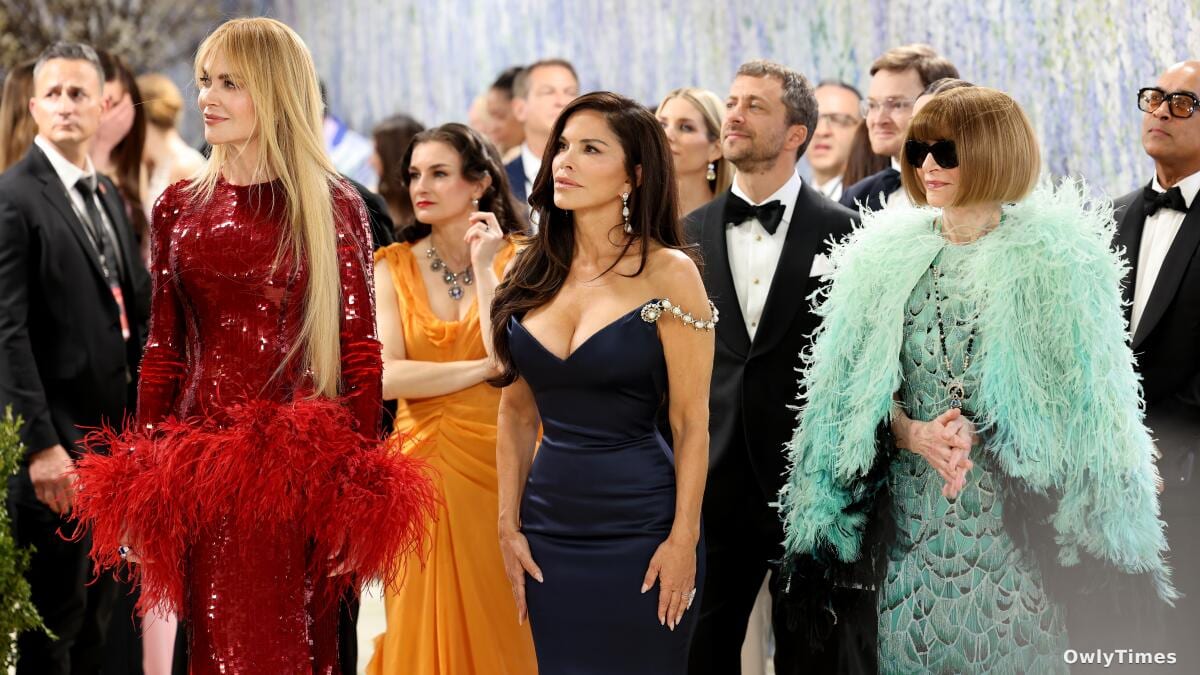

The air on the Metropolitan Museum’s grand staircase was thick with the kind of calculated tension that only occurs when the world’s most powerful cultural figures are asked to transform themselves into literal works of art. As the Met Gala officially commenced, the spectacle moved beyond the usual celebrity parade, shifting toward a high-stakes experiment in self-objectification. Under the banner of this year’s theme, “Costume Art,” the evening functioned as a living, breathing inauguration for the new 12,000-square-foot Condé M. Nast Galleries, setting a standard for how the fashion industry intends to bridge the gap between high-concept exhibition and social media-driven mass appeal.
When the Body Becomes the Canvas
This year’s directive, “Fashion Is Art,” served as a prompt for guests to treat their own anatomy as a malleable medium. The result was a fascinating, often contradictory display of vulnerability and armor. We saw the return of the “naked dress” trend, championed by Irina Shayk and Gigi Hadid, while Kylie and Kendall Jenner opted for coordinated, skin-mimicking illusions. These choices highlight a broader industry obsession with the “embodied art form,” where the human figure is no longer just a mannequin for a garment, but the primary material itself.
The commitment to this theme reached its zenith in the technical execution of the garments. Emma Chamberlain opened the festivities in a Mugler gown that required 40 hours of hand-painting by artist Anna Deller to complete. Similarly, SZA appeared in a corset dress constructed from 100 yards of material sourced directly from eBay, signaling a shift toward finding high-art value in the secondary market. When Heidi Klum arrived as a living marble statue, designed by Mike Marino to evoke the “Veiled Christ” by Giuseppe Sanmartino, the line between celebrity and sculpture effectively evaporated.
The Power Dynamics of the Red Carpet
The event was steered by a high-profile co-chair committee: Nicole Kidman, Venus Williams, Anna Wintour, and Beyoncé, the latter making a notable return after a 10-year hiatus. Their presence underscored the gala’s dual identity as both a sanctuary for historical costume study and a massive financial engine for the Metropolitan Museum of Art’s Costume Institute. The stakes of this patronage are increasingly visible; reports suggest Lauren Sánchez Bezos and her husband Jeff Bezos spent $10 million to sponsor the evening, a figure that provides necessary context for the sheer scale of the resources mobilized for a single night of sartorial excellence.
Beyond the flashing cameras, the tensions of the industry were palpable. While stars like Chase Infiniti in Thom Browne, Gracie Abrams in Chanel, and Rachel Zegler in Prabal Gurung leaned into literal interpretations of specific artworks, others utilized masks, blindfolds, and molded breastplates—like the bronze piece worn by Kim Kardashian—to create a sense of distance from the audience. It is a striking contradiction: these figures are more exposed than ever, yet they are increasingly hiding behind sculptural barriers that discourage human interaction.
The Future of the Fashion Spectacle
As the night concluded, the lasting impression was not just the gowns, but the aggressive pursuit of historical relevance. By framing the dressed body as a legitimate subject of art history, the museum is effectively raising the stakes for every red carpet that follows. The industry is no longer content with mere glamour; it is now actively competing with the galleries that house its history.
The next reading of the attendance and fundraising metrics for the new Condé M. Nast Galleries will show whether this shift toward "Costume Art" successfully sustains the gala’s position as the premier financial and cultural driver for the Costume Institute. For now, the message is clear: in an era of infinite digital noise, the most effective way to grab attention is to stop dressing for the camera and start dressing for the canon.