
Is your family photo album destined for digital dust? We’re obsessed with “the cloud,” with backing up everything to servers we don’t control, trusting corporations with our memories. But what happens when those servers fail, or the company goes under, or the file format becomes obsolete? Microsoft’s latest push with “Project Silica” isn’t about faster streaming or slicker interfaces – it’s a blunt acknowledgement that our current data storage methods are fundamentally fragile. The real story here isn’t about competing with SSDs – it’s about building a digital ark, capable of preserving information for millennia.
Since 2019, Microsoft has been quietly tinkering with storing data in glass, and the latest results, published February 18th in Nature, are a significant leap forward. They’ve moved beyond expensive, specialized fused silica to using ordinary borosilicate glass – the kind found in Pyrex cookware and oven doors. This isn’t some futuristic pipe dream; it’s a practical solution to a looming problem. Richard Black, partner research manager at Microsoft, frames it as unlocking “the science for parallel high-speed writing,” but the core achievement is dramatically lowering the barrier to entry for truly long-term data storage. They’ve now demonstrated the ability to encode 4.8TB of data – roughly 200 4K movies – onto a piece of glass just 0.08 by 4.72 inches, and they estimate that data will remain intact for at least 10,000 years.
That’s a staggering contrast to the lifespan of current storage media. Hard drives and solid-state drives, the workhorses of modern computing, typically last a decade, maybe two if you’re lucky. Ten thousand years puts this technology in a different category entirely. It’s not about speed – at 3.13 MB/s, writing to glass is significantly slower than even a traditional hard drive (around 160 MB/s) or an SSD (roughly 7,000 MB/s). It’s about permanence. This isn’t intended to replace your laptop’s hard drive; it’s designed for archival purposes, for preserving critical data that must survive. Microsoft has already explored this with plans to preserve music in the Global Music Vault in Norway, a real-world demonstration of the technology’s potential.
The Science Behind the Stone Tablet
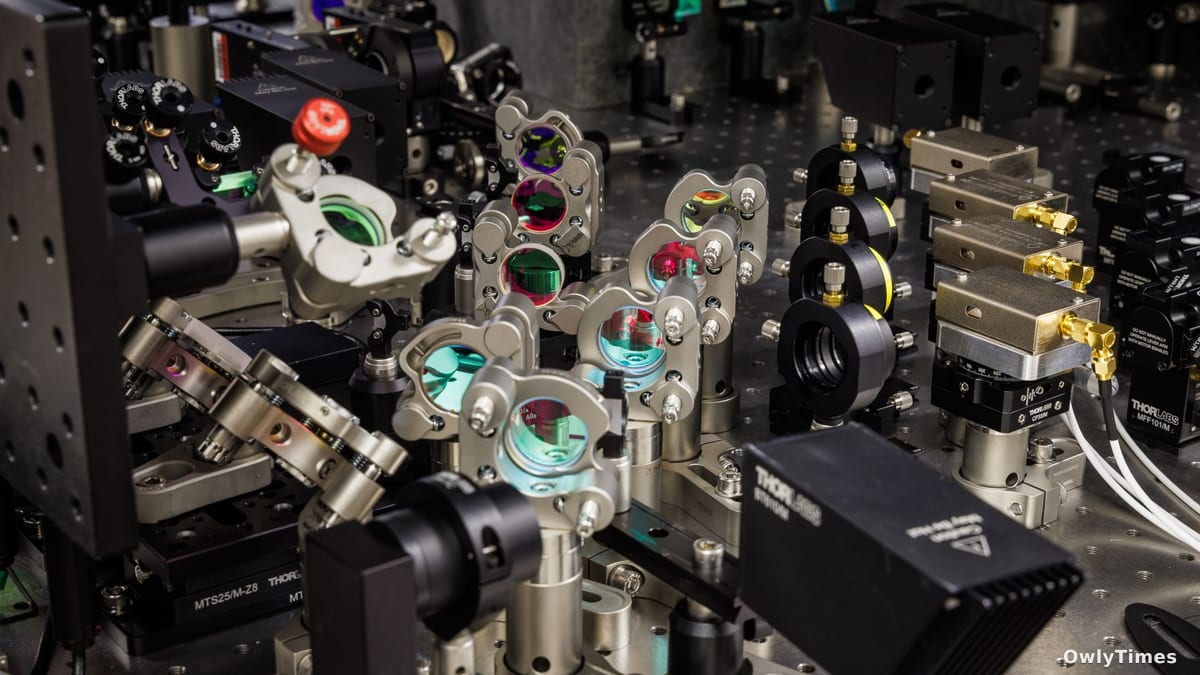
The breakthrough isn’t just about using cheaper glass. The team, led by researchers like F. Chen and B. Wu, has refined the process of writing data onto the glass itself. They’ve moved to a “pseudo-single pulse” laser technique, splitting a single laser pulse to create two voxels (3D pixels) simultaneously, increasing writing efficiency. Crucially, they’ve also developed “phase voxels,” encoding data into the phase change of the glass material, requiring only a single laser pulse and offering a new method for reading the information. This is a clever workaround to the limitations of traditional polarization-based encoding.
This article draws on reporting from Live Science.
But perhaps the most important advancement is the ability to assess data degradation. They’ve developed a method to identify aging data within the voxels, allowing them to use accelerated aging tests to confidently predict the 10,000-year lifespan. This isn’t guesswork; it’s based on rigorous scientific analysis. It’s a far cry from the “bit rot” that plagues digital storage today, where data silently corrupts over time, often undetected until it’s too late.
Beyond Music Vaults: Who Actually Needs This?
The immediate applications are obvious for institutions dealing with massive, long-term data sets: libraries, archives, governments, and scientific organizations. Imagine preserving historical records, genomic data, or critical infrastructure schematics for future generations. But the implications extend further. Consider the growing problem of digital inheritance. What happens to your digital life – photos, videos, documents – when you’re gone? Currently, it relies on the continued existence of platforms like Google Photos or Facebook, and your family’s ability to access those accounts. Glass storage offers a way to create a truly independent, enduring digital legacy.
This also arrives alongside other intriguing developments in archival storage. The recent breakthrough in DNA storage, capable of holding 360TB of data in half a mile of DNA, demonstrates a parallel pursuit of ultra-long-term solutions. While DNA storage faces its own challenges – cost and complexity – it highlights a growing recognition that our current storage paradigms are inadequate for the age of exponential data growth. The competition between glass and DNA storage isn’t about which is “better,” but about diversifying our options for preserving information.
The Cost of Forever
The biggest hurdle remains cost. While using borosilicate glass lowers the material expense, the specialized laser writing equipment is still expensive and relatively slow. Microsoft is actively working on improving writing and reading speeds, and exploring different glass compositions to optimize performance. But even with improvements, this technology won’t be cheap. It’s not going to replace your external hard drive anytime soon.
However, the cost argument misses the point. The value of preserving data for 10,000 years isn’t measured in dollars and cents; it’s measured in the continuity of knowledge and culture. We readily spend fortunes on fleeting entertainment and disposable gadgets. Investing in truly long-term data storage is an investment in the future itself.
Here’s what to watch for: over the next three years, expect to see pilot projects emerge beyond the Global Music Vault. I predict we’ll see national archives begin experimenting with glass storage for their most critical documents, and a small but growing market for “digital wills” – services that archive your personal data onto glass for your heirs. The question isn’t if this technology will be adopted, but how quickly the perceived value of digital permanence will outweigh the initial cost.