
Is the future of your family photos…glass? While Silicon Valley chases the next AI breakthrough or foldable phone gimmick, Microsoft is quietly tinkering with a storage medium that makes hard drives look like fleeting digital sandcastles. The real story here isn't about faster processing or bigger screens—it’s about the fundamental problem of data longevity, and whether anything we create today will actually exist tomorrow. We’re so focused on generating data, we rarely stop to consider how to outlive it.
For years, the industry standard for “long-term” archival has been magnetic tape, a technology barely evolved since the 1950s. Then came hard drives, then SSDs, each promising greater density and speed, but all sharing a fatal flaw: they degrade. Bit rot, the silent corruption of data, is an inevitability with every current storage method. Microsoft’s Project Silica, initiated in 2019, proposes a radical solution: etching data onto glass. Not just any glass, initially. Early experiments relied on expensive, specialized fused silica, limiting its practicality. But a paper published this week in Nature reveals a significant shift – they’ve cracked the code to use standard borosilicate glass, the same stuff in your oven door.
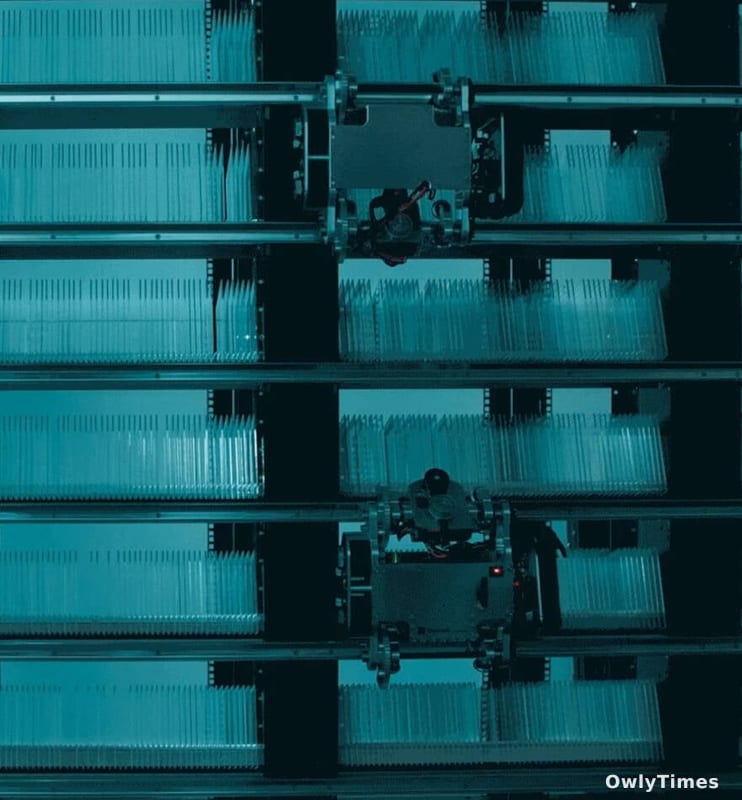
The process involves using femtosecond lasers – incredibly short bursts of light – to create microscopic “voxels,” essentially 3D pixels, within the glass. These voxels represent data, and because glass is remarkably stable, resistant to water, heat, and even electromagnetic pulses, the data theoretically remains intact for millennia. In recent tests, Microsoft researchers encoded 2.02 TB of data onto a 2mm thick borosilicate plate, achieving write speeds between 18.4 and 65.9 Mbps, depending on the number of laser beams employed. That’s faster than the 25.6 Mbps they previously achieved with fused silica, though at a lower density (2.02 TB versus 4.84 TB per platter). Crucially, they also streamlined the read process, reducing the required cameras from three or four to just one.
This piece references the theregister.com report.
What’s particularly clever is the evolution of how they’re writing the data. Initially, they used “birefringent” voxels, relying on how light polarized as it passed through. This required multiple laser pulses per bit. Now, they’ve moved to a “phase-based” voxel, needing only a single pulse. This simplification, combined with writing more voxels in parallel, is what’s driving the speed improvements. It’s not a perfect system; these phase-based voxels are more susceptible to interference, but Microsoft believes machine learning can effectively filter out the noise. This is a classic tech trade-off: increased efficiency introduces new challenges, solvable with…more tech.
However, let’s pump the brakes on imagining a future where your entire digital life is etched in glass. These results are from a lab environment. Scaling this technology for mass production, reducing costs, and developing practical read/write devices are enormous hurdles. Microsoft itself is remarkably non-committal about productizing Project Silica. A spokesperson told The Register they’re “exploring options for how to apply the research learnings,” which is corporate-speak for “we’re not making any promises.” The company’s hesitation isn’t surprising. The current focus is squarely on AI, and the demand for storage is being driven by massive datasets for machine learning, not preserving Aunt Mildred’s vacation photos for the next ten thousand years.
The accelerated aging tests, however, are compelling. Microsoft estimates a viable storage life exceeding 10,000 years – a timeframe that dwarfs any existing storage medium. This isn’t about backing up your Netflix queue; it’s about preserving cultural heritage, scientific data, and critical records for future generations. Consider the recent recovery of the UNIX V4 tape, the first version of UNIX written in C. These fragile relics require specialized equipment and constant monitoring. Imagine if that code had been stored on glass.
The real question isn’t if glass storage will become mainstream, but when the need for truly archival storage outweighs the current obsession with speed and capacity. Right now, the market is being devoured by AI’s insatiable appetite for data, fueling demand for high-bandwidth, short-lifespan storage like Micron’s new 28 GB/s PCIe 6.0 SSD. But what happens when the AI boom cools, and we’re left with petabytes of data we actually need to keep? Watch for a resurgence of interest in long-term storage solutions, and a renewed focus on the quiet revolution happening inside Microsoft’s glass-filled labs. I predict that within the next decade, we’ll see a niche market emerge for “digital vaults” – secure, glass-based archives for institutions and individuals willing to pay a premium for data that truly lasts.