
How do we quantify the intangible pressures that dictate the modern teenager’s wallet? While many view adolescent consumption as a matter of personal taste, a rigorous examination of the social mechanisms behind these choices reveals that peer influence acts as a measurable, predictable force. This year, the Terra NYC STEM Fair—a high-stakes competition affiliated with the Regeneron International Science and Engineering Fair—provided a window into how students are dissecting these complex sociological and environmental problems through independent research.
Decoding the Social Currency of Adolescence
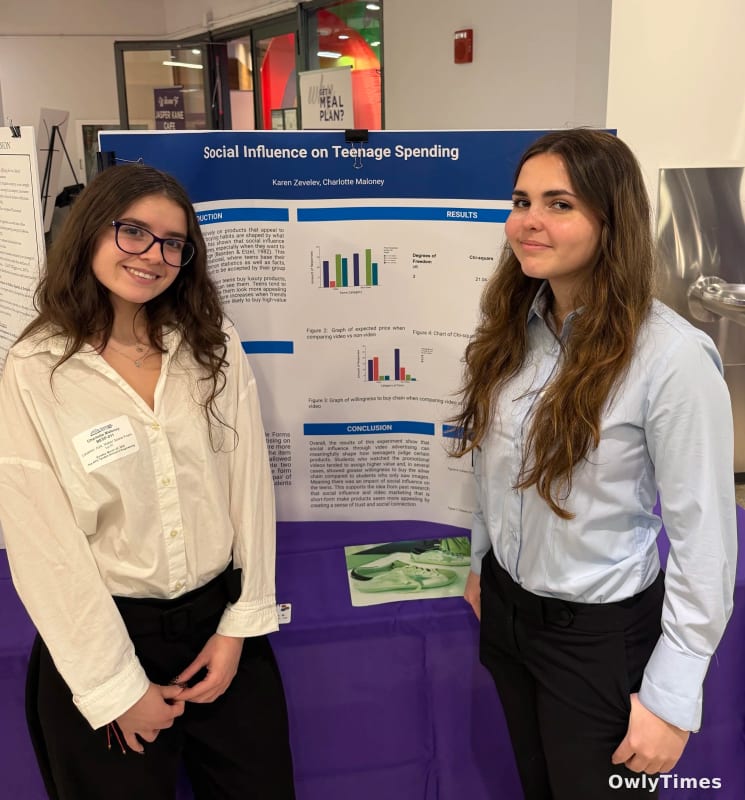
The inquiry into teenage spending began with an observation of the everyday: why do students gravitate toward high-priced, distressed-look footwear like Golden Goose sneakers? Seniors Charlotte Maloney and Karen Zevelev turned this anecdotal curiosity into a controlled study titled “Social Influence on Teenage Spending Habits.” Guided by science research coordinator Stacy Goldstein and Susan Katzoff, the duo utilized Google forms to test student responses to promotional videos featuring student actors.
The findings demonstrated a statistically significant correlation between peer-led promotional content and the willingness to spend. While public discourse often frames teenage shopping as impulsive or erratic, Maloney and Zevelev’s methodology suggests that these habits are actually highly reactive to social environments. The project’s success, which earned them third place in the Behavioral and Social Sciences category at the March 22 finals at NYU, highlights the power of structured social analysis in understanding consumer behavior.
Engineering Alternatives to Electronic Waste
While Maloney and Zevelev focused on social trends, other students were applying the scientific method to the physical infrastructure of our future. Seniors Haley Chen and Kalok Huang, collaborating with Max Shi of Franklin Delano Roosevelt High School and Professor Domenec Paterno at Brooklyn College, addressed the growing crisis of lithium-ion battery pollution. Their project, “Development and Optimization of Manganese Chloride Tetrahydrate Combined with Propanamide Deep Eutectic Solvent for Capacitor Applications,” sought to replace standard, environmentally taxing battery components with affordable, biodegradable alternatives.
The researchers spent months testing specific chemical ratios, using Electrical Impetus Spectroscopy to measure conductivity and determine activation energy. The project, which saw Chen working late into the evening, reflects the labor-intensive nature of chemical engineering. Their conclusion—that deep eutectic solvents could eventually displace traditional lithium components—offers a promising, if early-stage, solution to the electronic waste generated by current consumer technology.
The Intersection of Science and Communication
Success in competitive science is rarely the result of data alone; it requires the ability to translate complex research into a compelling narrative. To bridge this gap, Midwood students engaged in a unique partnership with the Irondale Theater Ensemble. Acting coaches taught participants how to distill intricate chemical processes and sociological data into clear, persuasive presentations. By focusing on tone, body language, and the art of the "hook," students learned that the rigor of their research is only as effective as their ability to communicate it to a broader audience.
Limitations and Future Directions
It is important to view these results within the context of a student-led competition. While the methodology for both the behavioral study and the capacitor research is sound, these projects represent preliminary investigations rather than final industrial solutions. The sample sizes and the controlled nature of the school-based experiments mean that scaling these findings to a broader population or a commercial manufacturing level will require significantly more data and resources.
The next phase for these researchers is already in motion. With the May 21 Science Fair and the second annual TED Talk series on May 28 approaching, the focus will shift from initial discovery to the public dissemination of these ideas. The evolution of these projects will be measured by the students' ability to refine their prototypes and datasets as they move toward more advanced academic environments.