
The air smells faintly of damp earth and pixelated possibility. That’s the sensation Kayleen Walters, head of Mojang Studios, hopes visitors to Minecraft World will experience when the $70 million attraction opens at Chessington World Adventures in 2027. But this isn’t simply about recreating the blocky aesthetic of the world’s best-selling video game; it’s about translating a fundamentally digital experience into something tangible, something that smells like biomes and feels like gravity. The announcement, made during Minecraft LIVE, isn’t just a theme park reveal – it’s a bellwether for how entertainment is evolving in the age of immersive digital worlds, and what happens when those worlds decide to build themselves in our own.
For years, the conversation around video game adaptations has centered on film and television. But Microsoft and Merlin Entertainments are betting on a different approach, one that prioritizes agency and shared experience over passive consumption. This isn’t a theme park based on “A Minecraft Movie” – despite the success of the 2025 film, which Walters cites as proof of the franchise’s broader appeal – it’s built directly from the gameplay itself. “Every time you hit play, it’s a different experience for you,” Walters explained to Variety, and that’s the core principle guiding the design. The goal isn’t to replicate a narrative, but to offer a space where visitors can create their own. This is a significant departure from the typical theme park model, which often relies on pre-defined storylines and character interactions.
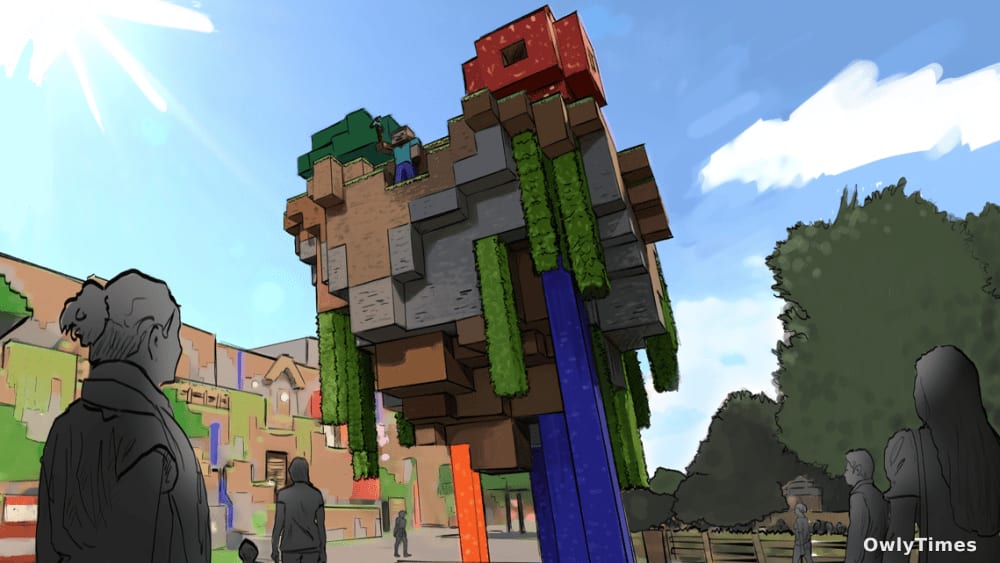
The sheer ambition of the project is striking. Angela Jobson, senior vice president of global brand marketing at Merlin Entertainments, casually mentioned a “giant floating island” as a key feature, a detail she admits presented “interesting” engineering challenges. This isn’t about subtle theming; it’s about defying expectations and creating a sense of the impossible. The park will also boast the world’s first Minecraft rollercoaster and the world’s largest Minecraft retail store, alongside themed dining experiences that are prompting surprisingly complex questions – what does one eat in the Minecraft universe, and how do you make it appetizing? The investment of $70 million, while substantial, represents a calculated risk. Theme park attendance globally reached 490 million in 2023, a 7% increase from pre-pandemic levels, according to the Themed Entertainment Association. But simply building rides isn’t enough anymore; parks need to offer experiences that resonate with a digitally native audience.
See the original variety.com story for the full account.
Beyond the headlines of rollercoasters and retail, the Minecraft World project reveals a fascinating shift in how intellectual property is being leveraged. It’s no longer enough to simply adapt a story; brands need to create ecosystems that allow fans to participate and contribute. The collaboration with “a selection of iconic ‘Minecraft’ creators” is a crucial element of this strategy, ensuring the park feels authentic to the game’s global community. This mirrors a broader trend in entertainment, where user-generated content and co-creation are becoming increasingly important. Think of Fortnite’s evolving metaverse, or the success of Roblox, platforms that empower players to build and share their own experiences. Minecraft World isn’t just a park; it’s an extension of that philosophy, a physical manifestation of the game’s open-ended creativity.
The success of Minecraft World will hinge on its ability to capture the emotional core of the game. Jobson emphasized the need to balance “commitment to delivering real emotion and making it really believable” with “this sense of epicness.” This is a delicate balancing act. Too much realism, and the park risks losing the whimsical charm of Minecraft. Too much spectacle, and it could feel disconnected from the game’s core values. But if they succeed, Minecraft World could redefine what a theme park can be, proving that immersive experiences aren’t just about escaping reality, but about building new ones – together. The question now isn’t just whether fans will visit, but whether this model will inspire other gaming franchises to break ground and build worlds of their own. Will we see a Fortnite land at Universal Studios? A Roblox zone at Six Flags? The future of theme parks may very well be block by block.