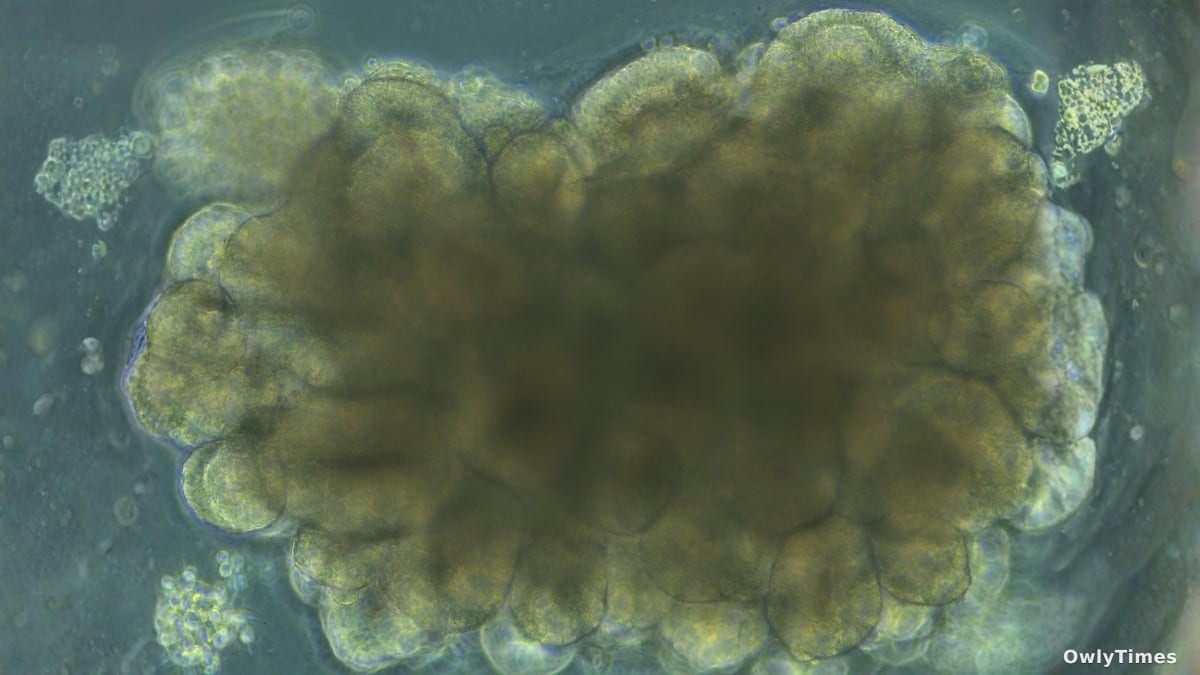

The persistent challenge of understanding how the brain learns – and relearns – has taken an unexpected turn, not with complex behavioral studies or advanced neuroimaging, but with tiny, lab-grown clusters of mouse brain tissue. A recent study from the University of California, Santa Cruz, detailed in bioRxiv and subsequently Cell Reports, demonstrates that these “brain organoids” can be adaptively tuned to solve a deceptively simple control problem, offering a novel platform for investigating the fundamental mechanisms of neurological plasticity. While headlines might suggest a step toward “biocomputers,” the true significance lies in what this experiment reveals about the brain’s inherent capacity to adjust and the potential to model disease-induced learning deficits.
The experiment centered around the “cartpole problem,” a staple in robotics and artificial intelligence. Imagine attempting to balance a pen upright on your hand; the task requires constant, minute adjustments to counteract gravity. In the virtual version used by Ash Robbins, a robotics and artificial intelligence researcher at UC Santa Cruz, a cart moves left or right to keep a pole balanced. It’s a deceptively difficult task, as even small errors quickly compound. What sets this research apart isn’t solving the cartpole problem itself – algorithms have long been able to do so – but how the solution was achieved: not through pre-programmed instructions, but through feedback-driven adaptation within living neural tissue. For Robbins and his team, the cartpole served as a clean, quantifiable testbed for organoid capabilities.
The organoids themselves were grown from mouse stem cells, forming small, interconnected clusters of cortical tissue capable of electrical signaling. Crucially, these weren’t complex, thinking brains; they lacked the structures for consciousness or complex cognition. Instead, they were designed to respond to stimulation and, importantly, to change their internal connections over time. The researchers connected these organoids to the virtual cartpole, feeding them electrical signals representing the pole’s tilt. The organoids’ responses were then translated into movements for the cart. The key was the feedback loop: if the pole began to fall, the organoids received a different pattern of stimulation. Over time, the researchers observed that the organoids, under adaptive feedback, demonstrably improved their ability to keep the pole balanced. Organoids receiving adaptive feedback achieved proficient performance in 46 percent of trials, a stark contrast to the 2.3 percent proficiency rate of those receiving no feedback and the 4.4 percent rate of those receiving random stimulation. This wasn’t random chance; the organoids were learning, albeit in a rudimentary way.
Original reporting: ScienceAlert.
However, it’s vital to understand what the study didn’t show. The improvement was “short-term,” lasting only as long as the stimulation continued. After just 45 minutes of inactivity, the organoids reverted to their baseline performance, effectively “forgetting” what they had learned. This highlights a critical limitation: the organoids lack the structural complexity needed to retain information over extended periods. This isn’t necessarily a failure of the experiment, but rather a reflection of the current state of organoid technology. The researchers emphasize that their goal isn’t to create biocomputers, a prospect that raises significant ethical concerns, particularly if human brain organoids were involved. As David Haussler, a bioinformatician at UC Santa Cruz, clarified, the focus remains firmly on advancing brain research and developing treatments for neurological diseases.
Limitations to consider extend beyond the short-term memory issue. The organoids are derived from mouse stem cells, meaning the results may not directly translate to human brain function. Furthermore, the electrical stimulation is a crude proxy for the complex chemical signaling that occurs within a living brain. The researchers acknowledge these constraints, framing their work as a foundational step rather than a finished product. The success of adaptive feedback, however, is a significant finding. It demonstrates that neural tissue can be tuned through structured stimulation, opening avenues for investigating how neurological diseases disrupt the brain’s capacity for plasticity – its ability to reorganize and adapt.
The next crucial step is to explore methods for enhancing the organoids’ memory capacity, potentially by increasing their complexity or incorporating more sophisticated signaling pathways. Robbins’ team is also working on making the software used to control the stimulation more widely available, fostering a larger community focused on adaptive organoid computation. But perhaps the most pressing question this research raises is: can we use this platform to model the specific learning deficits seen in conditions like Alzheimer’s disease or stroke? If we can recreate those deficits in a dish, we might finally have a reliable way to test potential therapies and understand how to restore the brain’s remarkable ability to learn and adapt.