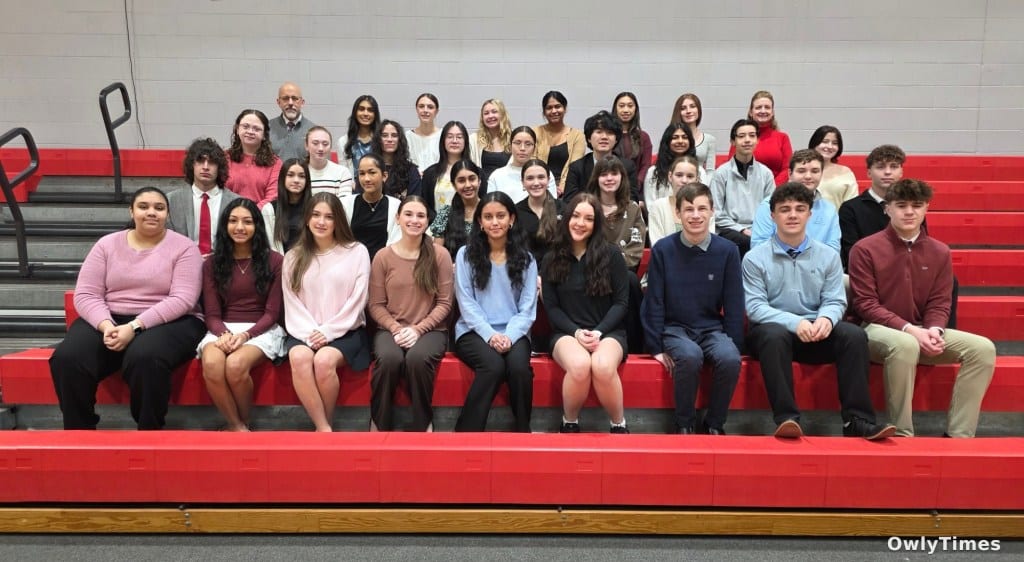

Scientific inquiry at the secondary education level serves as more than just a classroom exercise; it acts as a critical incubator for the analytical rigor required in professional research. On Feb. 28, the Pennsylvania Junior Academy of Science (PJAS) competition at Wilkes University provided a benchmark for this developmental pipeline, revealing how structured mentorship and long-term student engagement translate into high-level academic performance.
At MMI Preparatory School, the results of this year’s competition highlight a shift toward high-volume success. Out of 37 participating students, 29 secured first-place awards. This achievement represents an 83% first-place rate, which head of school Theresa Long noted as an all-time high for the institution. While headlines often focus on the prestige of such accolades, the underlying data points to the necessity of sustained effort; the students were evaluated not just on a single presentation, but on the ability to sustain scientific curiosity over multiple years.
The Intersection of Rigor and Recognition
The distinction between a standard project and an "Excellence Award" winner lies in the depth of methodology. These awards, which are limited to only 12 upper school and 12 middle school students across the entire competition, recognize the highest tier of project performance. This year, Siya Patel (’28) in biology, Cedrah Abdulrahman (’26) in botany, and Ian Composto (’27) in chemistry captured these honors.
It is important to clarify that while perfect scores—achieved by eight students, including Shreeya Parikh (’28) and Ruhani Shah (’27)—demonstrate technical mastery, they are a reflection of specific criteria met during the judging process. These scores do not necessarily equate to breakthroughs in the scientific field at large, but rather to the mastery of the scientific method within the context of the PJAS rubric. As Michael Mele, MMI’s science department chair and PJAS adviser, observed, the results speak to the "perseverance throughout the process," emphasizing that the consistency of the students' work is as significant as the outcome itself.
Limitations to Consider in Academic Competitions
When evaluating the success of student researchers, it is vital to acknowledge the limitations inherent in these environments. The PJAS competition relies on a specific set of parameters that may favor certain types of project designs over others. Furthermore, the "Perseverance Awards" given to students like Arushi Solgama (’26), who has been involved for five years, suggest that experience within the specific framework of the competition is a significant variable. A student’s success is often tied to their familiarity with the competition’s expectations, which can sometimes overshadow the raw novelty of a scientific hypothesis.
Moving Toward State-Level Validation
The transition from the regional level at Wilkes University to the state-level competition at Pennsylvania State University’s main campus in May serves as the next logical threshold. For the 29 first-place recipients, including Lance Lispi (’29) and Anna Zaroda (’27), this advancement is more than a trophy; it is a test of whether their research methodology can withstand a broader, more competitive scrutiny.
The upcoming state competition in May will provide a clearer picture of how these student-led research models perform when scaled beyond the regional peer group. Observers should look to the performance of these students in their respective categories at Penn State to determine if this year’s regional success at MMI signifies a broader trend of increased scientific literacy or a localized peak in student engagement.





