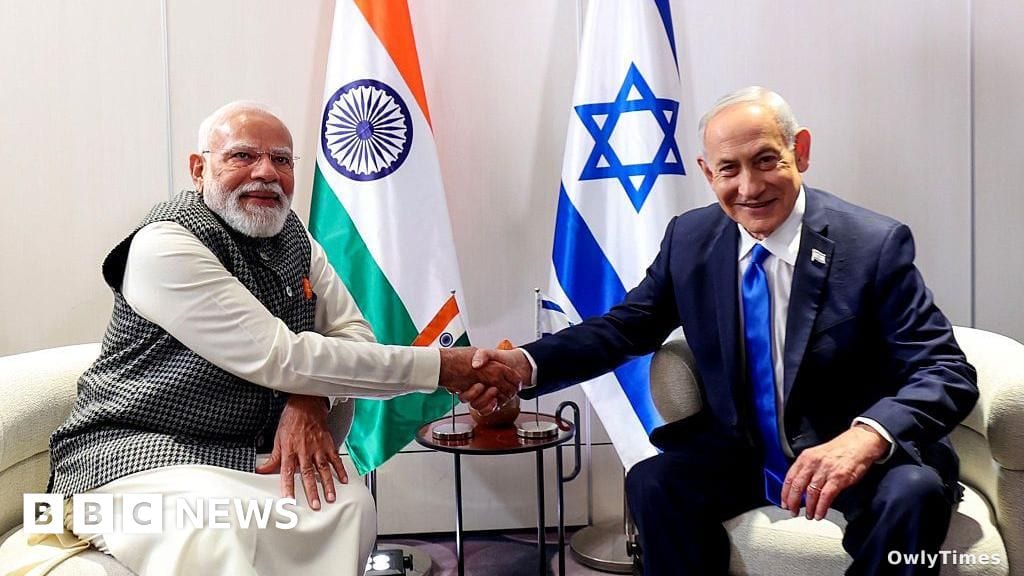

The Calculus of Alignment: India’s Strategic Shift Towards Israel
The flurry of over a dozen bilateral agreements signed during Narendra Modi’s two-day visit to Israel isn’t simply a demonstration of warming relations; it’s a calculated realignment of Indian foreign policy prioritizing tangible strategic gains over decades of symbolic solidarity. While publicly maintaining a commitment to a two-state solution, the speed and depth of cooperation – particularly in defense and artificial intelligence – signals a decisive tilt towards Israel, a move driven less by ideological convergence and more by a pragmatic assessment of India’s security and economic needs. The explicit condemnation of the October 2023 Hamas attack, delivered directly to the Knesset, wasn’t merely diplomatic courtesy, but a deliberate distancing from positions traditionally favored by India’s domestic political base and its broader relationships within the Arab world.
Balancing Act: Domestic Opposition and Regional Implications
The immediate political fallout within India is predictable. Jairam Ramesh of the Congress party’s sharp criticism – accusing the Modi government of abandoning the Palestinian cause – highlights a deep fissure in Indian political discourse. This isn’t a new debate; India historically walked a tightrope, maintaining ties with both Israel and the Arab states. However, the overt embrace of Benjamin Netanyahu’s government, coupled with the explicit endorsement of Donald Trump’s Gaza peace plan, represents a significant departure. The plan’s inclusion in the joint statement is particularly noteworthy, given its controversial reception internationally and its perceived bias towards Israel. Who benefits and who loses here is clear: Israel gains a powerful ally willing to publicly validate its policies, while the Palestinian Authority finds itself further isolated. India, in turn, secures access to advanced Israeli technologies and strengthens a security partnership crucial for countering shared threats.
Original reporting: the BBC.
The Economic Engine: Labor and Digital Finance
Beyond defense, the economic dimensions of this partnership are equally significant. Israel’s pledge to allow 50,000 Indian workers over the next five years addresses a critical labor shortage in Israel’s construction and care sectors, while simultaneously providing employment opportunities for Indian citizens. More subtly, the extension of India’s Unified Payments Interface (UPI) to Israel is a strategic move to project India’s digital prowess and potentially challenge the dominance of Western financial technologies in the region. This isn’t simply about facilitating transactions; it’s about establishing India as a key player in the future of digital finance. The timing is crucial, as global powers vie for influence in shaping the technological landscape. Compared to last year, when discussions around digital cooperation were preliminary, this represents a concrete step towards integration.
Historical Echoes: Non-Alignment and the New Pragmatism
This shift echoes historical precedents. During the Cold War, India’s non-aligned movement was often framed as a principled stance against superpower rivalry. However, it also served India’s pragmatic interests, allowing it to secure aid and support from both sides. Today, India’s evolving relationship with Israel can be viewed through a similar lens. The traditional constraints of non-alignment are giving way to a more flexible, issue-based approach to foreign policy. Kabir Taneja’s assessment that the visit is “largely driven by bilateral requirements” underscores this point. India’s focus on regional stability in the Middle East, as he notes, is not altruistic; it’s essential for securing its energy supplies, protecting its diaspora, and countering terrorism. The 1992 establishment of full diplomatic relations with Israel, after decades of limited contact, was also driven by shifting geopolitical realities and India’s growing economic needs.
The Next Move: Saudi Arabia’s Response
The critical question now is how Saudi Arabia will respond. India maintains strong economic and strategic ties with the Kingdom, and any perception of a significant tilt towards Israel could strain those relations. Will Saudi Arabia recalibrate its own engagement with India, potentially seeking closer ties with other regional powers? Or will it accept India’s strategic realignment as a necessary consequence of its own evolving geopolitical calculations? The upcoming visit by a high-level Saudi delegation to New Delhi will be the political chess move to watch. The outcome will reveal whether India can successfully navigate this delicate balancing act and maintain its influence in the broader Middle East.





