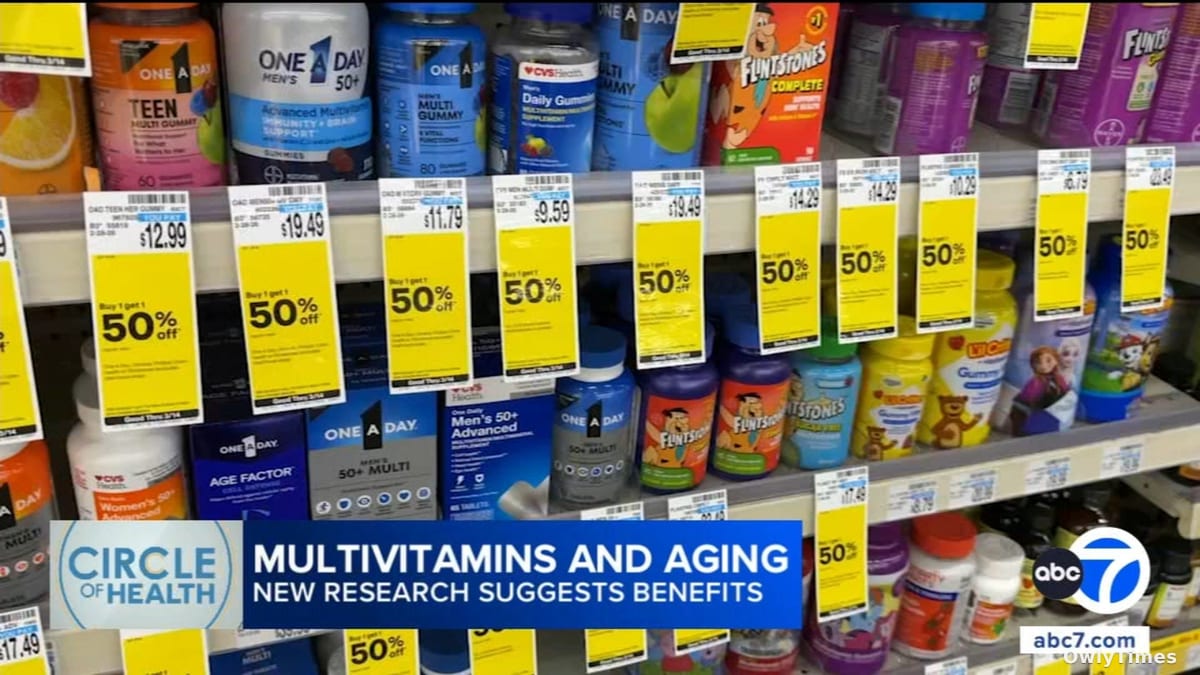

The persistent search for interventions that meaningfully address the aging process often feels like chasing shadows. For decades, the prevailing scientific consensus dismissed multivitamins as, at best, harmless and, at worst, a waste of money. Now, a carefully designed study is prompting a reassessment of that position, not by claiming to stop aging, but by suggesting a modest slowing of its biological pace. The nuance here is critical, and often lost in headlines proclaiming “anti-aging pills,” but the implications for public health, particularly as populations age globally, are worth a closer look.
Measuring Time Within Our Cells
The study, published in Nature Medicine, focused on a biomarker of biological age – a measurement distinct from the simple count of years lived. Chronological age is the time since birth; biological age attempts to quantify how well our bodies are functioning relative to that number. Researchers achieve this by examining epigenetic changes, specifically DNA methylation patterns. These patterns aren’t alterations to the DNA sequence itself, but rather modifications on the DNA that influence gene expression. As we age, these patterns shift in predictable ways, and the rate of shift can be used as a proxy for biological aging. In this trial, nearly 1,000 older adults were given daily Centrum Silver multivitamins, and their epigenetic profiles were tracked over two years. The results showed a statistically significant difference: those taking the multivitamin exhibited slower rates of epigenetic aging compared to a control group.
Original reporting: abc7.com.
The effect size, however, is where careful interpretation is essential. The study found that daily multivitamin use corresponded to roughly 2.7 to 5.1 months less biological aging over the two-year period. To put that into perspective, it doesn’t equate to looking or feeling dramatically younger. It’s a subtle shift, but one that Dr. Terry Simpson, a culinary medicine specialist with Dignity Health St. John’s Regional Medical Center, believes is worth considering. “Multivitamins aren’t really magic pills, but they may be a simple way to support healthy aging,” he said, emphasizing that this is an addition to, not a replacement for, established healthy habits. It’s also important to note that the study measured a surrogate marker of aging, as researchers clarified – a change in DNA methylation – and not a direct measure of lifespan or healthspan.
Beyond the Bottle: Context and Individual Needs
The study’s findings immediately sparked debate about the role of micronutrients in healthy aging. For years, large-scale reviews have questioned the benefits of routine multivitamin supplementation, particularly in individuals with already adequate diets. The prevailing argument was that if you’re getting sufficient vitamins and minerals from food, adding a pill provides no additional benefit. This new data doesn’t necessarily invalidate those earlier findings, but it does suggest that certain populations might benefit from supplementation. Dr. Simpson specifically highlighted older adults with cardiovascular disease, those experiencing nutritional gaps, and individuals exhibiting faster biological aging as potential candidates.
This raises a crucial point about personalized medicine. The “one-size-fits-all” approach to health is increasingly being challenged. While Centrum Silver was used in the trial, Dr. Simpson stated that any similar multivitamin formulation should yield comparable results, though individual tolerance to different fillers and ingredients may vary. The key isn’t necessarily the brand, but the composition – ensuring adequate levels of vitamins A, C, D, E, B vitamins, and minerals like zinc, selenium, and calcium. However, it’s equally important to acknowledge that a multivitamin is not a panacea. It won’t reverse Alzheimer’s or prevent cognitive decline, and it’s most effective when integrated into a broader lifestyle that prioritizes a healthy diet, regular exercise, and cognitive stimulation.
Limitations to Consider and Future Directions
While promising, the Nature Medicine study isn’t without its limitations. The trial population was relatively homogenous, and further research is needed to determine if the observed effects are consistent across diverse ethnic and socioeconomic groups. Additionally, the study relied on a single brand of multivitamin, and the long-term effects of continued supplementation remain unknown. It’s also crucial to understand why the multivitamin appeared to slow biological aging. Was it a specific vitamin or mineral, a combination of nutrients, or some other synergistic effect? Dissecting the active components will be essential for optimizing supplementation strategies.
Looking ahead, researchers are planning follow-up studies to investigate the mechanisms underlying the observed anti-aging effect and to explore the potential benefits of targeted nutrient interventions. A critical next step will be to identify biomarkers that can predict who is most likely to benefit from multivitamin supplementation. Will we eventually see personalized multivitamin formulations tailored to an individual’s genetic profile and nutritional status? And perhaps more importantly, will these modest shifts in biological age translate into meaningful improvements in healthspan and quality of life? That’s the question researchers – and increasingly, individuals seeking to navigate the complexities of aging – will be watching for.





