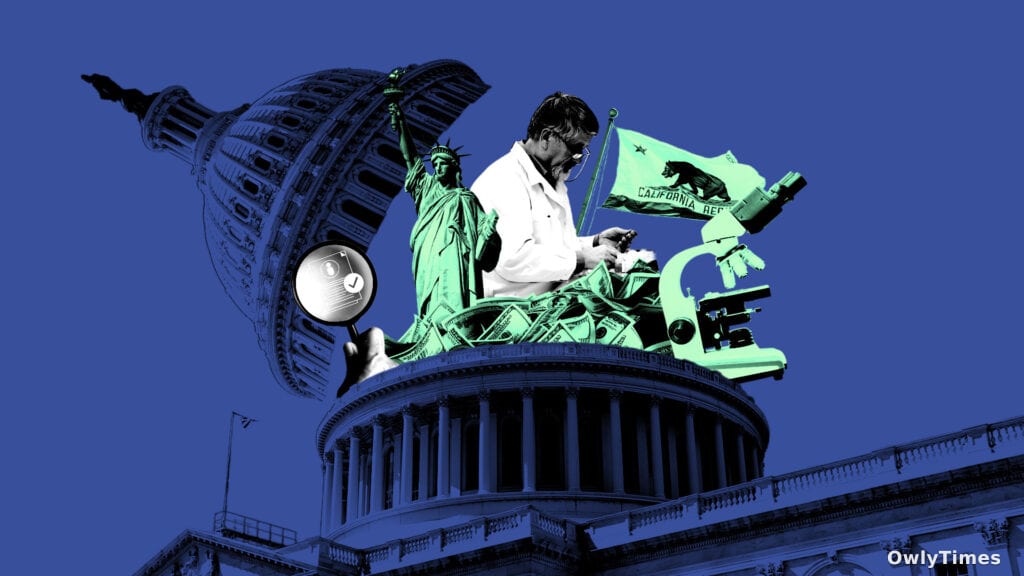

The apparent stability of research funding at institutions like UMass Chan Medical School masks a deeper, more precarious reality. While the number of crucial Research Project Grants (RO1s) from the National Institutes of Health dipped by a seemingly modest 1.6% in the 2025 fiscal year, a closer look reveals a system strained by unpredictable federal policies and a growing reliance on funding mechanisms that prioritize immediate availability over long-term research viability. This isn’t simply a story about budget cuts; it’s about a fundamental shift in the landscape of scientific funding, forcing states to consider a role they’ve historically eschewed – becoming major players in sustaining the nation’s research ecosystem. The concern isn’t just about dollars and cents, but about the potential erosion of a merit-based system and the national priorities it serves.
The headline figure of $75.4 million available to UMass Chan this year, down from $88.6 million in allocated RO1 awards, is deceptively reassuring. This apparent shortfall isn’t due to outright cuts, but to the NIH’s increasing use of multi-year funding, where the entire budget is frontloaded. This creates an immediate cash flow problem for institutions like UMass Chan, as they navigate the uncertainty of when – or even if – those promised funds will actually be accessible. As Michael Collins, chancellor of UMass Chan, explains, “One of the issues with federal funding is the uncertainty of when institutions…will receive award money. We have numerous grants that are in the NIH review process that would have already been awarded in previous years, but currently we do not know when the award money is being released.” This delay isn’t a bureaucratic hiccup; it’s a destabilizing force that impacts hiring, project timelines, and the overall research environment.
Original reporting: STAT.
The search for alternative funding sources – private philanthropy and industry partnerships – has yielded limited results, prompting a significant pivot towards state-level support. Victor Ambros, a Nobel laureate molecular biologist at UMass Chan, and Collins are actively championing the Discovery, Research, and Innovation for a Vibrant Economy (DRIVE) initiative in Massachusetts, which proposes $400 million in state funding for universities. This isn’t a novel idea, but its urgency has been dramatically amplified by the current climate. As Ambros puts it, the DRIVE initiative isn’t “timely…it’s actually long overdue because institutions like ours…have been really in a bind for many, many, many months.” The immediate impact of federal uncertainty is already visible at UMass Chan: 200 employees were furloughed or laid off last year, and the incoming Ph.D. class was slashed from 73 to just 13 students. These aren’t abstract numbers; they represent lost expertise, stalled projects, and a diminished pipeline of future scientists.
The growing reliance on state funding, however, isn’t without its anxieties. While states like Texas and California have demonstrated success with dedicated research funds – Texas’s Cancer Prevention Research Institute (CPRIT) being a prime example – there’s a concern that a patchwork of state-level initiatives could undermine the federal government’s ability to set national research priorities. Kenneth Evans, a science and technology scholar at Rice University, points to rhetoric from the White House Office of Science and Technology Policy emphasizing “getting more bang for your buck” and attracting “other players,” a sentiment echoed in policy playbooks like Project 2025 developed by the Heritage Foundation. This blueprint advocates for block grants to states, potentially allowing them to prioritize local needs over nationally significant research areas.
The fear, articulated by Shruti Naik, founder of New York Cures, is that states “will never be able to replace [federal funding], and it’s actually quite dangerous to say, ‘Now we want it to all go to states.’” The concern is valid: federal funding historically drives large-scale, long-term projects that address national challenges, while state funding may be more inclined towards immediate, localized benefits. Furthermore, the current administration’s signals – including statements from NIH director Jay Bhattacharya about spreading funding more evenly across states – raise concerns that merit-based funding decisions may be increasingly influenced by political considerations. New York, for example, saw $2.8 billion in NIH funding terminated in 2025, fueling anxieties that its historically strong research infrastructure may be deliberately diminished.
The situation is prompting a reassessment of talent recruitment strategies. John Quackenbush, a computational biologist currently at Harvard, is relocating his lab to Texas, drawn by the substantial funding offered through CPRIT. His decision, while driven by financial necessity, highlights a broader trend: researchers are increasingly willing to move to states that actively invest in science. This creates a competitive landscape where states are vying for scientific talent, potentially exacerbating existing inequalities and further destabilizing the national research ecosystem. Quackenbush’s plea to Massachusetts Governor Maura Healy – “please really push this initiative forward, because you don’t want to see the environment here degrade more than it has to” – underscores the urgency of the situation.
Looking ahead, the critical question isn’t simply whether states will step up, but how they will do so. Will state funding complement federal priorities, or will it create a fragmented system driven by localized needs? Will states prioritize basic research, which fuels long-term innovation, or focus on more immediately applicable clinical and translational research? And, perhaps most importantly, will the increased reliance on state funding be perceived as a sustainable solution, or merely a temporary bandage on a deeper wound in the federal research funding landscape? Researchers and policymakers should be closely watching the implementation of initiatives like DRIVE in Massachusetts, CPRIT in Texas, and similar proposals in California, Pennsylvania, and New York, not just for their immediate impact on individual institutions, but for the precedent they set for the future of science funding in the United States. The success or failure of these initiatives will likely determine whether the current period of uncertainty is a temporary disruption or the beginning of a fundamental restructuring of the American research enterprise.