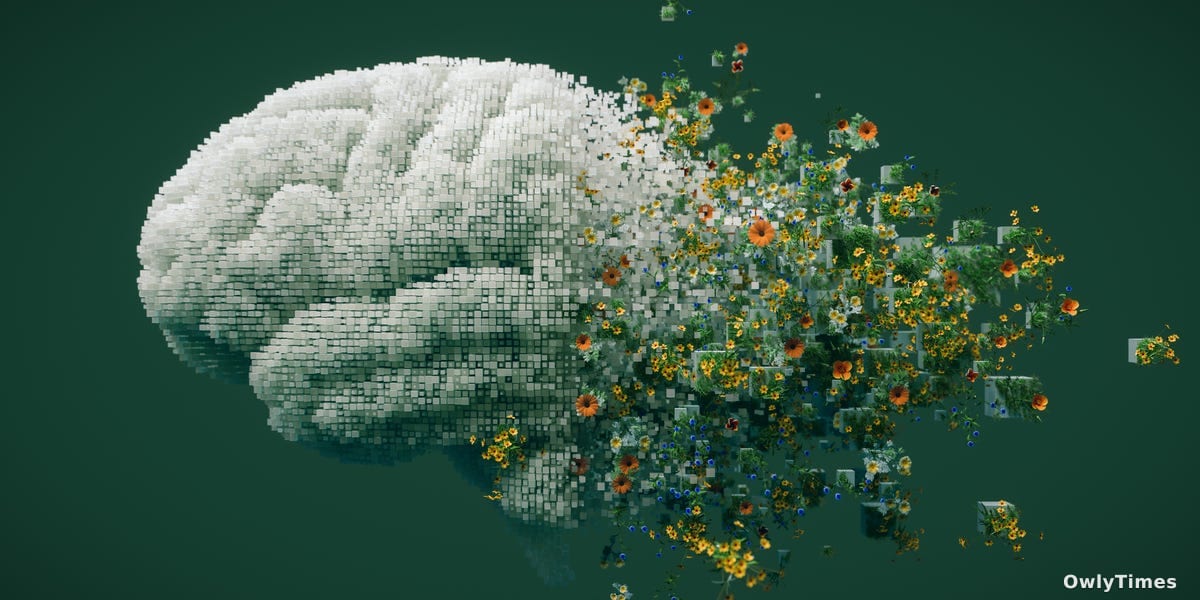

For centuries, the relationship between our physical form and our personal history has been treated as a philosophical puzzle rather than a biological mechanism. In 1689, philosopher John Locke proposed that human identity is essentially a tapestry of our memories. Yet, modern neuroscience has largely focused on the brain as the sole repository of this selfhood. A recent study published in Scientific Reports challenges this mental-centric view, suggesting that our bodies act as an active, rather than passive, vessel for our past.
The study, led by Utkarsh Gupta, then a PhD candidate at Anglia Ruskin University, alongside Jane Aspell, head of the university's Self and Body Lab, utilized a psychological phenomenon known as the "enfacement illusion." Researchers recruited 50 participants to interact with a live video feed of their own faces. For half of the group, a digital filter was applied to make them appear as children. As they moved their heads, the digital "mirror-alike" mimicked their motions. The goal was to determine if physically "inhabiting" a younger version of oneself could act as a cognitive key, unlocking autobiographical memories that participants believed were long forgotten.
It is critical to distinguish between the study’s controlled methodology and the sensationalized potential of "time-traveling" technology. The headlines might suggest a revolutionary breakthrough in memory retrieval, but the study actually found that the body-self connection is a viable, albeit subtle, pathway for episodic memory recall. Participants who viewed their digitally de-aged faces retrieved significantly more specific childhood details than those who viewed their unaltered adult reflections. Crucially, the researchers used a standardized testing protocol to ensure that the memories recalled were consistent and context-bound, minimizing the risk of participants simply inventing stories to fit the experiment’s premise.
One notable participant, Henry Chung, a lecturer at the University of Essex, provided a poignant look at the study’s efficacy. During the trial, Chung was transported back to a childhood holiday in Hong Kong. He vividly recalled the tactile sensation of a marble grave that was too hot to touch on a summer afternoon—a memory he had not accessed in decades. For Chung, the experience was not merely a parlor trick; it was a visceral reclamation of a moment he had presumed lost.
There are significant limitations to consider when interpreting these results. The digital filters used were generic, creating a "baby-like" appearance rather than a photorealistic reconstruction of the participant’s actual childhood face. While the results were statistically significant, the study’s reliance on these crude tools suggests that the brain’s susceptibility to the enfacement illusion is broad, but the depth of the memory recall may be limited by the quality of the visual feedback. Furthermore, while the study suggests the body is key to memory, it does not suggest that the brain is a secondary player; rather, it highlights an interactive feedback loop between our physical appearance and our cognitive archives.
The potential for this research to influence clinical practice is substantial, particularly in fields where memory is compromised. Gupta and Aspell point to the existing success of reminiscence therapy in senior care and the growing use of virtual reality to help patients confront younger versions of themselves in psychotherapy. These interventions already show promise in reducing self-criticism and enhancing cognition in patients with dementia.
Future research will likely shift toward more sophisticated, personalized simulations. Aspell suggests that utilizing deepfake technology, built from actual childhood photographs, could yield even more profound results than the generic filters used in this initial trial. The next reading of data regarding how high-fidelity visual representations affect long-term memory retrieval will determine whether this is a niche psychological observation or a new, standard tool for clinical memory restoration. For now, the study serves as a compelling reminder that we carry our history in our bodies, waiting for the right reflection to bring it back to the surface.