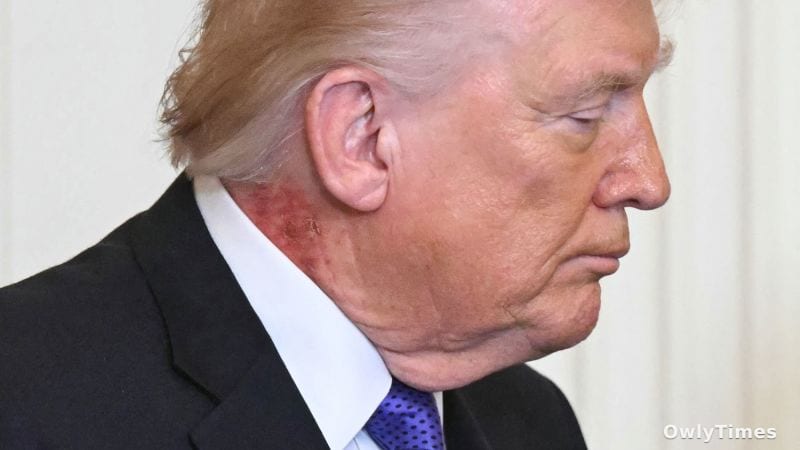

The persistent public scrutiny of presidential health isn’t new, but the current focus on Donald Trump’s physical condition feels distinctly different. It’s not about acute illness, but a pattern of minor, yet visible, changes – a rash, bruising, the routine monitoring of cardiovascular health – that collectively raise a question not of if aging is impacting the president, but how. The recent disclosure of a rash on his neck, attributed to a “preventative skin treatment,” isn’t alarming in isolation, but it arrives within a context of heightened awareness surrounding the health of the oldest president to take office, and a notable lack of transparency regarding the underlying reasons for such treatments. This isn’t a story about a single medical event; it’s about the evolving challenge of maintaining public trust when details are scarce and interpretations abound.
A Preventative Measure, But Preventative of What?
On Monday, Dr. Sean Barbabella, President Trump’s personal physician, released a statement to CNN explaining a visible rash on the right side of the president’s neck. The rash, he stated, is a side effect of a “very common cream” used as a “preventative skin treatment,” expected to last for several weeks following a one-week application. This phrasing is crucial. “Preventative” implies a known risk or predisposition, but Dr. Barbabella offered no specifics. This omission fuels speculation, particularly given the president’s age and prior health observations. It’s standard practice to avoid detailed public disclosure of a patient’s medical history, but the term “preventative” inherently invites inquiry. Is this related to sun exposure, a common concern for skin cancer? Is it addressing a pre-cancerous condition? Or is it a prophylactic measure against something else entirely? The absence of clarity isn’t necessarily malicious, but it does create a vacuum filled by conjecture. The visible nature of the rash, appearing during a public ceremony, further amplifies the need for a more detailed explanation, even if framed in broad terms.
This article draws on reporting from CNN.
Beyond the Rash: A History of Scrutiny
This incident isn’t occurring in a vacuum. President Trump has previously addressed concerns about bruising on the backs of his hands, attributing it to frequent handshaking and a self-prescribed higher dose of aspirin. While plausible, this explanation doesn’t fully satisfy medical observers, as aspirin’s antiplatelet effects can increase bruising susceptibility, and the dosage should be determined by a physician. More significantly, last year’s examinations at Walter Reed National Military Medical Center included “cardiovascular imaging,” a detail revealed by Dr. Barbabella after the fact. The specifics of those findings haven’t been publicly released, but the decision to conduct such imaging in a 79-year-old president is noteworthy. Cardiovascular disease is a leading cause of death in the United States, and age is a significant risk factor. The fact that this imaging occurred, and the results remain undisclosed, contributes to the overall sense of incomplete information. It’s important to remember that undergoing medical tests isn’t inherently negative; it’s a responsible step for someone in a demanding role. However, transparency about the reason for those tests, and a general overview of the findings, is essential for maintaining public confidence.
Limitations to Consider: The Boundaries of Public Health Information
It’s vital to acknowledge the inherent limitations in interpreting this information. We are receiving updates filtered through the president’s physician and the White House communications team. Medical privacy laws rightfully protect the details of an individual’s health record. Furthermore, even with complete access to medical records, interpreting them requires specialized expertise. A rash could be benign, or it could be indicative of a more serious underlying condition. The same applies to bruising and cardiovascular imaging. The public’s understanding is necessarily incomplete, and drawing definitive conclusions based on limited information is irresponsible. The current situation highlights a tension between the public’s right to know about the health of their leader, and the individual’s right to medical privacy. Finding a balance that satisfies both is a continuing challenge.
What Comes Next: Monitoring and the Need for Proactive Disclosure
Dr. Barbabella’s December statement asserting that President Trump “remains in excellent overall health” offers reassurance, but it’s a static assessment. Health is dynamic, particularly with age. The next steps aren’t necessarily about reacting to crises, but about establishing a pattern of proactive disclosure. Regular, comprehensive summaries of the president’s health – released with his consent, of course – would go a long way toward alleviating public concerns. Specifically, we should watch for whether the White House releases any information regarding the underlying reason for the “preventative skin treatment.” Will they clarify the nature of the risk it’s intended to mitigate? And will future health updates include more detail about cardiovascular monitoring, beyond simply stating that it occurred? The public isn’t demanding a complete medical file, but a reasonable level of transparency about the health of the person holding the highest office in the country. The question isn’t whether President Trump is currently healthy, but whether the White House will adopt a more open approach to communicating about his health going forward, recognizing that preventative care, especially at his age, will likely be an ongoing process.





