
The Pragmatic Pivot: Newsom’s Call for Democratic “Cultural Normality”
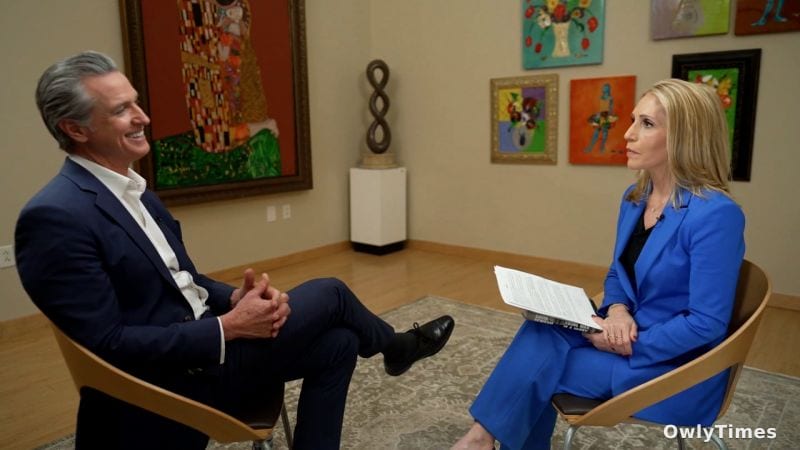
The timing is deliberate. As Donald Trump’s approval ratings with independents demonstrably weaken – a CNN poll showing a clear cratering ahead of the State of the Union – Gavin Newsom isn’t offering policy prescriptions, but a strategic realignment for the Democratic Party. His recent comments to CNN’s Dana Bash, urging Democrats to focus “less on pronouns” and “more on tabletop issues” like cost of living, aren’t a rejection of progressive values, but a cold calculation of electoral necessity. This isn’t about what Democrats believe, but how they present those beliefs to a broader electorate increasingly focused on immediate economic pressures. The strategic calculus is clear: re-establish a connection with working-class voters who feel increasingly alienated by what they perceive as the party’s preoccupation with cultural debates.
Newsom’s framing – a call for “cultural normality” – is particularly revealing. It’s a direct response to the narrative, relentlessly amplified by the right, that the Democratic Party has become detached from mainstream American concerns. The emphasis on “electricity bills, childcare costs, health care, and housing costs” isn’t a new policy platform, but a deliberate attempt to re-center the party’s message around tangible anxieties. This echoes a historical pattern: parties often recalibrate their messaging during periods of economic uncertainty, prioritizing bread-and-butter issues over ideological purity. Consider the Democratic Leadership Council in the 1990s, which similarly pushed for a more moderate, economically-focused platform under Bill Clinton, successfully appealing to swing voters and winning the White House after a decade of Republican dominance.
Who benefits and who loses from this potential shift? The immediate beneficiaries are moderate Democrats in swing districts, particularly those facing tough re-election battles in 2024 and 2026. They gain rhetorical cover to distance themselves from more progressive stances on social issues, allowing them to focus on local economic concerns. Conversely, the progressive wing of the party, represented by figures like Alexandria Ocasio-Cortez, risks being marginalized. While Newsom insists he’s not abandoning progressive values, the implicit message is that these values must be presented in a way that resonates with a wider audience. The tension here is palpable: can the Democratic Party simultaneously appeal to its progressive base and win back working-class voters who have drifted towards the Republicans?
Reporting from CNN informs this analysis.
The parallel to Richard Nixon’s “Southern Strategy” is not accidental, though Newsom’s approach is far more nuanced. Nixon successfully exploited cultural anxieties and economic grievances in the South, appealing to white working-class voters who felt left behind by the Civil Rights Movement and the changing social landscape. Newsom isn’t employing racial appeals, but he is tapping into a similar sense of economic insecurity and cultural displacement. The key difference is that Newsom is attempting to re-integrate alienated voters into the Democratic coalition, rather than actively courting a new base through divisive rhetoric. However, the underlying principle remains the same: identify and exploit vulnerabilities in the opposing party’s base.
The current political climate, marked by high inflation, rising housing costs, and persistent economic anxieties, provides fertile ground for Newsom’s message. The Supreme Court’s recent ruling on Donald Trump’s tariffs, and the subsequent calls for refunds – highlighted by Senator Andy Kim – further underscore the economic pressures facing ordinary Americans. Even comedic reactions to the ruling, as reported by CNN, reveal a widespread frustration with economic policies that disproportionately burden working families. This backdrop amplifies the urgency of Newsom’s call for a more pragmatic, economically-focused Democratic agenda.
The political chess move to watch next isn’t a policy announcement, but a personnel one. Will Newsom actively support and campaign for moderate Democratic candidates in key swing districts? Will the Democratic National Committee (DNC) adjust its messaging strategy to reflect Newsom’s emphasis on “tabletop issues”? The answer to these questions will reveal whether Newsom’s call for “cultural normality” is a genuine attempt to reshape the Democratic Party, or simply a calculated maneuver to bolster his own political ambitions. The 2026 midterm elections, particularly in districts like the Texas border district CNN identifies as flashing warning signs, will be the ultimate test.





