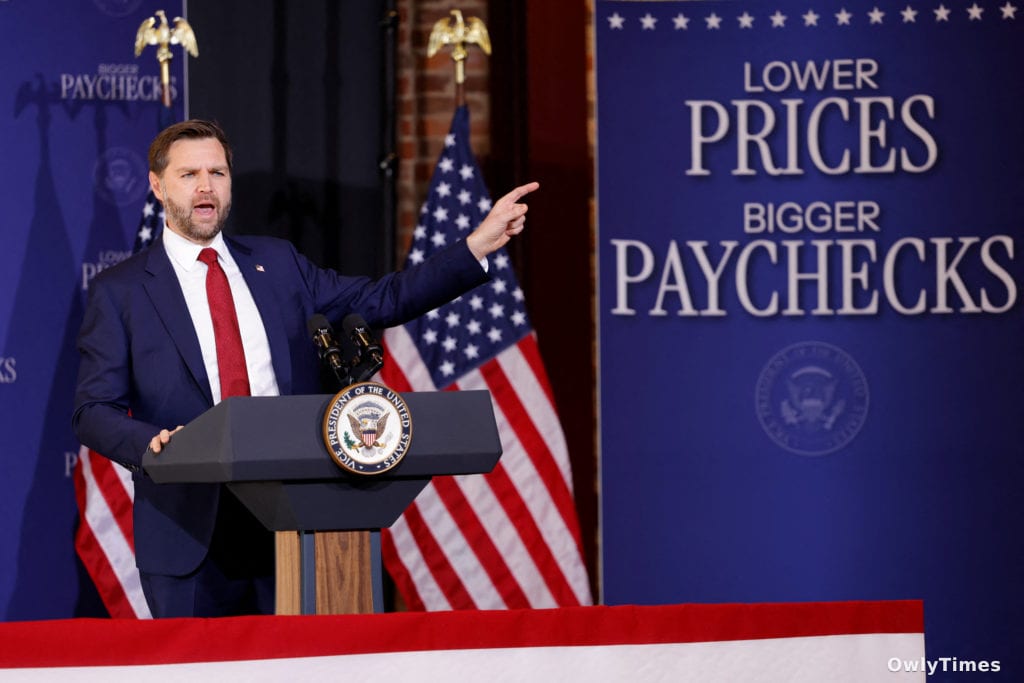

The choice of Rocky Mount, North Carolina, for JD Vance’s economic address wasn’t accidental. It’s a calculated move to signal the Republican Party’s intent to aggressively contest the state’s newly redrawn congressional districts – and, crucially, to demonstrate a commitment to economic messaging in a battleground that will likely hinge on pocketbook issues. Vance’s visit isn’t about bolstering a specific candidate in that district, though that’s a secondary benefit; it’s about nationally framing the economic narrative ahead of a midterm election where control of the Senate is genuinely at stake. The strategic calculus is clear: North Carolina is now ground zero for defining the economic terms of the 2026 midterms, and the GOP intends to lead that conversation.
North Carolina’s Remapping and the Senate Stakes
Last week’s primary results – Roy Cooper, the former Democratic Governor, securing his party’s Senate nomination, and Michael Whatley, the ex-Republican National Committee Chairman, doing the same – were largely expected. However, the context is anything but routine. North Carolina’s recent redistricting, approved despite legal challenges, has created several competitive congressional seats, shifting the state’s political landscape. This isn’t simply about adding or subtracting seats; it’s about fundamentally altering the electorate within those districts. The new maps are widely considered to favor Republicans, potentially flipping several seats currently held by Democrats. This shift, combined with the open Senate seat, elevates North Carolina to a pivotal state, with the potential to swing the balance of power in Washington. The Cook Political Report currently rates the Senate race as a “Toss-Up,” a designation that reflects the high stakes and uncertain outcome.
Original reporting: PBS.
Whatley’s RNC Background: A Signaling Operation
The selection of Michael Whatley as the Republican Senate nominee is particularly revealing. Whatley’s tenure as RNC Chairman, culminating in his election in March 2024, wasn’t marked by sweeping policy changes but by a relentless focus on election integrity and fundraising. His appointment signals the GOP’s intention to run a highly disciplined, well-funded campaign, mirroring the strategies employed during the 2022 midterms. Whatley’s deep ties to the conservative media ecosystem, particularly his frequent appearances on platforms like Newsmax and One America News Network, suggest a campaign geared towards mobilizing the base through targeted messaging. This contrasts sharply with the more moderate approach often favored by establishment Republicans, and it’s a deliberate choice reflecting the ongoing influence of the party’s populist wing. Who benefits? Primarily, the conservative media apparatus and the fundraising consultants poised to profit from a high-spending campaign. Who loses? Potentially, moderate voters who might be alienated by the increasingly partisan rhetoric.
The Economic Message: A Bid for Working-Class Voters
JD Vance’s speech in Rocky Mount centered on themes of economic opportunity and the revitalization of American manufacturing. He specifically highlighted the need to “bring jobs back home” and reduce reliance on foreign supply chains, echoing the “America First” rhetoric that propelled Donald Trump to the presidency. This isn’t a new message, but the location is key. Rocky Mount, a city with a history of textile manufacturing, has experienced significant economic decline in recent decades. Targeting this area allows Vance to directly address the concerns of working-class voters who feel left behind by globalization. The timing is also significant. Inflation, while moderating, remains a concern for many Americans, and the unemployment rate, currently at 3.9%, is beginning to creep upwards. The Republican strategy appears to be to capitalize on these anxieties, framing the Democrats as responsible for the current economic challenges. This echoes the playbook used by Ronald Reagan in 1980, successfully appealing to disaffected blue-collar voters with a promise of economic renewal.
The Next Chess Move: Fundraising and Early Ad Spending
The immediate political chess move to watch isn’t another rally or policy announcement, but the fundraising numbers for both the Cooper and Whatley campaigns in the coming weeks. The first quarterly fundraising reports, due in April, will provide a crucial indicator of each candidate’s financial strength and organizational capacity. A significant disparity in fundraising would immediately shift the narrative, potentially forcing one campaign into a defensive posture. Equally important will be the allocation of early ad spending. Will the Whatley campaign focus on attacking Roy Cooper’s record as governor, or will it attempt to define him before the Democrats can? Will Cooper attempt to portray Whatley as an extremist beholden to Donald Trump, or will he focus on economic issues? The answers to these questions will reveal the core strategies each campaign intends to pursue, and they will ultimately determine the trajectory of this pivotal Senate race. The question isn’t if North Carolina will be flooded with political advertising, but what that advertising will say – and who will have the resources to say it loudest.