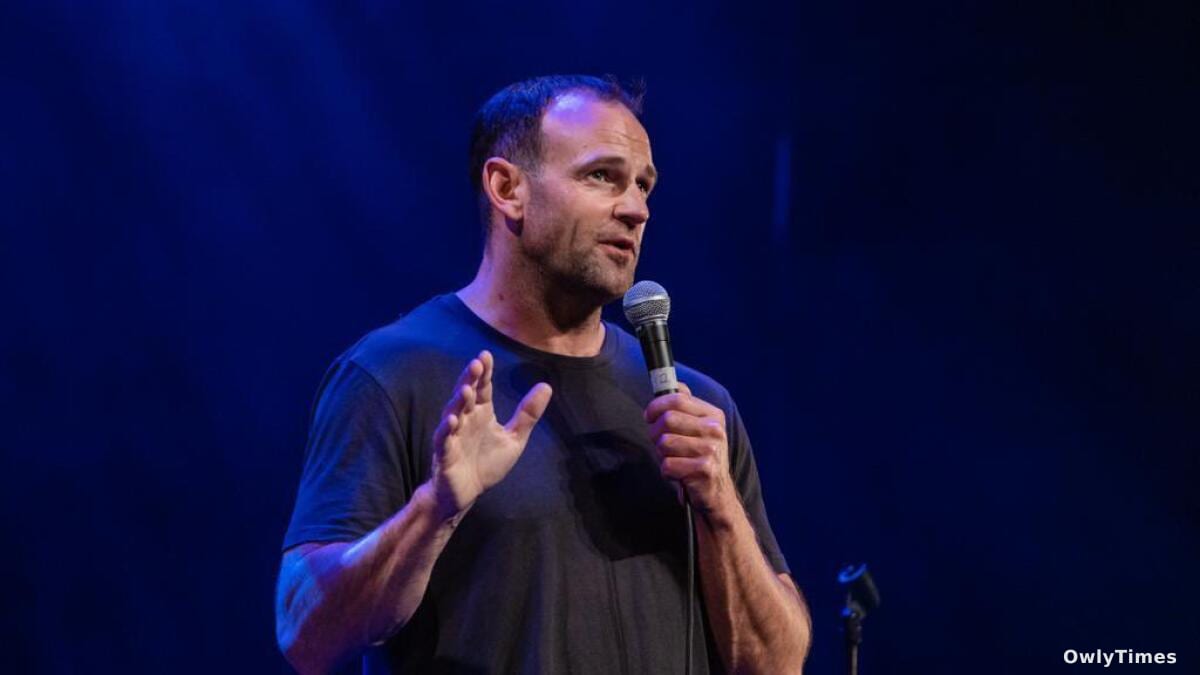

Is the future of entertainment less about polished performance and more about… rambling? That’s the question David Nihill’s unlikely career path forces us to confront. While Silicon Valley chases the next algorithmically-optimized content stream, Nihill, a comedian who “wouldn’t even call [his specials] comedy specials,” is building an audience of 2.5 million on YouTube by essentially thinking out loud on stage. The real story here isn't the rise of another stand-up – it’s a quiet rebellion against the hyper-curation that’s come to define how we consume everything, from news to Netflix.
Nihill’s current tour, “Taking Tangents,” hitting Irvine, Pasadena, and Los Angeles from March 13-17, isn’t about delivering tightly-crafted jokes. It’s about a willingness to wander, to follow a thought wherever it leads, even if it involves a detour through his father’s near-deportation from the US after a bar fight fueled by a County Cork ballad. This isn’t a bug in his system, it’s the feature. Growing up in Ireland with severe dyslexia – scoring in the bottom 5% nationally for spelling – Nihill learned to navigate the world by connecting disparate ideas, a skill born of necessity. He wasn’t built for rote memorization or standardized tests; he was built for associative thinking.
That early struggle with formal education is crucial to understanding his appeal. While many comedians meticulously dissect societal issues, Nihill’s strength lies in revealing the messy, often illogical connections within his own life. He didn’t excel at math, and a promised Super Nintendo couldn’t change that, but he sold it to buy a motorcycle at 15, a decision that speaks volumes about prioritizing experience over external validation. This isn’t a tale of overcoming adversity; it’s a celebration of embracing the detours. And in a world increasingly obsessed with optimization and “life hacks,” that’s a surprisingly radical message.
The contrast with American stand-up, as Nihill himself points out, is stark. Here, the goal is often a five-minute set packed with punchlines. In Ireland, the tradition is to simply tell a story, letting the humor emerge organically. This difference reflects a broader cultural tension: the American emphasis on efficiency versus a more relaxed, narrative-driven approach. We’re conditioned to expect entertainment to be concise and impactful, but Nihill’s success suggests a growing appetite for something slower, more meandering, and ultimately, more human. His previous show, “Shelf Life,” further demonstrates this, weaving in dozens of book recommendations – a deliberate act of sharing, not selling.
Reporting from the Los Angeles Times informs this analysis.
But Nihill’s story isn’t just about cultural differences. It’s about recognizing the value of “failure” in a system that rewards only success. His initial foray into public speaking was a disaster, fueled by pre-show anxiety and a questionable decision to pretend to be an exchange student from Southern Yemen. Yet, that fear ultimately led him to FunnyBizz, a company that teaches business leaders how to use humor, and funded his early comedy career. He stumbled into his profession, not through ambition, but through a willingness to confront his own shortcomings. This is a lesson Silicon Valley, with its relentless pursuit of disruption, could stand to learn. Innovation isn’t always about creating something new; it’s often about repurposing what already exists, embracing the unexpected, and finding value in the imperfect.
Nihill’s deliberate inclusion of social commentary, drawing connections between Irish history and global movements like Jamaican independence, isn’t preachy. It’s a natural extension of his associative thinking. He’s not trying to tell us what to think; he’s inviting us to join him on his thought process. He even avoids sharing a particularly poignant story about his mother’s final days, prioritizing an upbeat mood for his audience. This isn’t censorship; it’s a conscious choice to curate an emotional experience, recognizing that comedy isn’t always about confronting darkness, but sometimes about offering a moment of levity.
Looking ahead, expect to see more performers embracing this “tangential” approach. The curated perfection of social media is starting to feel… exhausting. People are craving authenticity, even if that authenticity is messy and unpredictable. The question isn’t whether Nihill will continue to find an audience for his rambling stories, but whether the entertainment industry will adapt to a world where the most compelling narratives aren’t always the most polished ones. Will we see a rise in “anti-influencers” who prioritize genuine connection over carefully crafted personas? That’s the tangent worth watching.