
The chipped Formica countertops and faded wood paneling of The Bogey Inn, a Dublin, Ohio landmark, have held a lot of stories. For decades, it was the place to be before and after a round at nearby Muirfield Village Golf Club, a casual haven steeped in local lore. But the story everyone was anticipating – a $10 million-plus reimagining of the space by Rise Brands into a sprawling entertainment complex – has abruptly ended, leaving a quiet disappointment hanging in the air and raising questions about the future of experiential entertainment. It’s not just a canceled project; it’s a microcosm of the challenges facing developers trying to blend nostalgia with the demands of a rapidly evolving leisure landscape.
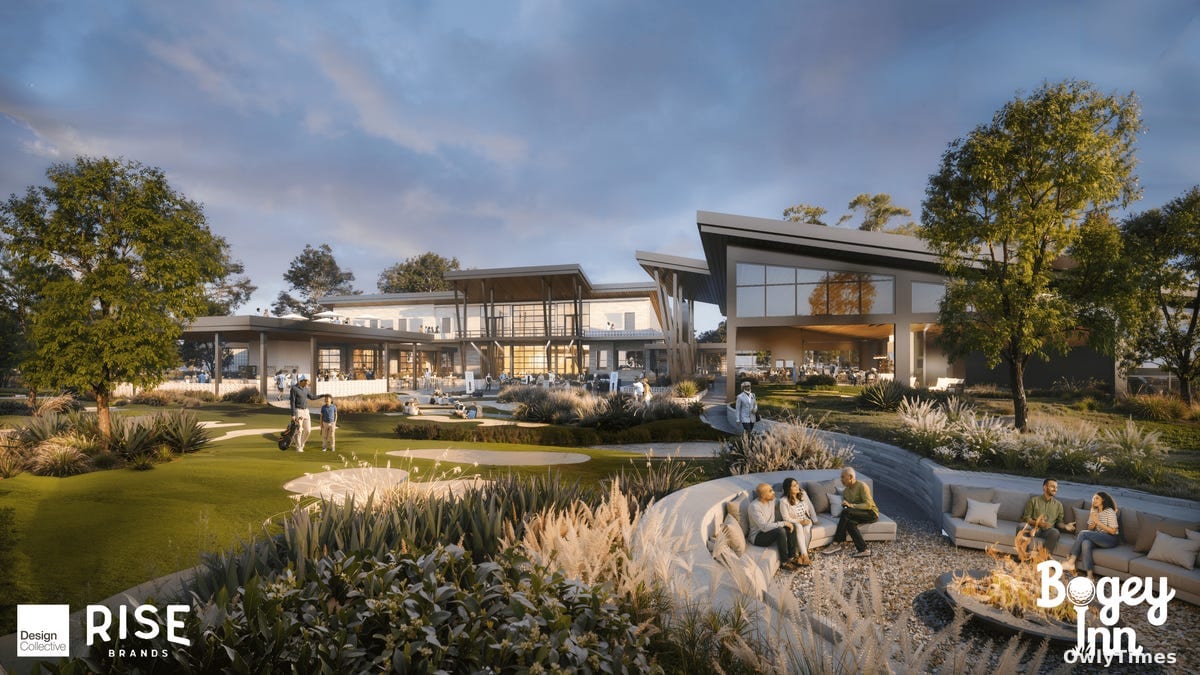
The ambitious plan, first unveiled in January 2025 by Troy Allen, founder of Rise Brands, envisioned a three-acre destination boasting indoor and outdoor bars, live music, diverse food options, and a unique 36-hole putting course – 27 holes open to the elements and nine sheltered. Renderings released a year ago showed a vibrant, modern space, a far cry from the Bogey’s well-worn charm. The timing was strategic, aiming for a grand opening coinciding with the 2026 Memorial Tournament, capitalizing on the influx of golf enthusiasts. But as Hana Hesselgesser, who took the helm as Rise Brands CEO in January, bluntly stated to The Dispatch, the project simply wasn’t “feasible” at that location.
The core issue wasn’t a lack of vision, but a tangle of bureaucratic red tape. The property straddles multiple municipal jurisdictions, a logistical nightmare that Rise Brands spent “a great deal” of time and money attempting to untangle. This isn’t an isolated incident. Across the country, developers are increasingly finding that even seemingly straightforward projects are bogged down by zoning regulations, permitting delays, and community opposition. The cost of navigating these hurdles, coupled with rising construction costs – up 15% nationally in the last year alone, according to the Associated General Contractors of America – can quickly erode profit margins and kill even the most promising ventures. Rise Brands, known for successful concepts like Pins Mechanical Co. and 16-Bit Bar + Arcade, clearly determined the risk outweighed the reward.
But Hesselgesser’s statement hints at something more nuanced than just logistical difficulties. She expressed excitement about bringing a “golf-related concept” under the Rise Brands umbrella, suggesting a shift in strategy. This isn’t a complete abandonment of the golf entertainment market, but a recalibration. The failure at The Bogey Inn may signal a move away from large-scale, ground-up developments towards acquiring and adapting existing spaces, or focusing on more portable, scalable concepts. This is a trend we’re seeing across the entertainment sector, with companies prioritizing agility and minimizing capital expenditure in an uncertain economic climate. The initial investment in the Bogey Inn project was estimated to exceed $10 million; a more measured approach could prove more sustainable.
See the original dispatch.com story for the full account.
Beyond the headlines of a canceled project, this situation speaks to a broader tension: the desire to preserve local character versus the allure of large-scale entertainment. The Bogey Inn wasn’t just a bar; it was a community hub, a repository of memories. While Rise Brands’ vision promised economic revitalization and a modern entertainment experience, it also risked erasing a piece of Dublin’s identity. The fact that the project stalled isn’t necessarily a loss for the community, but a reminder that development must be sensitive to the existing fabric of a place. The future of the site remains unclear, but the question now is: will Dublin prioritize preserving the spirit of the Bogey Inn, or seek a new vision for the property? And, more broadly, will the entertainment industry learn to balance ambition with a respect for the places – and the stories – that already exist?