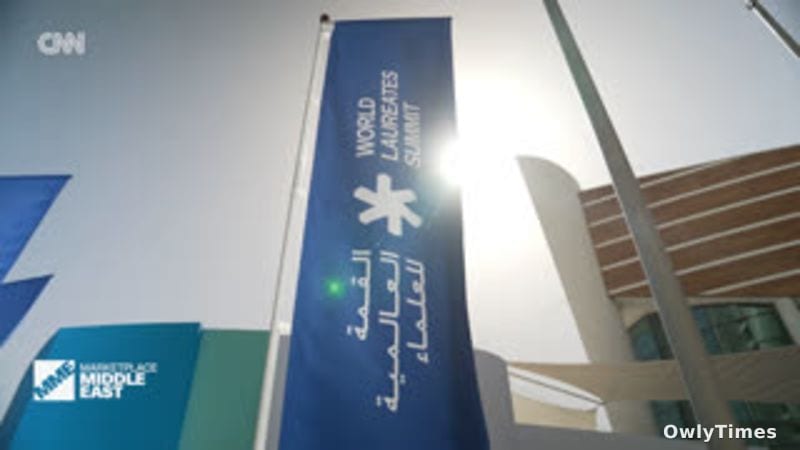

Beyond Breakthroughs: Why Dubai’s Nobel Gathering Focused on Science as National Security
The gathering of Nobel laureates and policymakers in Dubai, as reported by CNN’s Christiane Amanpour, wasn’t simply a celebration of scientific achievement. It was a strategic conversation, subtly acknowledging a growing global reality: long-term economic resilience, and even national security, are increasingly tethered to a nation’s capacity for fundamental scientific advancement. While headlines understandably focus on the prestige of bringing Nobel minds together, the core message – that sustained investment in basic research is no longer a luxury but a necessity – is a critical shift in thinking, particularly as geopolitical instability mounts and resource competition intensifies. This isn’t about faster technology; it’s about building the foundational knowledge that enables faster technology, and the sovereign capacity to control that innovation.
Based on the original CNN report.
The Dubai meeting, framed around the intersection of science and global strategy, arrives at a moment when the relationship between scientific progress and political power is becoming starkly visible. Consider the ongoing debates surrounding semiconductor manufacturing. The United States, for decades a leader in chip technology, now recognizes its vulnerability due to concentrated manufacturing in East Asia. The CHIPS and Science Act of 2022, allocating $280 billion to bolster domestic semiconductor production and research, is a direct response to this realization – a national security concern masquerading as an economic policy. The Dubai forum suggests this pattern will extend beyond semiconductors, encompassing fields like materials science, biotechnology, and sustainable energy, all areas where foundational research is paramount. The emphasis wasn’t on applying existing science, but on generating new science, a distinction often lost in public discourse.
The Economic Calculus of Curiosity-Driven Research
A key theme emerging from the Dubai discussions, though not explicitly stated in initial reports, is the economic return on investment in “curiosity-driven” research – the kind of basic science that doesn’t have an immediate, marketable application. Historically, this has been a difficult sell to policymakers focused on short-term gains. However, the examples cited by attendees, including breakthroughs in mRNA vaccine technology (rooted in decades of basic research on RNA) and the development of new materials for renewable energy, demonstrate the potential for exponential returns. The argument isn’t simply that basic research eventually leads to innovation; it’s that it creates a fertile ground for innovation, attracting talent, fostering collaboration, and building a resilient scientific ecosystem. This is particularly relevant for nations like the United Arab Emirates, actively diversifying their economies beyond oil and gas.
It’s important to note, however, that quantifying the economic impact of basic research remains a significant challenge. While the mRNA vaccine example is compelling, attributing its rapid development solely to prior basic research overlooks the substantial private investment and clinical trial infrastructure required to bring it to market. The Dubai forum likely addressed this nuance, emphasizing the need for a holistic approach that combines public funding for basic research with incentives for private sector translation. The challenge lies in creating a system that rewards long-term investment in fundamental knowledge without guaranteeing immediate financial returns, a tension that requires careful policy design.
Geopolitical Implications and the Shifting Landscape of Scientific Collaboration
The Dubai gathering also occurred against a backdrop of increasing geopolitical competition, particularly between the United States and China. Both nations recognize the strategic importance of scientific and technological leadership, and are actively investing in research and development. However, the nature of that investment differs. The US approach, while still emphasizing basic research, has become increasingly focused on national security applications, leading to concerns about restrictions on scientific collaboration and the potential for “de-risking” – limiting engagement with China in certain sensitive areas. This contrasts with China’s more expansive, state-directed approach, which prioritizes technological self-sufficiency and global influence.
The presence of policymakers at the Dubai forum suggests a recognition that scientific progress cannot occur in isolation. International collaboration, despite the political challenges, remains essential for accelerating discovery and addressing global challenges like climate change and pandemics. The question is whether a new model for scientific collaboration can emerge, one that balances the need for national security with the benefits of open exchange. The recent allegations by the Nobel Committee regarding the severe abuse of Peace Prize winner Narges Mohammadi in Iran, also reported by CNN, serve as a stark reminder that scientific freedom and human rights are inextricably linked, and that geopolitical tensions can have a direct impact on the ability of scientists to conduct their work.
What Comes Next: Tracking the Translation of Discourse into Action
The Dubai forum was, fundamentally, a conversation. The real test will be whether that conversation translates into concrete policy changes and increased investment in fundamental science. We should be watching for several key indicators in the coming months. First, will nations like the UAE significantly increase their funding for basic research, particularly in areas aligned with their strategic priorities? Second, will the US and other Western nations find a way to balance national security concerns with the need for international scientific collaboration? And third, will there be a shift in public perception, recognizing the long-term value of curiosity-driven research and the importance of supporting the scientific enterprise?
Specifically, it will be crucial to monitor the implementation of the CHIPS and Science Act in the US, assessing whether the funding is effectively allocated to both basic research and manufacturing capacity. Furthermore, observing the evolution of scientific exchange programs and collaborative research initiatives between the US and China will provide insights into the future of international scientific cooperation. The success of the Dubai forum, ultimately, won’t be measured by the number of Nobel laureates in attendance, but by whether it catalyzes a sustained commitment to fundamental science as a cornerstone of national and global resilience.





