
The opening scene of Celine Song’s upcoming film, Materialists (2025), depicts a tender moment – a Neanderthal couple touching noses in what appears to be an instinctive expression of affection. This evocative image isn’t merely artistic license; it’s a visual cue to a surprisingly understudied area of animal behavior, and one that’s now receiving focused scientific attention. While often dismissed as a quaint human custom or a charming animal quirk, recent research suggests nose-to-nose contact, sometimes playfully termed the “Eskimo kiss,” is a fundamental form of social communication with deep evolutionary roots, even extending to species we typically consider antisocial. The question isn’t simply if animals exchange information this way, but what information is being exchanged, and what that reveals about the evolution of sociality itself.
Beyond Affection: The Spectrum of Nasal Communication
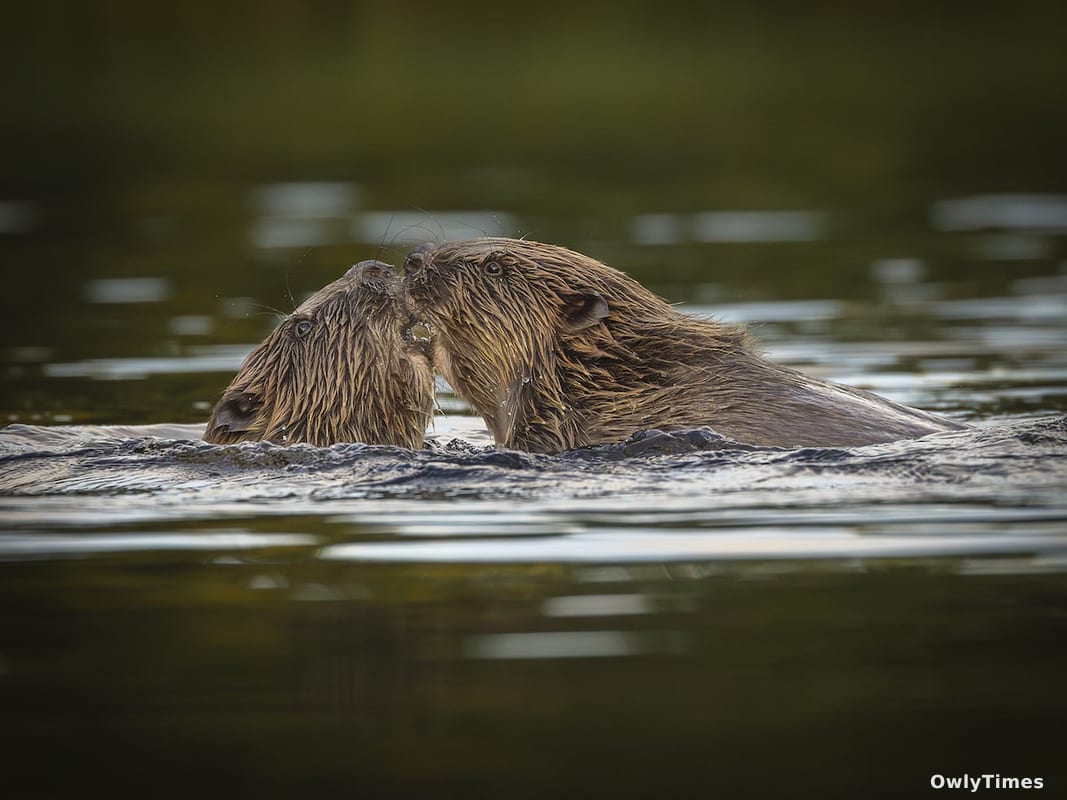
Sophie Lund Rasmussen, a biologist associated with the University of Oxford and Denmark’s Museum of Natural History, spearheaded the recent study published in Evolution and Human Behaviour. Her initial curiosity stemmed from observing the similarities in mouth-to-mouth kissing across humans, chimpanzees, and bonobos, prompting her to consider the broader context of facial contact in the animal kingdom. “It was really fun to research, it’s not a typical subject in science,” she recalls, highlighting the novelty of systematically investigating a behavior often relegated to anecdotal observation. Lund’s research isn’t about proving animals “kiss” like humans; it’s about identifying the diverse functions of nose-to-nose contact across species. The study meticulously compiled examples, revealing a surprisingly wide range of purposes, from reinforcing social bonds to assessing dominance.
Original reporting: english.elpais.com.
Among highly social animals like bats, nose-to-nose contact serves as a greeting, strengthening colony cohesion and aiding in individual recognition. This is crucial for survival, as it allows bats to quickly identify members of their group versus potential threats. But the implications extend beyond simple identification. Lund’s work suggests that these interactions facilitate the exchange of chemical signals – information about reproductive status, health, and even fighting strength. A brief nose bump could be enough to signal, “I am healthy and not worth challenging,” potentially averting conflict and conserving energy. This is a significant finding, as conflict avoidance directly impacts survival rates, particularly in resource-limited environments.
The Unexpected Complexity of Solitary Species
The study’s most intriguing findings emerged from observations of less social animals. The European hedgehog, a solitary and nocturnal creature, provided a particularly compelling case. Lund observed that accidental nose-to-nose contact during sniffing would cause the hedgehogs to freeze, pupils dilated, seemingly overwhelmed by sensory input. This “sensory overload,” as Lund describes it, suggests that even brief contact triggers a powerful chemical exchange, forcing the animal to pause and process the information. This contrasts sharply with the more nuanced and controlled interactions seen in social species, but underscores the potency of the vomeronasal system – the olfactory system dedicated to detecting pheromones – in mammalian communication.
Carmen Agustín Pavón, a neurobiology researcher from Valencia, Spain, explains that this system bypasses the typical olfactory processing centers and directly connects to the brain regions responsible for social and emotional behavior. “The olfactory signal in just two neuronal connections reaches to the emotional and social center of the brain,” she notes, emphasizing the speed and directness of this communication pathway. For many mammals, smell is the primary way they interpret their environment, far surpassing vision in importance. This is particularly true for species like mice, hedgehogs, and naked mole rats, where social interactions are heavily reliant on chemical cues.
Human Kisses: An Evolved Tradition?
Lund’s research also prompts a fascinating question about the origins of human kissing. She proposes that the human kiss may be a cultural evolution of this ancient sensory behavior. The prevalence of nose-rubbing and similar facial contact practices in diverse cultures – from the Māori of New Zealand to the Inuit of Greenland – suggests a deep-seated, perhaps instinctive, basis for the behavior. “The fact that this behavior continues to exist suggests that it fulfills an important function,” Lund argues. If it were merely arbitrary, she reasons, it would likely have disappeared over time.
However, it’s crucial to acknowledge the limitations of this line of inquiry. While the correlation between cultural practices and animal behavior is suggestive, establishing a direct causal link is incredibly difficult. We cannot definitively say that human kissing evolved from animal nose-to-nose contact; it’s equally plausible that both arose independently as effective methods of chemical communication. Furthermore, the specific chemical substances exchanged during these interactions remain largely unknown. Identifying these compounds and understanding their effects on behavior is a significant challenge for future research.
The next crucial step, Lund hopes, is experimental investigation. Researchers need to move beyond observation and actively manipulate these interactions, analyzing the chemical signals exchanged and measuring the behavioral responses. This will require innovative methodologies and a willingness to explore a subject that, as Lund herself admits, is “not a typical subject in science.” But the potential rewards – a deeper understanding of the evolution of sociality, the complexities of animal communication, and even the origins of human intimacy – are well worth the effort. As we continue to unravel the secrets of these brief, nose-to-nose encounters, we should be asking ourselves: what subtle chemical messages are we sending and receiving in our own everyday interactions, and how are they shaping our social world?





