
The Dawn of Movement: Rewriting the Timeline of Animal Evolution
For decades, the “Cambrian explosion” – the relatively sudden appearance of diverse, complex animal life around 541 million years ago – has captivated paleontologists. But pinpointing when the foundational changes enabling this explosion actually began has remained elusive. Recent discoveries in Yunnan province, China, aren’t simply adding to the fossil record; they’re forcing a re-evaluation of the entire narrative, pushing the origins of key animal traits back by at least 10 million years. The significance isn’t merely about adjusting dates on a timeline, but understanding the environmental pressures and evolutionary experiments that ultimately paved the way for everything from fish to humans. Initial headlines have proclaimed a “glimpse of when Earth made a crucial transition,” but the study, published this week in Nature, reveals a more nuanced picture: a gradual accumulation of traits, not a singular, explosive event.
Unearthing Ediacaran Complexity in Yunnan
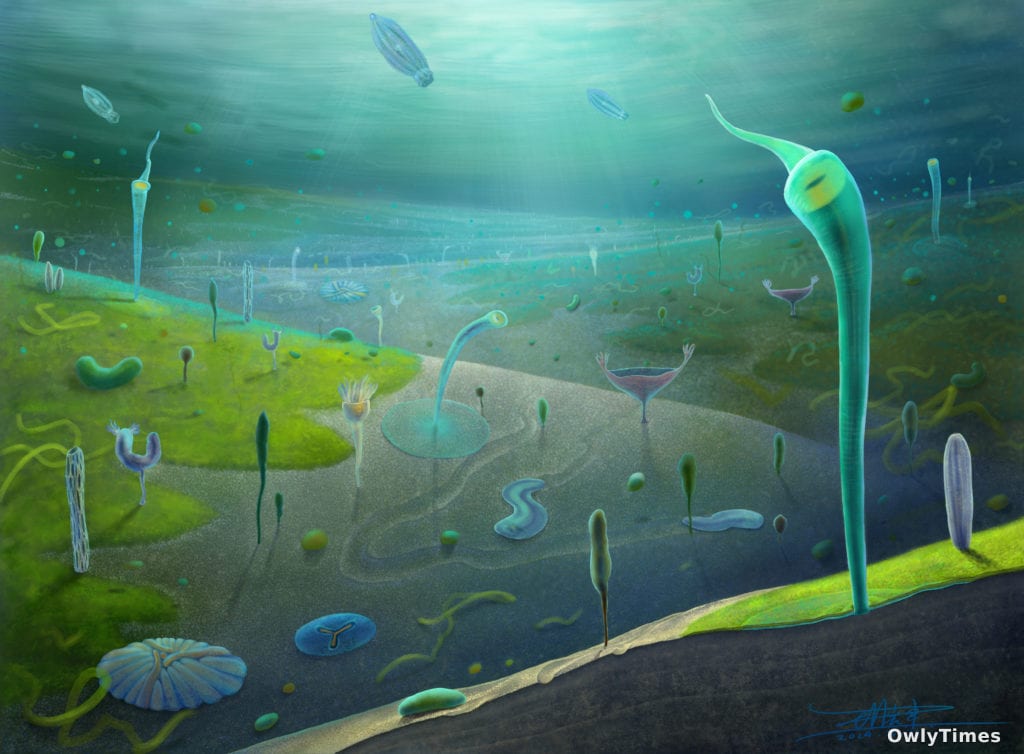
The find centers around over 700 exceptionally well-preserved fossils unearthed in the Yunnan province. This region is increasingly recognized as a hotspot for Ediacaran-era paleontology, but the sheer volume and detail of these new specimens are unprecedented. The Ediacaran period (635 to 539 million years ago) is characterized by organisms unlike anything seen today. Many were flat, frond-like, or quilted, seemingly lacking hard parts and existing as two-dimensional lifeforms anchored to the seafloor. What distinguishes these Yunnan fossils is the presence of early evidence of bilateral symmetry – a body plan with left and right sides – and, crucially, signs of directed movement. Professor Emily Carter, lead author of the study from the University of Toronto, explains that “these aren’t just organisms existing in the environment, they’re interacting with it, leaving trails and burrows that demonstrate purposeful locomotion.” This is a critical departure from the largely sessile lifestyle previously attributed to most Ediacaran fauna.
Source material: PBS.
The fossils aren’t easily categorized. They don’t neatly fit into modern animal groups, but they exhibit features that foreshadow the development of key anatomical structures. Researchers identified evidence of early guts, suggesting a more complex feeding strategy than simple absorption. The presence of muscle attachments, inferred from impressions on the fossils, further supports the idea of active movement. While the animals themselves were still small – most measured only a few centimeters in length – their behaviors represent a significant leap in evolutionary complexity. It’s important to note that the study doesn’t claim these fossils are the direct ancestors of modern animals, but rather represent a crucial experimental phase in the evolution of animal body plans.
Beyond the “Explosion”: A Gradual Ascent
The conventional wisdom has long held that the Cambrian explosion was a relatively abrupt event, triggered perhaps by a sudden increase in oxygen levels or the evolution of predation. However, the Yunnan fossils suggest a more protracted process. By pushing back the emergence of bilateral symmetry and active movement to the late Ediacaran period, the study implies that the groundwork for the Cambrian explosion was laid much earlier than previously thought. The Cambrian wasn’t a starting gun, but rather the culmination of millions of years of experimentation and refinement. This challenges the notion of a singular “trigger” for animal diversification, suggesting instead a complex interplay of environmental factors and evolutionary innovations. Dr. Jian Li, a paleontologist at the Yunnan Geological Survey who collaborated on the excavation, emphasized that “the fossils show a clear trend towards increasing complexity throughout the Ediacaran period, culminating in the more diverse fauna we see in the Cambrian.”
Limitations to Consider: Preservation and Interpretation
Despite the excitement surrounding this discovery, several limitations must be acknowledged. Fossilization is a rare event, and the Yunnan site represents a unique set of preservation conditions. The exceptional preservation quality is a boon, but it also raises questions about whether the fossils are representative of Ediacaran life globally. It’s possible that the Yunnan environment favored the preservation of certain types of organisms, creating a biased sample. Furthermore, interpreting the behavior of ancient organisms from fossilized traces is inherently challenging. While the presence of burrows and trails strongly suggests active movement, it’s difficult to determine the precise nature of that movement or the animals’ motivations. The team employed sophisticated 3D modeling and biomechanical analysis to infer muscle attachments and movement patterns, but these interpretations remain subject to ongoing refinement as new data emerges.
The Next Steps: Filling the Gaps in the Early Animal Story
The Yunnan fossils have opened a new window into the Ediacaran period, but many questions remain. Future research will focus on analyzing the geochemical composition of the surrounding rocks to reconstruct the environmental conditions in which these organisms lived. This will help scientists understand the selective pressures that drove the evolution of bilateral symmetry and active movement. Further excavations at the Yunnan site are planned, with the hope of uncovering even more complete and diverse fossils. Perhaps most importantly, researchers are actively searching for similar Ediacaran fossils in other parts of the world to determine whether the Yunnan fauna represents a localized phenomenon or a global trend. The question now isn’t simply when animal life became complex, but why – and understanding the environmental and evolutionary factors at play in the late Ediacaran period is crucial to answering that question. We should watch for further analysis of the gut contents of these fossils; determining what these early animals were eating could reveal critical insights into the development of early ecosystems.