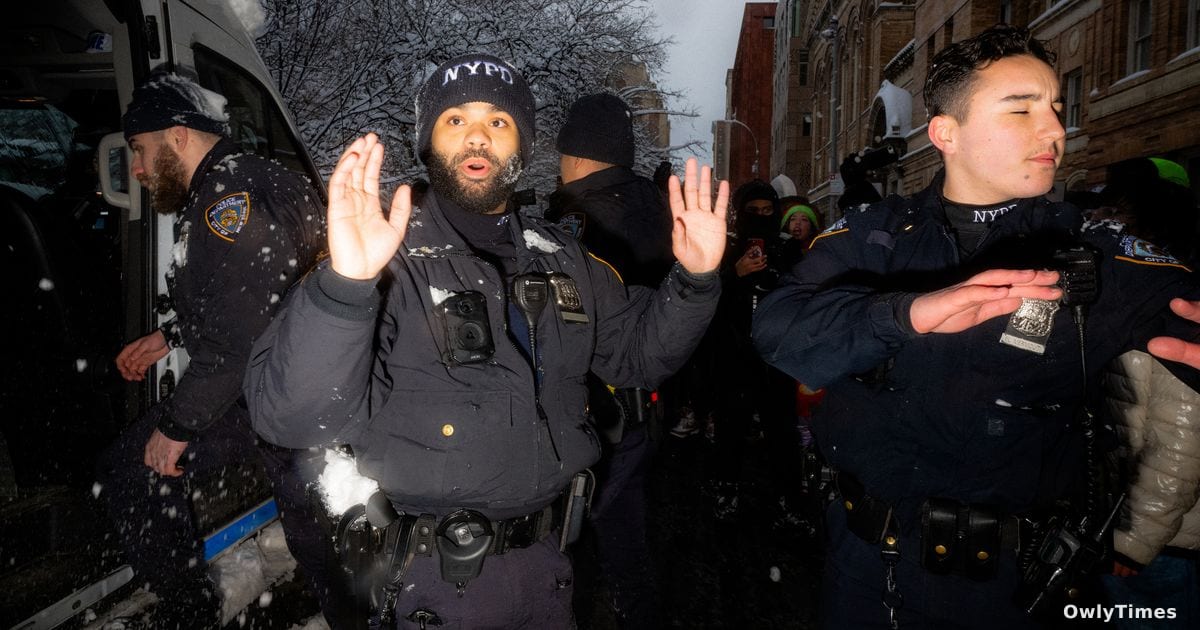

The seemingly trivial incident of a snowball fight in Washington Square Park reveals a calculated risk assessment by Zohran Mamdani, the current Mayor of New York City. The strategic calculus isn’t about the snowballs themselves, but about establishing boundaries in a power struggle with the NYPD and its unions, while simultaneously navigating a delicate negotiation with Donald Trump for crucial housing project funding. Mamdani’s measured response – characterizing it as a “snowball fight that got out of hand” – wasn’t a lapse in leadership, but a deliberate positioning ahead of potentially larger confrontations.
The immediate fallout saw Jessica Tisch, NYPD Commissioner, adopt a markedly tougher stance, declaring the incident “disgraceful” and “criminal” and issuing a pointed defense of her officers. This divergence in tone immediately highlighted the underlying tension. Who benefits and who loses here isn’t simply about the officers involved, but about the long-term balance of power between the mayor’s office and the traditionally independent NYPD. Tisch’s forceful response, framed as a “protective Jewish mother” defending “her cops,” served to rally support within the department and signal a willingness to aggressively defend its authority. The Police Benevolent Association (PBA) predictably echoed this sentiment, branding Mamdani’s response a “complete failure of leadership.”
Source material: nymag.com.
This dynamic isn’t new to New York City politics. The history of mayoral-police commissioner relationships is often defined by a careful dance between cooperation and control. The situation bears a striking resemblance to the fraught relationship between Bill de Blasio and Bill Bratton. Bratton, a seasoned and assertive commissioner, clashed repeatedly with de Blasio’s progressive agenda, ultimately leading to a strained and short-lived partnership. Mamdani, recognizing this precedent, appears to be adopting a strategy of non-antagonism with Tisch – for now. He’s carefully avoiding direct challenges, allowing her operational autonomy, while focusing on his core policy objectives like universal childcare and a rent freeze. This echoes the successful, if somewhat detached, relationship between Mike Bloomberg and Ray Kelly, where peace was maintained by a tacit agreement to largely “leave each other alone.”
However, this equilibrium is fragile. The key question is how long Mamdani can maintain this hands-off approach. His current NYPD, as observers note, largely is Eric Adams’s NYPD, and his progressive base hasn’t yet demanded a significant shift in policing strategy, content with the potential for progress on other fronts. But the PBA, under its new president Patrick Hendry, is signaling a willingness to engage in a more assertive opposition. The PBA’s past tactics, particularly under Patrick Lynch, proved devastating to de Blasio’s mayoralty, culminating in the infamous accusation of “blood on his hands” following the 2014 murders of two NYPD officers.
The context of a shifting media landscape is crucial. Unlike Lynch, a long-established media figure, Hendry remains largely unknown. The traditional media ecosystem that amplified Lynch’s message – local talk radio and the tabloids – has diminished in influence, replaced by a younger demographic that propelled Mamdani into office. This demographic is less receptive to the “law and order” rhetoric that once dominated the city’s political discourse. The New York Post’s attempts to replicate the playbook used against de Blasio are, for now, falling on less fertile ground.
Yet, the potential for escalation remains. The current truce between Mamdani and Tisch appears contingent on his avoidance of direct challenges to her authority, as evidenced by his evasiveness when questioned about disagreements, such as the maintenance of a controversial gang database. This suggests a calculated strategy: prioritize policy wins while minimizing conflict with the NYPD, hoping to consolidate power and build a base of support strong enough to withstand future challenges. But the political chess move to watch next isn’t about snowballs or police tactics. It’s about the outcome of Mamdani’s meeting with Donald Trump. Securing funding for the Sunnyside Yard housing project would dramatically strengthen his position, providing a tangible victory that could quell dissent from both the left and the right. If that deal falls through, however, the PBA and Tisch will likely find a more receptive audience for their criticisms, and Mamdani’s carefully constructed equilibrium will be severely tested.





