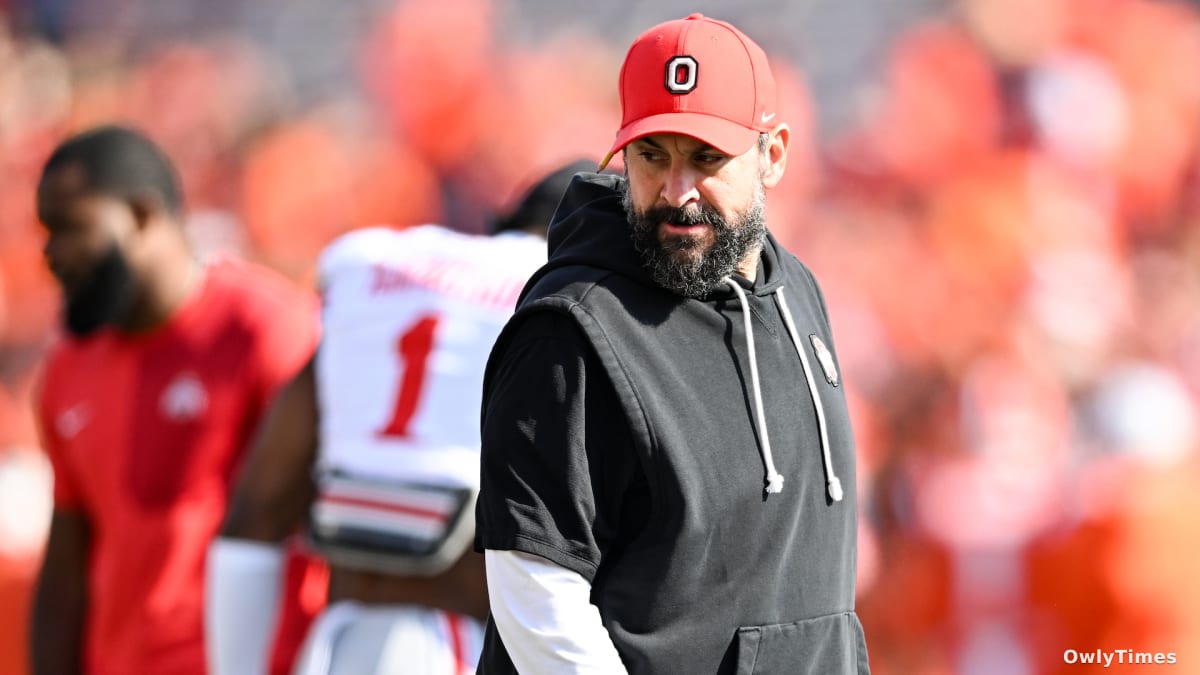

The fluorescent lights of the Woody Hayes Athletic Center hummed as Matt Patricia signed his new contract, a deal that officially made him the highest-paid assistant coach in college football at $3.75 million. It wasn’t the roar of a stadium or the clash of helmets that defined this moment, but the quiet acknowledgment of a seismic shift in the economics of the game. This isn’t simply about rewarding a successful defensive coordinator – Ohio State led the nation in scoring and total defense in his first season – it’s about the escalating arms race for talent that’s reshaping college football, and the uncomfortable truth that defensive schemes are now valued more than ever before. The numbers aren’t just big; they’re a symptom of a system undergoing a fundamental transformation.
The Billion-Dollar Backrooms of College Football
The rise of the coordinator class isn’t happening in a vacuum. More than a dozen college football programs now boast valuations exceeding $1 billion, fueled by massive television deals and increasingly sophisticated fundraising. This influx of revenue has created a landscape where elite coaching staff members are treated less like assistants and more like prized assets, constantly subject to poaching and requiring lavish contracts to retain. The $3 million mark, once reserved for head coaches, is now a starting point for top coordinators like LSU’s Blake Baker, Michigan’s Jason Beck, and Indiana’s Bryant Haines. Baker’s contract even includes a $300,000 bonus if the Tigers finish in the top 20 in scoring defense – a clear incentive structure reflecting the outsized importance placed on defensive performance. This isn’t about loyalty anymore; it’s about market value.
This article draws on reporting from CBS Sports.
Beyond the Salary: The Power Dynamic Shift
What’s particularly striking is the disparity within coaching staffs themselves. Patricia’s $3.75 million dwarfs the $1.5 million being paid to Ohio State’s new offensive coordinator, Arthur Smith, despite Smith being tasked with calling the plays after Brian Hartline’s departure to South Florida. This imbalance speaks to a broader trend: the increasing emphasis on defensive football in the modern game. Offenses are becoming more complex and explosive, but defenses are adapting, and the coordinators leading those adaptations are being rewarded accordingly. It’s a direct response to the offensive explosion of recent years, a recognition that stopping the scoring is often more valuable than simply putting points on the board. The fact that Patricia earns more than double his offensive counterpart isn’t just a financial quirk; it’s a statement about where the game currently stands.
The Transfer Portal of Coaches and the NIL Factor
The situation mirrors the player transfer portal in unsettling ways. Just as athletes are now free to pursue the highest bidder, so too are assistant coaches. The “tugging and pulling” between schools and agents, as described by sources within the industry, is an annual obstacle for athletic directors. The case of Ole Miss and Lane Kiffin last season, where staffers briefly joined LSU only to be pulled back, highlighted the chaotic nature of this new reality. This instability is further compounded by the rise of Name, Image, and Likeness (NIL) deals, which are not only attracting players but also influencing coaching decisions. Programs with robust NIL collectives are better positioned to attract and retain top talent, creating a self-perpetuating cycle of success. Indiana’s recent defensive revitalization, fueled by both coaching prowess and the backing of booster Mark Cuban’s NIL efforts, is a prime example.
What This Means for the Future of the Game
The escalating cost of coaching is unsustainable in the long run. While the wealthiest programs can absorb these expenses, it further widens the gap between the “haves” and the “have-nots,” potentially creating a two-tiered system where only a select few can compete for championships. The question now isn’t just who can afford the best coordinators, but what happens to the programs that can’t. Will we see a consolidation of power among the elite, or will new models emerge to level the playing field? More immediately, watch how programs like USC and Penn State, who’ve made high-profile defensive coordinator hires in Gary Patterson and D’Anton Lynn respectively, navigate the salary disclosure landscape. Will their financial commitments to these coaches match the eye-popping numbers being thrown around at Ohio State and LSU? The answer will reveal a lot about the true priorities – and financial realities – of college football’s new era.