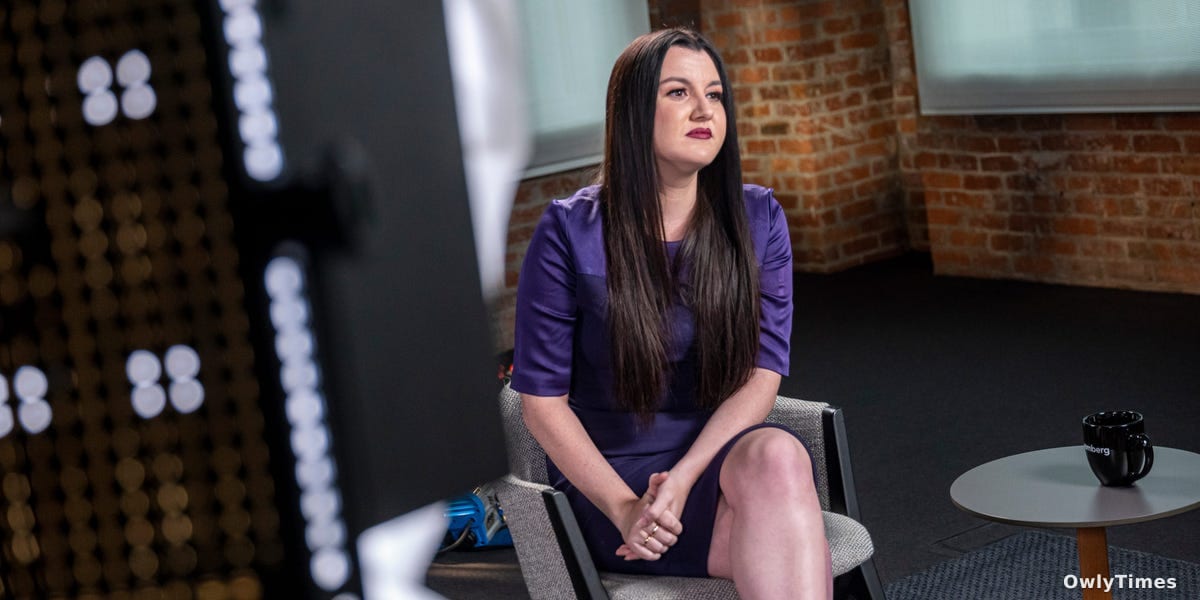

$143 billion. That’s the projected magnitude of losses Deutsche Bank estimates OpenAI will accumulate between 2024 and 2029 – a figure that, even when revised by the company to $111 billion by 2030, underscores a fundamental tension at the heart of the AI revolution: building the future is extraordinarily expensive. While Sam Altman remains the public face of OpenAI, the company’s increasingly urgent pivot towards profitability is being driven by Fidji Simo, the 40-year-old CEO of applications, who now oversees nearly two-thirds of the organization. Simo’s appointment isn’t simply a personnel change; it’s a strategic realignment, signaling a shift from a research-first ethos to a product-driven imperative, and a critical test of whether OpenAI can monetize its groundbreaking technology before competitors – and mounting losses – overtake it.
The scale of OpenAI’s projected burn rate is particularly jarring when contrasted with the broader tech landscape. Startups rarely, if ever, operate at this level of sustained loss. To put it in perspective, even during the dot-com bubble, few companies anticipated losses of this magnitude over a five-year period. This isn’t reckless spending; it’s the cost of compute power – the GPUs, energy, and data center capacity required to train and deploy increasingly complex AI models. OpenAI’s ambition isn’t simply to have the most powerful models, but to make them accessible and marketable, a dual challenge that demands both technological innovation and ruthless operational efficiency. The fact that Anthropic’s coding tool has already outperformed OpenAI’s, despite the latter prioritizing coding dominance, highlights the competitive pressure and the risk of falling behind.
Simo’s arrival in August 2023 wasn’t a sudden decision. She’d served on OpenAI’s board for over a year, observing the company’s trajectory and, crucially, identifying the need for a dedicated leader focused on commercialization. Her background – former CEO of Instacart and a long-time executive at Meta – speaks to a proven ability to scale products and generate revenue. As Simo herself stated, a key part of her mandate was to operate with “autonomy,” a clear indication that Altman recognizes the need to delegate responsibility and empower a leader focused on the bottom line. This division of labor – Altman focusing on research and compute scaling, Simo on product execution – mirrors the structure of companies like Meta, where Mark Zuckerberg similarly delegates operational control while maintaining a strategic vision.
Based on the original Business Insider report.
However, this shift isn’t without internal friction. The tension between OpenAI’s research-driven origins and its burgeoning commercial ambitions is palpable. Some researchers, as reported by Business Insider, express concern that the focus on user optimization and product growth could stifle more exploratory, long-term research. The resignation of vice president of research Jerry Tworek earlier this year, citing a desire to pursue research “hard to do at OpenAI,” is a symptom of this underlying conflict. This internal debate is further complicated by the need to attract and retain top talent, many of whom were initially drawn to OpenAI’s research-focused mission. Simo’s challenge is to convince these employees that commercialization isn’t a betrayal of that mission, but a necessary step to ensure its long-term sustainability.
Simo’s approach is characterized by a relentless focus on prioritization and efficiency. She’s implemented a system of eliminating unnecessary bureaucracy, publishing monthly updates on obstacles removed, and maintaining a direct line of communication with employees. This “founder mode,” as described by head of ChatGPT Nick Turley, reflects a willingness to deeply engage with every aspect of the company’s operations. This intensity, coupled with a track record of navigating complex challenges at both Instacart and Meta, suggests Simo is prepared to make difficult decisions and drive a hard bargain. But her past isn’t without scrutiny; her tenure at Facebook saw inflated video viewership metrics, and her efforts at Instacart to improve worker relations were met with skepticism.
Looking ahead, the critical question for investors and consumers isn’t whether OpenAI can build impressive AI models – it already has. It’s whether Simo can translate that technological prowess into a sustainable business model. Will OpenAI successfully navigate the delicate balance between innovation and profitability? Will it be able to fend off competitors like Anthropic and Google, who are rapidly closing the gap? And, crucially, will it be able to do so without sacrificing the research-driven culture that initially propelled its success? The next 12-18 months will be decisive, and the answer will likely determine not only OpenAI’s fate, but also the future of the entire AI industry. What this means for your wallet: expect to see more aggressive monetization of AI tools, potentially through subscription models, tiered access, and targeted advertising – and be prepared to pay a premium for the most advanced features.