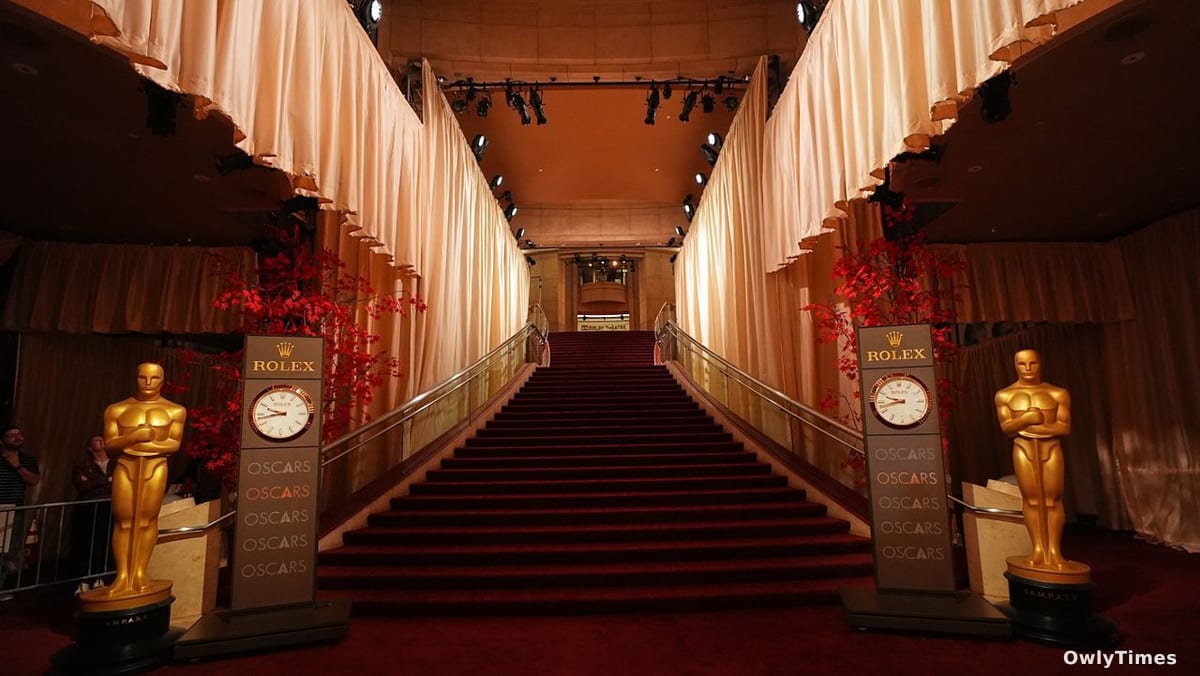

Is the Oscars still relevant, or is it just a meticulously crafted exercise in self-congratulation for an industry increasingly disconnected from the lives of most viewers? Sunday’s ceremony wasn’t about celebrating cinematic achievement so much as it was a carefully curated display of industry anxieties and attempts at relevance. The glitz and glamour, the emotional tributes, even the rare tie – they all felt less like organic moments and more like strategic maneuvers to remind us that Hollywood still matters. The real story here isn't the winners and losers – it's the desperate attempt to reconcile a fading cultural authority with a rapidly changing media landscape.
The evening’s opening, featuring Conan O’Brien riffing on Best Picture nominees and poking fun at industry figures like Timothée Chalamet, set a tone of self-awareness, bordering on defensiveness. It was a preemptive strike against accusations of elitism, a wink to the audience acknowledging the perceived disconnect. Even the joke about a Waymo robot hosting next year’s ceremony wasn’t just a gag; it was a commentary on the looming threat of AI and automation, anxieties that extend far beyond the entertainment industry. The fact that this felt like a necessary bit of levity speaks volumes.
Source material: Spectrum News.
Perhaps the most genuinely moving moment of the night came during the In Memoriam segment, dedicated to Rob Reiner and his wife, Michelle Singer Reiner. Billy Crystal’s heartfelt tribute, listing Reiner’s iconic films and punctuated by a photo of the couple, was a stark reminder of the human cost behind the industry’s spectacle. The sheer number of Reiner’s colleagues who took the stage – Meg Ryan, Kiefer Sutherland, and many others – underscored the deep connections within Hollywood, a world often perceived as superficial. But even this poignant moment felt…calculated. The Academy’s mirroring of their 2008 tribute to director John Hughes felt less about genuine grief and more about establishing a precedent of grand, televised mourning.
The performance of “I Lied to You” from “Sinners,” featuring a sprawling ensemble of artists, was a clear attempt to position the film – and the Academy – as champions of Black music and culture. The staging, recreating a scene from the film’s juke joint, was visually striking, and the sheer number of performers onstage was impressive. But the gesture felt somewhat belated, arriving after years of criticism regarding the Academy’s lack of diversity and representation. It wasn’t enough to simply showcase Black artistry; the industry needs to fundamentally address the systemic barriers that have historically excluded Black creators. The standing ovation, while enthusiastic, felt like a performative display of allyship rather than a genuine shift in power dynamics.
The tie between Harvey Guillén and Colman Domingo for Best Supporting Actor was a statistical anomaly, but it also highlighted a larger issue: the increasing competitiveness of the awards season and the difficulty of predicting outcomes. The Academy’s rule change, requiring an exact match in totals for a tie to occur, underscores a desire for control and predictability in an increasingly chaotic media environment. This isn’t about celebrating a unique outcome; it’s about maintaining the illusion of order. The last tie occurred in 2013, and the Academy clearly prefers to avoid such ambiguity.
The security measures surrounding the ceremony – a one-mile perimeter, uniformed officers, K-9 units, and surveillance drones – were a visible manifestation of the anxieties gripping the world. While officials cited concerns about the ongoing Middle East war and potential retaliatory strikes, the heightened security also served as a reminder of Hollywood’s vulnerability and its dependence on external forces for protection. It’s a stark contrast to the escapism that movies are supposed to provide. The cost of this security, estimated to be substantial, could have been allocated to supporting independent filmmakers or funding arts education programs.
The wins for “Sinners” – including Original Screenplay for Ryan Coogler – were significant, but they also raise questions about the Academy’s evolving tastes. Is the industry genuinely embracing more diverse and challenging narratives, or are these wins simply a response to public pressure? The fact that Sean Penn did not attend the ceremony, despite winning his third Oscar, adds another layer of complexity. His absence, while unexplained, suggests a potential disconnect between the industry’s accolades and the personal choices of its stars.
Looking ahead, expect the Academy to double down on attempts to broaden its appeal and demonstrate its relevance. We’ll see more carefully curated performances, more emotionally charged tributes, and more strategic partnerships with diverse artists. But these efforts will ultimately ring hollow if they aren’t accompanied by systemic changes within the industry. The question isn’t whether the Oscars can survive – it’s whether it can evolve beyond a self-referential echo chamber and reconnect with the audiences it claims to represent. Watch for a significant increase in AI-generated content being subtly integrated into future ceremonies – not as a spectacle, but as a cost-cutting measure disguised as innovation. The future of the Oscars isn’t about celebrating art; it’s about optimizing for engagement, even if that means sacrificing authenticity along the way.