
Is anyone actually surprised there’s a new tech lab promising to “save the environment”? Silicon Valley’s obsession with solving planetary crises with algorithms feels less like genuine altruism and more like a convenient narrative for justifying increasingly complex (and often opaque) technologies. The real story here isn’t another data center – it’s the fundamental shift happening in how we define “knowing” about our environment, and who gets to control that knowledge.
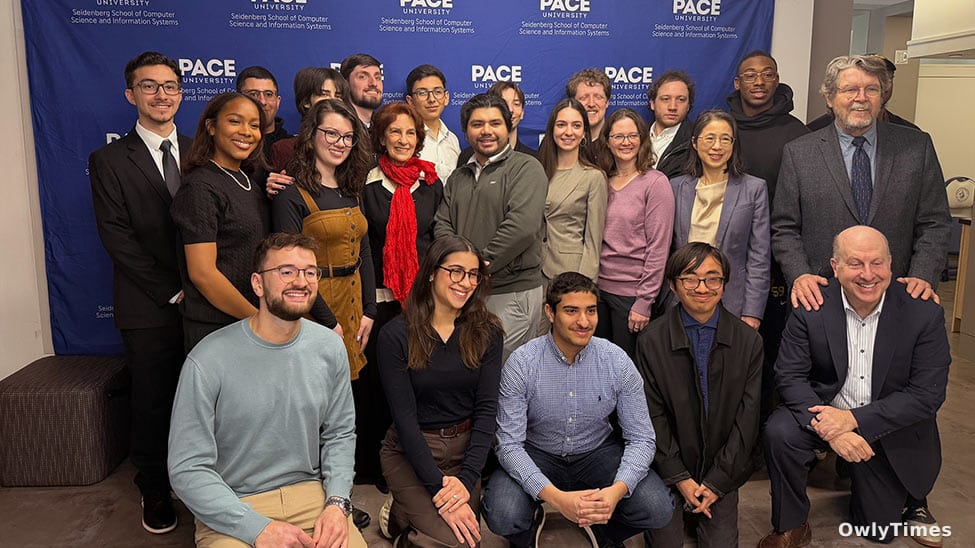
Pace University’s newly inaugurated Gale Epstein Center for Technology, Policy and the Environment, funded by a “transformative gift” from Gale Epstein, isn’t just about monitoring water quality in the Hudson River. It’s about building a system where environmental health is measured, analyzed, and ultimately defined by real-time data streams and the algorithms that interpret them. President Marvin Krislov calls it “innovation with purpose,” but purpose, as always, is in the eye of the beholder. The Center, building on the work of Pace’s Blue CoLab, aims to provide “timely, accurate information about environmental conditions” – a noble goal, but one fraught with potential pitfalls.
The core idea – early warning systems for contamination events, powered by AI and machine learning – sounds ripped from a tech brochure. John Cronin, the Center’s Executive Director, rightly points out that immediate alerts are critical for public health. But consider the implications. We’re moving towards a world where our understanding of environmental risk isn’t based on comprehensive, long-term studies, but on the output of sensors and the predictive power of algorithms. What happens when those algorithms are wrong? Or, more subtly, when they prioritize certain pollutants over others based on pre-defined parameters? The Center’s work, spearheaded by Interim Dean Li-Chiou Chen, will involve students in “data analytics, real-time systems and technology policy,” but are they being trained to question the data, or simply to optimize the systems that generate it?
Based on the original pace.edu report.
This isn’t a Pace University problem; it’s a systemic one. The push for “real-time” data often comes at the expense of historical context and nuanced understanding. We’ve seen this play out in countless other domains – finance, healthcare, even social media. The allure of instant information blinds us to the limitations of the tools providing it. Silas Gonzalez, a sophomore computer science student involved with the Center, expresses enthusiasm about “how technology and environmental science can work together,” but that enthusiasm needs to be tempered with critical thinking. The United Nations Millennium Fellowship, mentioned as a positive outcome, is a great opportunity, but it doesn’t inherently inoculate against the biases embedded within the technology itself.
The Center’s multidisciplinary approach – integrating the Seidenberg School with Dyson College, the Haub School of Law, and the NYC Design Factory – is commendable. The presence of Assemblymember MaryJane Shimsky at the opening suggests political buy-in. But the real test will be whether this collaboration translates into meaningful policy reforms that prioritize public access to understandable information, not just raw data. The Center’s guiding principle – that informed decision-making requires access to information – is only half the battle. The other half is ensuring that people have the tools and knowledge to interpret that information effectively.
The current investment in environmental tech is roughly $20 billion globally, a figure that’s doubled in the last five years, but the actual impact on reducing pollution or mitigating climate change remains stubbornly difficult to quantify. Much of that investment is focused on monitoring and data collection, creating a glut of information without a corresponding increase in actionable solutions. The Gale Epstein Center, while well-intentioned, risks adding to this pile. My prediction? Within the next three years, we’ll see a growing backlash against the “data-driven environmentalism” narrative, as communities begin to realize that having more information doesn’t necessarily equate to having more control – and that the companies profiting from this data aren’t always aligned with their best interests. The question isn’t whether we can monitor everything, but whether we should, and who ultimately benefits from doing so.