
Beyond Restoration: How New FIU Labs Signal a Shift in Environmental Monitoring
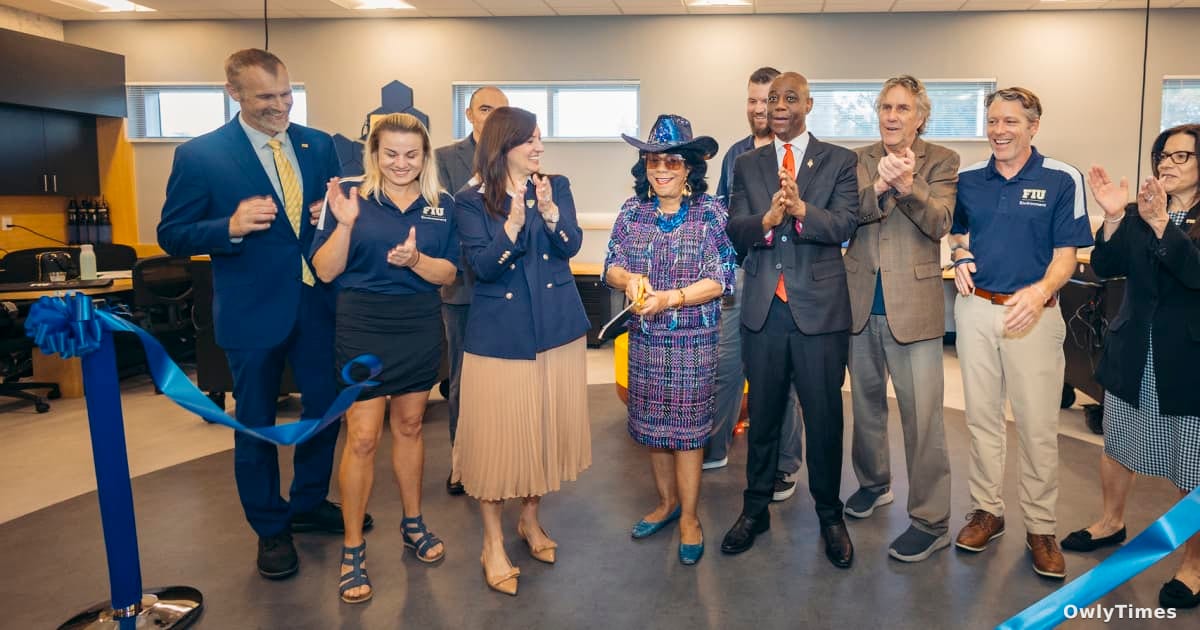
The narrative surrounding environmental conservation often centers on fixing damage – restoring habitats, cleaning polluted waters. But a crucial, and often underfunded, component is simply knowing the extent of the problem, and tracking changes over time. Last week’s unveiling of two new research laboratories at Florida International University – the Marine Robotics and Autonomous Systems Lab and the Coastal Conservation and Restoration Laboratory – represents a significant, and arguably more fundamental, investment in that knowledge base. While headlines emphasize the $11.5 million in federal funding secured by Frederica Wilson and the promise of Everglades and Biscayne Bay restoration, the true impact may lie in the shift towards proactive, data-driven environmental management these labs enable.
The $11.5 million, a substantial sum, is distributed strategically: $9.5 million dedicated to robotics and autonomous systems, roughly $1 million for Biscayne Bay-specific restoration and education, and just over $1 million for Everglades research. This allocation isn’t simply about more money for existing projects; it’s about fundamentally changing how that research is conducted. Traditional environmental monitoring relies heavily on manual data collection – a process that is both labor-intensive and limited in scope. The Marine Robotics and Autonomous Systems Lab aims to overcome these limitations by developing and deploying technologies like environmental sensors and underwater robots capable of continuous, real-time data gathering in previously inaccessible areas. This isn’t about replacing scientists in the field, but rather augmenting their capabilities, allowing them to focus on analysis and interpretation rather than repetitive data collection. FIU President Jeanette Nuñez framed this as a commitment to “environmental resilience…protecting our natural resources and also about securing our future prosperity,” but the economic implications of a more precise understanding of environmental health are often overlooked.
The Coastal Conservation and Restoration Laboratory, while less focused on novel technology, is equally vital. It provides a dedicated space for scientists to study the complex interplay between environmental pressures – sea level rise, pollution, and increasingly frequent extreme weather events – and the health of South Florida’s unique ecosystems. This research isn’t happening in a vacuum. As Mike Heithaus, FIU vice provost of environmental resilience, stated, the university is aiming to become “an innovation district for environmental and maritime technology.” This suggests a deliberate effort to foster collaboration between researchers, industry partners, and local communities, translating scientific findings into practical solutions. The labs will also serve as a training ground for the next generation of environmental professionals, equipping FIU students with skills in areas like robotics, data science, and underwater communication – skills that are currently in high demand.
This piece references the news.fiu.edu report.
However, it’s crucial to acknowledge the limitations of this investment. While $11.5 million is significant, it represents a small fraction of the overall funding needed to address the scale of environmental challenges facing South Florida. Biscayne Bay, for example, has experienced devastating seagrass die-offs in recent years, linked to a complex combination of factors including nutrient pollution and climate change. Simply having better data won’t solve these problems; it will only provide a clearer picture of what needs to be done. Furthermore, the success of these labs will depend on effective data sharing and collaboration not just within FIU, but also with other research institutions, government agencies, and the public. Todd Crowl, director of the Institute of Environment, highlighted the importance of engaging communities and schoolchildren, but translating data into actionable policy requires a sustained commitment to public outreach and education.
The opening of these labs isn’t a final solution, but a critical step towards a more informed and proactive approach to environmental management. The next crucial development will be observing how the data generated by these labs influences policy decisions regarding coastal development, water management, and pollution control. Will this enhanced understanding translate into more stringent regulations, increased funding for restoration projects, or a shift towards more sustainable practices? The real test of this investment won’t be the technology itself, but whether it can drive meaningful change in the face of ongoing environmental pressures.





