
The Silent Threat to Raptors: Rodenticide Exposure and a Community Rescue
The seemingly straightforward story of a rescued owlet speaks to a growing, often invisible, crisis in wildlife health: secondary poisoning from rodenticides. While headlines celebrate the successful return of a young great-horned owl to the UNCA woods, the case, as detailed by Miranda Torkelson, an assistant professor at Lees-McRae’s May School of Natural and Health Sciences, reveals a far more complex picture of environmental contamination and the delicate balance between human activity and predator wellbeing. This isn’t simply a feel-good story about animal rescue; it’s a warning sign about the unintended consequences of pest control and the increasing vulnerability of raptors in both rural and urban landscapes.
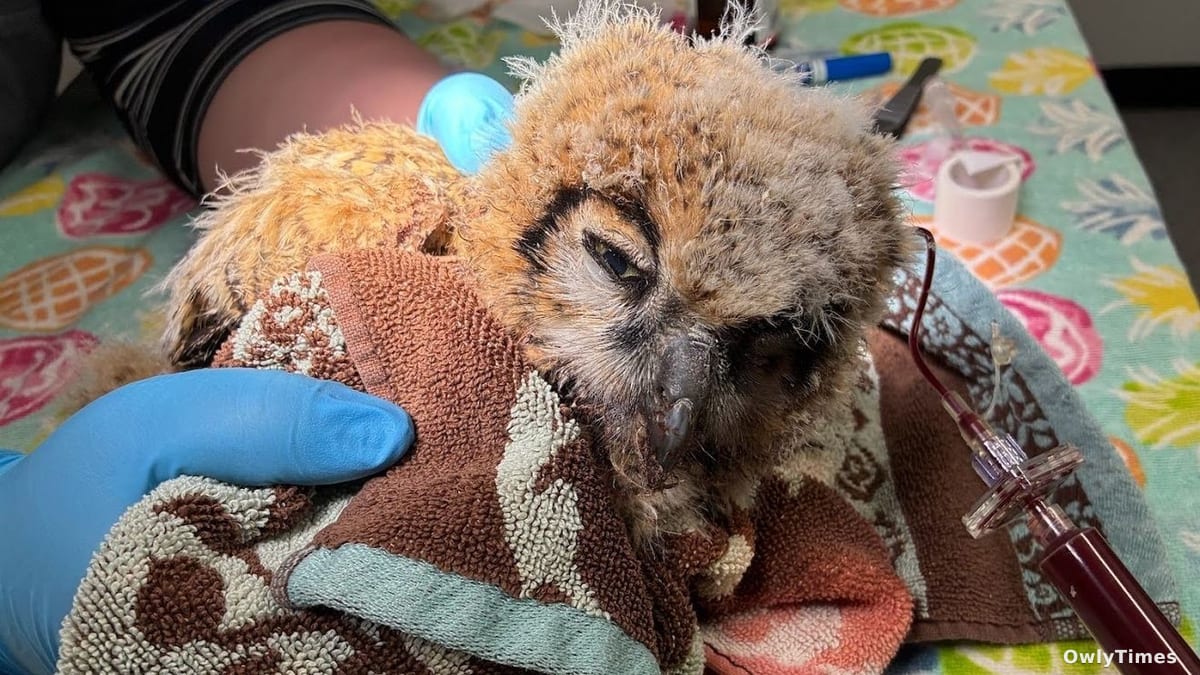
The owlet was initially discovered on March 8th by visitors to the UNC Asheville woods, exhibiting signs of severe weakness and unexplained bruising. What initially appeared as trauma quickly pointed to a more insidious cause. Torkelson and her team at the May Wildlife Rehabilitation Center discovered the owlet’s packed cell volume (PCV) – a measure of red blood cell concentration – was critically low, registering at just 9%. To put this in context, a normal range for owls falls between 35-55%. This severe anemia, coupled with a dangerously slow clotting time, strongly suggested exposure to rodenticide. The working hypothesis was that the owlet had consumed a rodent that had ingested poison, a phenomenon known as secondary poisoning. This isn’t a rare occurrence; raptors, as apex predators, are particularly susceptible because they accumulate toxins through their diet.
The speed of intervention proved crucial. Fortunately, Dylan Shrock, a recent Lees-McRae Wildlife Biology graduate living nearby, immediately recognized the severity of the situation and transported the owlet to the rehabilitation center in Banner Elk. This rapid response allowed for immediate treatment, including a life-saving blood transfusion administered via a jugular catheter. Within 24 hours, Torkelson reported a dramatic improvement in the owlet’s condition, and within three days, its PCV levels were approaching normal. The center, which treats approximately 1,500-1,800 native wildlife patients annually, relies heavily on student involvement, providing a vital learning environment alongside critical conservation work. The successful treatment, culminating in the cessation of vitamin K supplementation after nearly three weeks, demonstrated the effectiveness of targeted intervention.
This piece references the wlos.com report.
However, the owlet’s recovery wasn’t solely a medical triumph. The story highlights the power of community observation and advocacy. While the rehabilitation center focused on the owlet’s physical health, local residents and supporters of the “Save the UNCA Woods” campaign diligently monitored the remaining owlets and their parents, confirming their continued wellbeing in the original nest location. This collaborative effort, culminating in a carefully orchestrated return to the woods with the assistance of the Asheville Fire Department’s Ladder 4, underscores the importance of citizen science and local engagement in wildlife conservation. The return itself, documented by photographer Steve Atkins, provided ongoing reassurance that the owlet was successfully reintegrating and being fed by its parents.
Limitations to consider include the difficulty in definitively confirming the source of the rodenticide exposure. While the clinical signs strongly suggested poisoning, a specific toxin analysis wasn’t performed. Furthermore, this case represents a single instance, and while indicative of a broader problem, doesn’t provide statistically significant data on the prevalence of rodenticide poisoning in the Asheville area. The success of this rescue also relies on the availability of specialized veterinary care and a dedicated rehabilitation center, resources not universally accessible to all wildlife populations.
Looking ahead, research needs to focus on quantifying the extent of secondary poisoning in raptor populations across different landscapes. Tracking rodenticide use, analyzing prey items for toxin residues, and monitoring raptor health indicators are all critical steps. More importantly, exploring and promoting alternative, non-toxic pest control methods is essential to mitigate the risks to these vulnerable predators. The question now isn’t just whether we can rescue individual animals, but how we can prevent these exposures from happening in the first place – and whether communities will prioritize wildlife health when making decisions about pest management.