
Is the AI gold rush finally hitting a wall, or are we just watching the market get a bad case of the jitters? We are conditioned to view every earnings report from the titans of Silicon Valley as a binary outcome—either a rocket ship to the moon or a catastrophic crash. We treat these quarterly updates like high-stakes poker games where the house is supposed to win every single hand.
The real story here isn’t whether Nvidia hits its revenue targets on May 20—it’s whether Wall Street has finally moved the goalposts so far back that scoring a touchdown no longer counts as a win.
When Growth Isn’t Enough to Please the Street
For the Jensen Huang-led chip giant, the upcoming fiscal first-quarter earnings report represents more than just a balance sheet update. Investors are bracing for another period of explosive growth fueled by the insatiable appetite for AI infrastructure. The expectation is that the company will once again deliver revenue and profit numbers that comfortably clear Wall Street’s already lofty estimates.
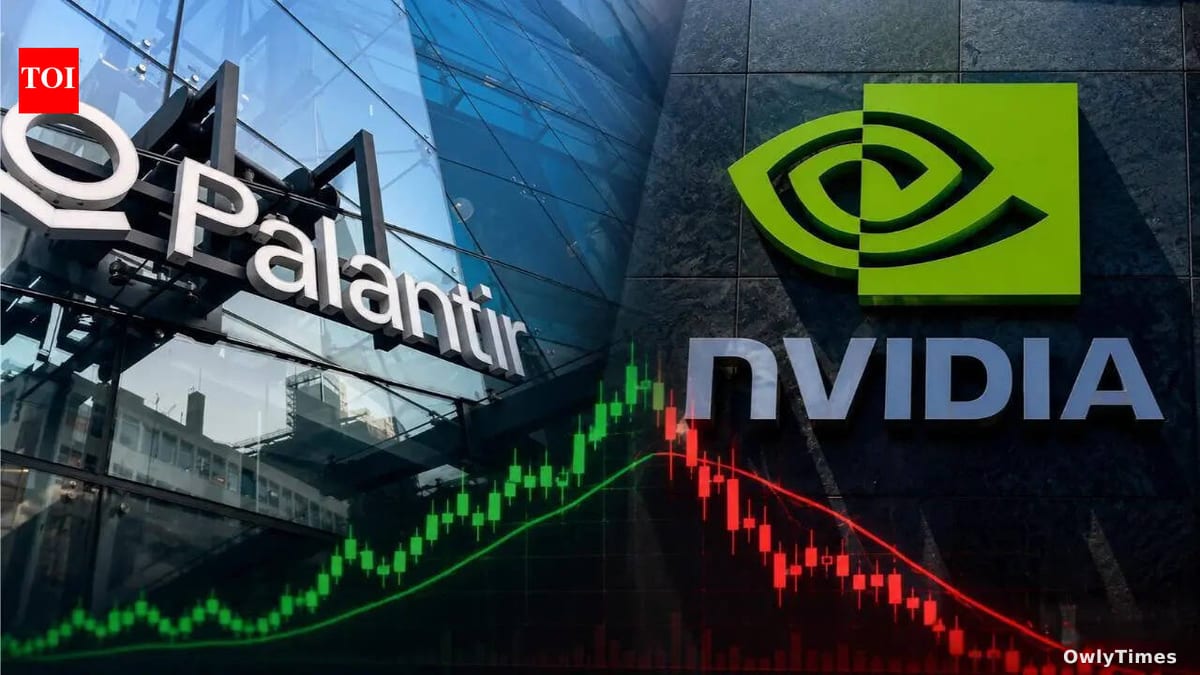
However, recent market behavior suggests that being "good enough" is a relic of the past. Look at Palantir Technologies, which recently reported a massive 85% jump in revenue to $1.63 billion. Bolstered by robust performance in both US government contracts and commercial business, the company even had the confidence to raise its full-year 2026 sales forecast. By any traditional metric, that is a stellar performance. Yet, the market’s response was a swift kick to the teeth: Palantir shares fell more than 8% in the two days following that report.
As The Motley Fool pointed out, this disconnect highlights a dangerous shift in sentiment. When investor expectations reach the stratosphere, even record-breaking growth can trigger a sell-off if it doesn’t meet a standard of perfection that defies business reality.
The Fragile Illusion of Infinite Pricing Power
Nvidia’s dominance is currently anchored by its GPUs and the CUDA software platform, the bedrock upon which most modern AI systems and data centers are built. As long as the tech industry is sprinting to build out AI capacity, Nvidia’s hardware remains the undisputed industry standard. Yet, the durability of that advantage is coming under scrutiny.
We are seeing the emergence of a classic tech contradiction: the customers who rely on Nvidia most are also its biggest future rivals. Major technology firms are pouring resources into developing their own proprietary AI chips and data center hardware. While these in-house solutions might not yet mirror the raw performance of Nvidia’s flagship gear, they possess a compelling edge: they are cheaper and far easier to access.
This internal competition poses a direct threat to the GPU shortage that has allowed Nvidia to maintain its iron grip on pricing power and profit margins. If the supply-demand imbalance begins to normalize, that "scarcity premium" will evaporate. Analysts are already sounding the alarm, warning that even if the upcoming earnings look strong on paper, the company may face significant pressure.
Betting on the Reality Check
The history of technology booms is littered with companies that led the charge only to face painful market corrections when the hype outpaced the actual utility. There is a growing, quiet anxiety that the businesses currently buying up Nvidia’s hardware will take years to figure out how to turn those expensive, power-hungry investments into actual, bottom-line profits. It is the tech equivalent of buying a Ferrari to deliver pizzas; it looks impressive, but the economics don't necessarily make sense yet.
If the market treats Nvidia with the same cold logic it applied to Palantir, we could see the chip maker lose billions in market value immediately following the May 20 earnings announcement, regardless of the actual numbers presented. The next reading of the stock's performance in the 48 hours following that May 20 report will reveal whether the AI hype cycle is still gathering steam or if the market has finally decided to start charging interest on its optimism.