
54% is the staggering annual increase in margin debt that currently underpins global market volatility, a surge representing the sixth-largest spike in the last 60 years. As Wall Street grapples with a cooling AI trade and a fundamental shift in how the Federal Reserve communicates, this leverage is acting as "push-button liquidity" that is simultaneously fueling market rallies and exacerbating the speed of sell-offs.
The Fed’s New ‘Quiet’ Strategy
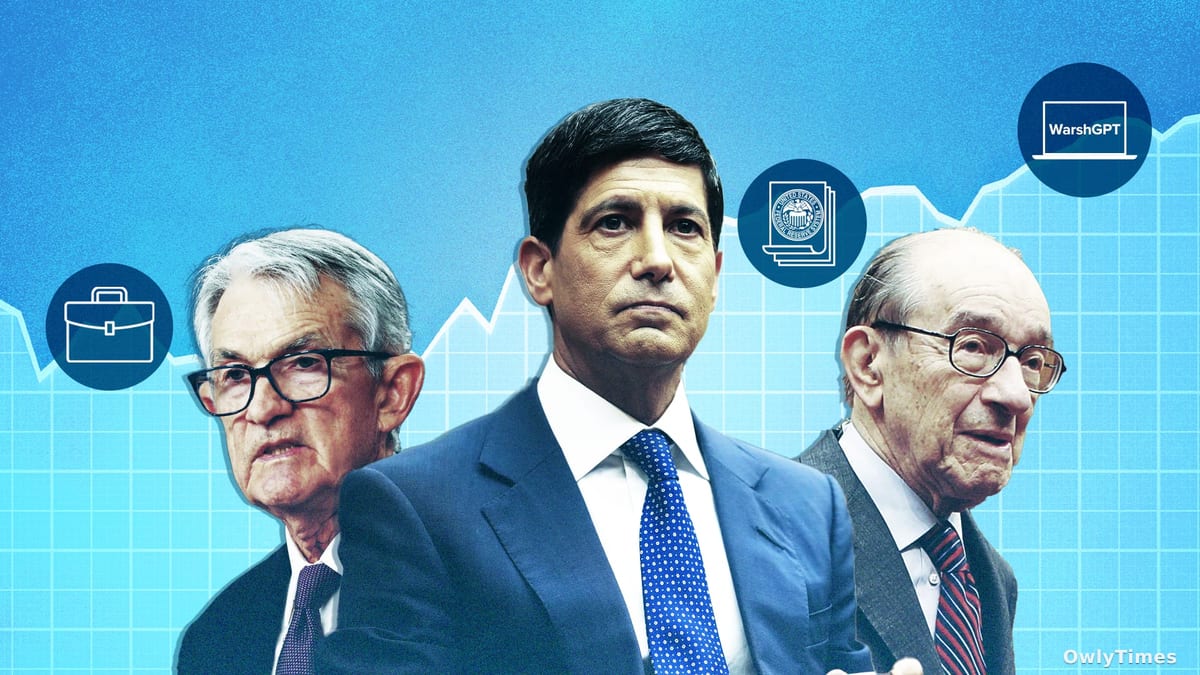
Market participants are recalibrating their strategies as Federal Reserve Chairman Kevin Warsh implements a significant reduction in forward-looking communication. According to CNBC, the shift is already measurable: the Federal Reserve’s June policy statement contained approximately 130 words, a sharp decline from the 300-word average seen under previous leadership. UBS data further highlights this pivot, noting that Warsh dedicated only 5% of his first post-decision press conference to policy-relevant topics, a stark contrast to the 27% average maintained by his predecessor, Jerome Powell.
In response to this "less clarity" era, financial firms are deploying proprietary technology to bridge the information gap. F/m Investments has launched "WarshGPT," an AI tool designed to parse nearly 1,800 documents and transcripts to analyze the chairman’s potential policy stance. While firms like JPMorgan Asset Management are preparing to pivot their focus toward the specific speeches of Federal Open Market Committee members should the Fed eventually abandon traditional tools like the "dot plot," analysts warn that this transition could result in heightened market sensitivity to every word spoken by central bank leadership.
The Leverage Trap and the Korean Correction
While the Fed’s communication style evolves, the underlying structure of global equity markets is facing a stress test driven by excessive borrowing. Fortune reports that the dangers of this leverage are most visible in South Korea, where the Kospi index has plummeted 27% from its record high last month. This decline triggered margin calls for 1.2 million brokerage accounts, affecting roughly 10% of the country’s total accounts.
Market forecaster Tom Lee of Fundstrat Global Advisors characterizes this as a "rolling correction" that, while painful for leveraged traders, may ultimately prove healthy for the broader U.S. market. Unlike the concentrated volatility seen in South Korea, the S&P 500’s 2% decline and the Nasdaq’s 6% slide from recent highs suggest that U.S. investors are maintaining "ballast" through exposure to more stable software stocks and the "Magnificent 7." However, the saturation of the bond market presents a separate hurdle: the cover ratio for hyperscaler debt—a measure of investor demand per dollar of bonds—has plunged from 5x in February 2026 to below 2x in July, according to data from Apollo Global economist Torsten Slok.
Historical Context and Investor Implications
While modern markets navigate AI-driven hype and regulatory shifts, the industry remains haunted by its past excesses. CBS News recently highlighted the revelations of Howie Gelfand, a former partner at the infamous firm Stratton Oakmont. His testimony serves as a stark reminder of the psychological and financial toll of unsustainable market practices, underscored by 15,000 internal FBI and government documents brought to light in a new Paramount+ docuseries.
For your wallet, these developments signal a period of transition where "decoding Fedspeak" is becoming a technological arms race rather than a human exercise. As borrowing costs for major tech firms rise due to bond market saturation and the Fed minimizes its forward guidance, investors should expect increased volatility following policy meetings. The takeaway is clear: in an environment where "one word can move dollars," relying on automated, data-backed frameworks is no longer just a competitive edge—it is becoming a necessity for navigating the current market cycle.