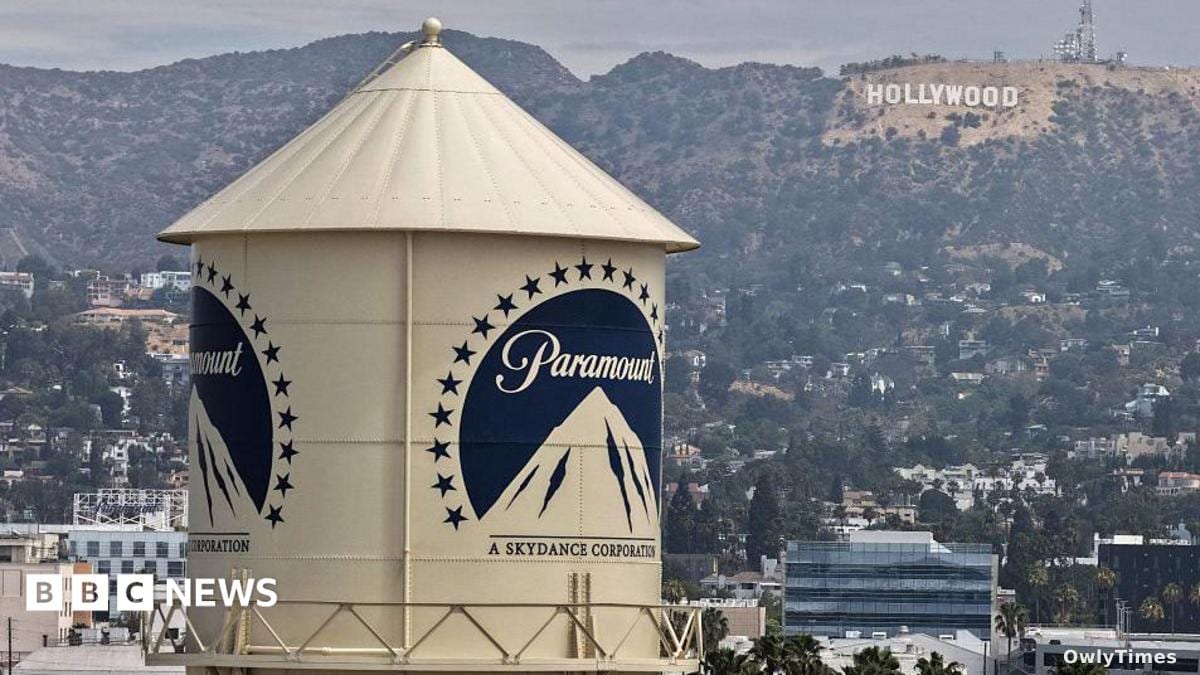

A ticking clock of $650 million in quarterly penalties is now counting down for Paramount Skydance after a federal judge froze its planned megamerger with Warner Bros Discovery (WBD). The sudden legal roadblock, delivered just days before the companies hoped to finalize their tie-up, threatens to turn a highly anticipated corporate marriage into an incredibly expensive waiting game. With legal fees and contractual penalties set to mount rapidly, the decision shifts the leverage in Hollywood from corporate boardrooms to state prosecutors.
A Blockbuster Deal Frozen on the Brink of Consummation
On Monday, July 20, 2026, US District Judge Araceli Martínez-Olguín issued a temporary restraining order (TRO) halting the merger for at least 14 days. The ruling came in response to a lawsuit filed by a coalition of 12 US states, led by California and New York, which argues that combining two of the world's largest media empires would stifle market competition and inflate costs for everyday consumers.
There is notable disagreement among major news outlets regarding the transaction's exact paper value. According to NPR, the deal is valued at $111 billion, whereas the BBC reports the figure at $110 billion. Meanwhile, The Guardian cites a significantly lower valuation of $81 billion, illustrating the complex accounting and debt structures underlying the massive transaction.
Despite these valuation discrepancies, state prosecutors are united in their opposition. California Attorney General Rob Bonta hailed the TRO as a critical first victory, asserting that history demonstrates what happens when a select few hold immense power over cultural and media markets. The states argue that the consolidation would lead to fewer opportunities for workers and diminished product quality for consumers.
Ticking Fees and the Steep Price of Regulatory Delays
To understand the true pressure on Paramount, one must follow the money. In merger arbitrage, time is literally money, and the financial structures governing this deal penalize delay with extreme severity. If the transaction is not completed in a timely manner, Paramount faces aggressive contractual penalties designed to protect Warner Bros Discovery's shareholders.
The exact activation date of these penalties varies slightly across reporting sources. Al Jazeera reports that Paramount will owe a quarterly "ticking fee" of $650 million starting September 30, 2026, alongside a 25-cent-per-share fee that translates to approximately $7 million daily. Conversely, NPR states the $650 million ticking consideration is due every 90 days starting October 1, 2026, with an ultimate drop-dead clause: if the merger is not completed by June 4, 2027, Paramount must pay Warner a staggering $7 billion termination fee.
Wall Street reacted swiftly to the legal setback. While Paramount Skydance’s stock experienced a midday recovery to trade roughly flat after an initial tumble, Warner Bros Discovery shares bore the brunt of investor anxiety, closing down 3.8 percent in midday trading, according to Al Jazeera.
The Battle Over Theatrical Distribution and Tech Giants
The legal battle centers on whether a combined Paramount-WBD would monopolize theatrical movie releases and basic cable distribution. Judge Martínez-Olguín noted that allowing the merger to proceed now would make it "extraordinarily difficult to unscramble the egg" if the court eventually decides to block the deal permanently. The judge scheduled a preliminary injunction hearing for August 3, 2026, which will determine if the freeze will extend into a multi-month trial.
Paramount’s Chief Legal Officer, Makan Delrahim, argued that the states’ antitrust arguments ignore the modern realities of the entertainment market. Delrahim contended that traditional Hollywood studios now compete directly with massive tech platforms like Netflix, Apple, and Amazon, as well as smaller players like Lionsgate and A24. However, Judge Martínez-Olguín rejected this defense, characterizing the streaming market as merely "ancillary" to the theatrical distribution and cable markets under litigation.
Adding to the legal pressure, the Writers Guild of America (WGA) filed a separate lawsuit to block the deal. WGA West President Michele Mulroney stated that the consolidation would eliminate vital competition, threatening the livelihoods of entertainment workers and reducing creative diversity in television and film.
Political Alliances and the Looming Battle Over Newsrooms
Beyond the economics of Hollywood box offices, the merger has sparked intense scrutiny in Washington due to its potential impact on the national news landscape. The deal is heavily bankrolled by Oracle co-founder Larry Ellison, a prominent ally of Donald Trump, whose son David Ellison serves as the CEO of Paramount.
The prospect of bringing CBS News and CNN under a single corporate umbrella has raised significant press freedom concerns. Internal anxieties have mounted over reports that conservative opinion writer Bari Weiss could be hired to oversee CNN. This rumor has reportedly caused high-profile talent to reconsider their futures; Paula Reid is already preparing to depart for MS Now, while veteran anchor Anderson Cooper has reportedly discussed leaving the network if a Weiss takeover occurs.
Media experts warn that such consolidation could compromise editorial independence. Rodney Benson, a professor of media, culture, and communication at New York University, warned that the merger could set a dangerous regulatory precedent by favoring media owners willing to align their news coverage with the executive branch, ultimately reducing the diversity of viewpoints available to the public.
How the Regulatory Standoff Impacts Consumer Budgets
For retail investors and consumers, the temporary freeze of this $110 billion-plus merger serves as a reminder of the rising regulatory risks in highly consolidated sectors. If the August 3 hearing transitions this temporary pause into a long-term preliminary injunction, Paramount's balance sheet will face immediate, severe strain from the multi-million-dollar daily ticking fees.
For consumers, the immediate impact is a temporary preservation of the status quo. Had the deal closed on its original July 22 target, subscribers would have likely faced rapid consolidation of streaming platforms like Paramount+ and Max, almost certainly followed by price hikes as the newly formed giant sought to monetize its combined library. For now, consumers retain separate billing options, but the impending August court date will ultimately dictate whether your monthly entertainment budget faces a consolidated, and likely more expensive, future.