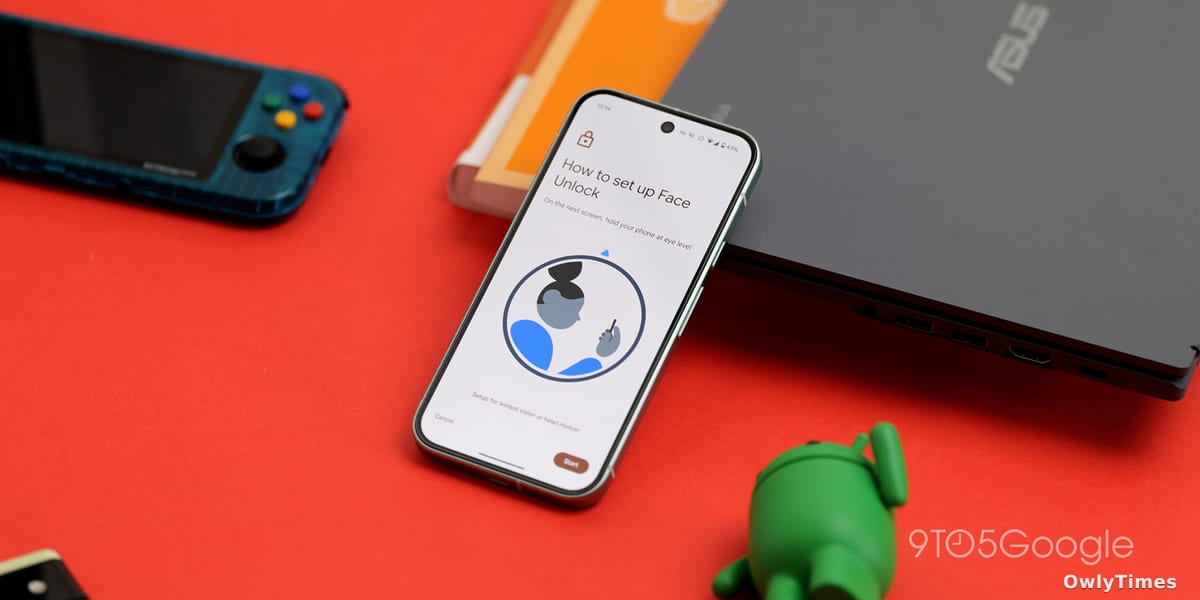

Is your phone’s face unlock actually secure, or just convenient? For years, Android manufacturers have treated facial recognition as an afterthought, a quick-and-dirty feature tacked onto fingerprint sensors. But Google is quietly signaling a shift with “Project Toscana,” a hardware overhaul aiming to bring Pixel face unlock up to – and potentially beyond – Apple’s Face ID. The real story here isn't just faster unlocking; it’s Google finally acknowledging that biometric authentication is a battle for user trust, and that trust is built on reliable, secure hardware.
For context, consider the current landscape. While roughly 90% of smartphone users globally utilize some form of biometric security, fingerprint sensors still dominate Android, accounting for approximately 75% of authentications. Face unlock, even on premium devices, often feels like a compromise. Google itself stumbled badly with the Pixel 4 in 2019, investing heavily in infrared-based face unlock only to see the feature rendered largely useless by the sudden ubiquity of masks. That misstep, launched mere months before the pandemic, effectively sidelined ambitious face unlock plans for years.
This article draws on reporting from 9to5Google.
The subsequent Pixel iterations, like the Pixel 7 and Pixel 8, reintroduced face unlock, but with limitations. The Pixel 7’s implementation relied on the standard camera and couldn’t access secure apps, a critical flaw. It took another year, with the Pixel 8, to resolve that issue. This incremental approach highlights a key tension: Google clearly wants to compete in the face unlock space, but has been hesitant to commit fully, likely due to lingering concerns about reliability and security. Now, with “Project Toscana,” reported by Android Authority, they’re signaling a renewed commitment.
The Hardware Catch-Up Game
“Project Toscana” reportedly aims to deliver Face ID-level performance – speed and accuracy in “various lighting conditions” – without adding extra hardware. This is a significant claim. Current Pixel face unlock struggles in low light, rendering it impractical for many users. The project’s potential use of infrared (IR) technology, hinted at in previous rumors surrounding the Pixel 11 and the Tensor G6 chip’s supposed under-display IR camera support, is crucial. The goal, according to the report, is to achieve reliable face unlock “in any lightning condition without any extra visible hardware.” This is a tall order, requiring sophisticated sensor technology and image processing.
It’s worth noting that simply matching Apple’s speed isn’t the primary win here. Pixel’s existing face unlock is already reasonably quick. The real leap forward would be consistent performance across a wider range of environments. The current implementation is, as many users have experienced, effectively useless outside of brightly lit rooms. This inconsistency erodes user confidence and pushes people back to less convenient, but more reliable, methods like PINs and passwords.
Chromebooks and the Expanding Biometric Ecosystem
The scope of “Project Toscana” extends beyond smartphones to include Chromebooks. This is a particularly interesting development. While Chromebooks have gained traction in education and enterprise, they’ve lagged behind in biometric security options. Adding robust face unlock to Chromebooks would not only enhance security but also streamline the user experience, particularly for shared devices. This move aligns with Google’s broader strategy of integrating its hardware and software ecosystems, creating a more seamless experience across devices.
Beyond Convenience: The Security Implications
The push for improved face unlock isn’t just about convenience. It’s about security in an increasingly complex digital world. As mobile payments, digital wallets, and sensitive data storage become more prevalent, the need for robust authentication methods grows. A compromised fingerprint sensor or a weak password can leave users vulnerable to fraud and identity theft. Secure face unlock, leveraging advanced hardware and algorithms, offers a more robust layer of protection. However, it’s crucial to remember that no biometric system is foolproof. They are all susceptible to spoofing attempts, and ongoing research is essential to stay ahead of potential threats.
Looking ahead, expect to see a renewed focus on biometric security across the Android ecosystem. Google’s “Project Toscana” is likely just the first step. The question isn’t if Android face unlock will improve, but how quickly Google can deliver on its promises and build user trust. Watch for the Pixel 11 – if it arrives with a truly reliable, all-condition face unlock, it will signal a fundamental shift in Google’s approach to biometric authentication, and a direct challenge to Apple’s dominance in this critical security space.