
The Delicate Balance of Supply Lines: What the Progress 94 Mission Reveals About ISS Operations
The International Space Station (ISS) is often presented as a symbol of international cooperation and scientific advancement, but beneath the surface lies a complex logistical operation. Tomorrow’s docking of the Progress 94 cargo spacecraft isn’t simply a delivery of food and fuel; it’s a demonstration of the ISS’s reliance on consistent resupply, and a subtle illustration of the challenges inherent in maintaining a human presence in low Earth orbit. While headlines will focus on the nearly three tons of essential goods arriving from the Baikonur Cosmodrome, the story is more nuanced, revealing a system that adapts to unexpected technical hurdles while simultaneously pushing the boundaries of space-based research.
Original reporting: nasa.gov.
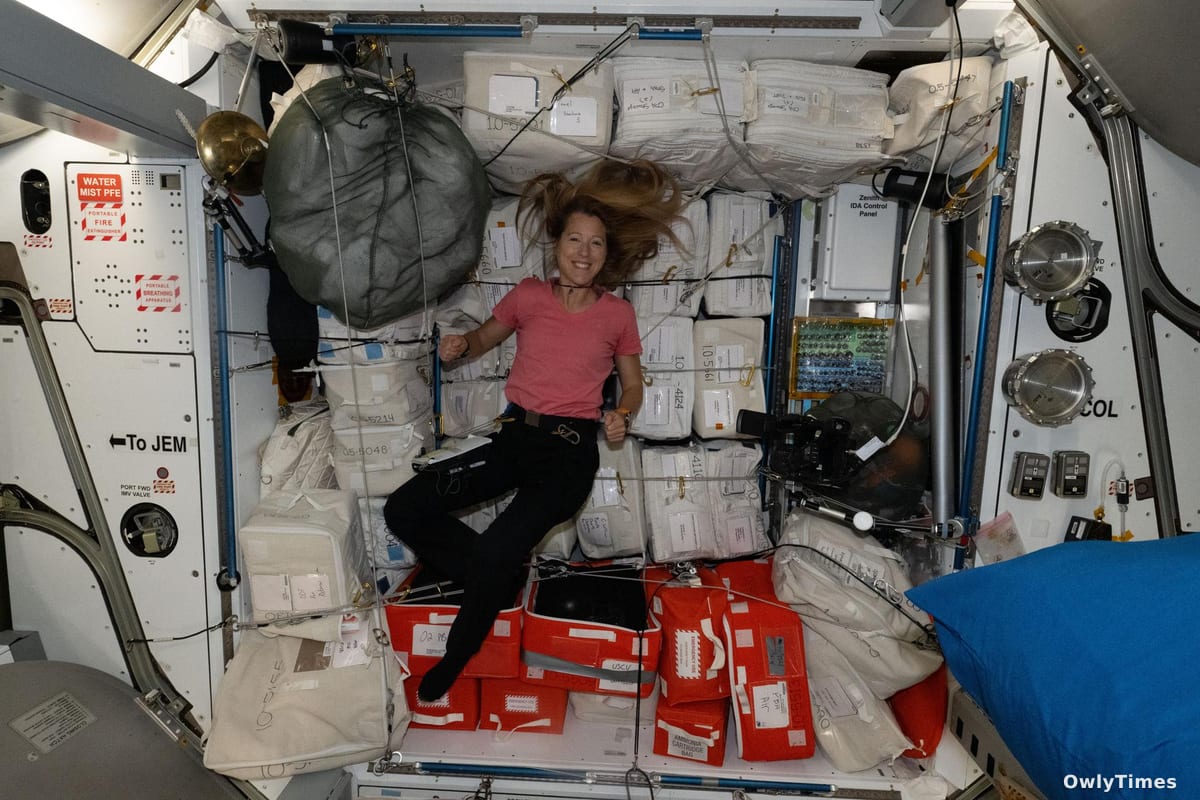
The Expedition 74 crew is currently engaged in a flurry of activity preparing for the arrival. NASA astronauts Jessica Meir, Chris Williams, and Jack Hathaway are focused on a blend of routine maintenance and preparation for an upcoming spacewalk. Williams’ work with the Cell Biology Experiment Facility, inserting canisters and organizing food stores, exemplifies the dual purpose of ISS operations: sustaining life and conducting research. Simultaneously, Hathaway is ensuring the readiness of the spacesuits, a critical component of the station’s ability to perform external repairs and upgrades. This division of labor isn’t arbitrary; it reflects a carefully orchestrated schedule designed to maximize efficiency in a resource-constrained environment. The fact that these tasks are happening concurrently, and that Adenot is also contributing to the RelaxPro experiment—investigating relaxation techniques for astronauts—highlights the sheer density of work occurring on the ISS at any given moment.
The Progress 94 mission, launched on March 22nd at 7:59 a.m. EDT, wasn’t without a complication. A failure in the deployment of one of the antennas used for automated rendezvous and docking necessitates a manual approach. This is where the expertise of Roscosmos Commander Sergey Kud-Sverchkov and flight engineer Sergei Mikaev becomes crucial. They’ve been training with TORU, the Telerobotically Operated Rendezvous System, to prepare for manually piloting the spacecraft during its final approach. This isn’t a failure, but a demonstration of the ISS’s built-in redundancy and the crew’s ability to adapt to unforeseen circumstances. The spacecraft will autonomously approach to within 200 meters, then Kud-Sverchkov will take control, a testament to the ongoing need for human skill even in an age of increasingly automated spaceflight. It’s important to note that this manual docking isn’t significantly slower than an automated one, but it does require a higher degree of concentration and precision from the commander.
Beyond the immediate logistical concerns, the work happening inside the ISS is equally significant. European Space Agency astronaut Sophie Adenot’s participation in the RelaxPro experiment, involving actigraphy devices and biological sample collection, speaks to a growing awareness of the psychological challenges of long-duration spaceflight. The ISS isn’t just a laboratory for physics and biology; it’s a testbed for understanding the human response to extreme environments. This research is vital as we look towards longer missions to the Moon and, eventually, Mars. Similarly, Adenot’s work with the Electrostatic Levitation Furnace in the Kibo module underscores the station’s role in materials science, potentially leading to breakthroughs in manufacturing processes both on Earth and in space.
Limitations to Consider
It’s crucial to remember that the ISS operates within a complex geopolitical landscape. While the current collaboration between NASA, Roscosmos, ESA, and other international partners remains intact, future cooperation isn’t guaranteed. The Progress 94 mission, while successful in its launch, serves as a reminder of the vulnerabilities inherent in relying on a single launch provider for critical supplies. Furthermore, the data collected from experiments like RelaxPro, while valuable, represents a relatively small sample size. Generalizing findings from a handful of astronauts to the broader population requires careful consideration. The ISS is a unique environment, and the stressors experienced by its crew may not perfectly replicate those encountered in other space exploration scenarios.
The live coverage of the docking, available on NASA+, Amazon Prime, and YouTube, is a deliberate effort to maintain public engagement and demonstrate the value of the ISS program. However, it’s important to view this coverage critically, recognizing that it presents a curated narrative. The challenges and setbacks, like the antenna deployment issue, are acknowledged, but often framed as examples of the crew’s resilience and adaptability. This isn’t necessarily misleading, but it’s a reminder that the public perception of the ISS is shaped by strategic communication.
What will be particularly interesting to watch in the coming months is how the ISS adapts to the evolving commercial space landscape. With companies like SpaceX and Northrop Grumman increasingly involved in cargo delivery, will the role of Roscosmos in resupply diminish? And how will this shift impact the delicate balance of international cooperation that has defined the ISS for over two decades? The arrival of Progress 94 isn’t just about delivering supplies; it’s a snapshot of a system in transition, and a harbinger of the challenges and opportunities that lie ahead.