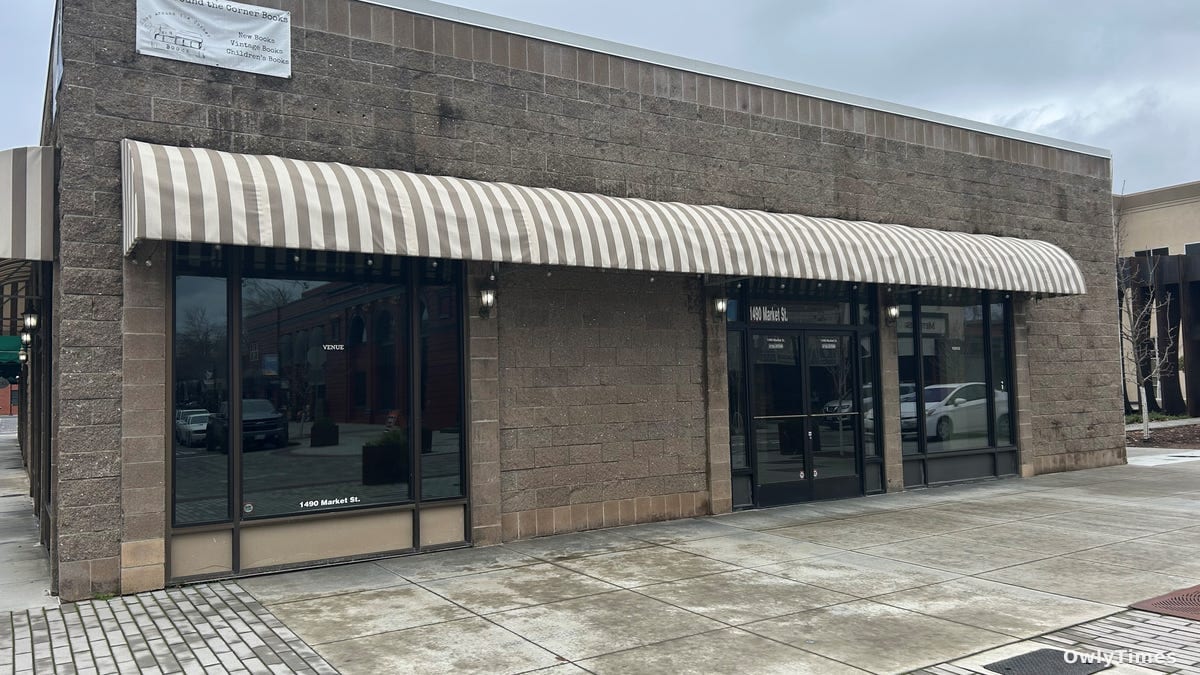

$1.375 million—that’s the price tag signaling a shift in Redding’s downtown core, but the story isn’t about escalating real estate values. It’s about a deliberate redirection of capital towards specialized community services, specifically neurodevelopmental and sensory support. Riley and Cassandra Breslin’s purchase of the 1490 Market St. building, formerly home to Sim Nathan’s Shoes, isn’t simply a real estate transaction; it’s a strategic investment in a market segment demonstrably underserved in Shasta County, and a potential bellwether for how commercial spaces are being reimagined post-pandemic.
Follow the money: the Breslins are moving their Sensory Innovations & Breslin Occupational Therapy Services from Hilltop Drive, effectively doubling down on a business model catering to autistic adults and children, individuals with traumatic brain injuries, and those experiencing mental health challenges. This isn’t a scaling play driven by venture capital; it’s a calculated expansion fueled by organic demand. While the exact revenue figures for Sensory Innovations remain private, the decision to occupy a 6,000 square foot space—and ultimately the entire building—suggests a substantial and growing client base. This contrasts sharply with the broader retail landscape, where businesses like the recently closed Clines Event Center struggled to maintain viability in the same location.
The sale price itself is revealing. $1.375 million for a building with such historical significance—Sim Nathan’s Shoes operated there for nearly 70 years—might seem high at first glance. However, consider the current commercial real estate market in Redding. The listing price for Dam Burger, a downtown landmark since 1938, recently dropped to $975,000, despite its established brand and prime location. This discrepancy suggests the Breslins weren’t simply buying a building, but a specific potential—the ability to create a unique, in-demand service hub. The Nathan family trust’s willingness to sell for that price, and to facilitate a transition that prioritizes community benefit, further underscores this point.
Reporting from redding.com informs this analysis.
This move is happening concurrently with a broader recalibration of Redding’s downtown. Amber Treat, owner of Shop Around the Corner Books, is actively seeking a new location, citing increased foot traffic spurred by the opening of Redding Public Market in late 2025. Treat reported a 20% increase in January business year-over-year, a figure that highlights the market’s growing vitality. However, this vitality isn’t uniformly distributed. The closure of Clines Event Center, despite initial rebranding efforts, demonstrates that traditional retail and event spaces face increasing pressure to adapt. The Breslins’ model—integrating a play cafe, community space, and sensory center—represents a potential solution: diversifying offerings to cater to a wider range of needs and fostering a sense of community.
Meanwhile, another Redding institution, Nello’s Place, has been put on the market as owner Jim Dad prepares for retirement after 43 years. Dad’s emphasis on preserving the restaurant’s legacy and training a successor speaks to a desire for continuity, but also acknowledges the challenges of sustaining a long-standing business in a changing economic climate. Dad’s assertion that Nello’s is “one of the busiest in town” is a crucial data point, suggesting strong demand remains, but the decision to sell indicates a recognition that continued success requires a new level of investment and commitment.
What this means for your wallet: the Breslins’ investment isn’t likely to directly impact consumer prices in the short term. However, it signals a potential shift in how commercial spaces are valued. Increasingly, the ability to provide specialized services and foster community engagement will outweigh the advantages of prime retail locations. For investors, this means looking beyond traditional metrics like foot traffic and square footage, and focusing on businesses that address unmet needs. For consumers, it means a growing availability of specialized services—but also the possibility of increased competition for prime downtown locations, potentially driving up rents and impacting the cost of goods and services. The key question now is whether this trend—capital flowing towards community-focused businesses—will accelerate, and whether Redding can successfully cultivate an ecosystem that supports both economic growth and social well-being.





