
Is longevity in high-performance fields a superpower, or is it just a slow-motion battle against the inevitable decay of our own relevance? We treat elite athletes like biological hardware; when the processing speed drops, we immediately start shopping for a replacement, assuming the "next-gen" model is inherently better.
The real story here isn't the 5-0 scoreline of Tuesday’s match against Uzbekistan—it’s the brutal, data-driven scrutiny that forced Cristiano Ronaldo to prove he isn’t obsolete. After a lackluster 1-1 draw against the Democratic Republic of the Congo last week, the 41-year-old captain faced a tidal wave of skepticism. According to NPR, the discourse on social media and broadcast commentary had shifted from celebrating his career to openly questioning whether his presence was a tactical liability.
The Metrics of Resilience
The pressure was compounded by the performance of his peers. While Ronaldo struggled, Lionel Messi was busy racking up goals for Argentina, while Kylian Mbappe and Erling Haaland were tearing up the tournament with four goals each, as noted by NPR. The criticism hit a fever pitch, with The Guardian reporting that Ronaldo had failed to score in ten consecutive major tournament games prior to this fixture. He described the period leading up to Tuesday as a "difficult, dark week," admitting that the constant narrative—"Cristiano, he's finished, he's old"—had begun to weigh on him.
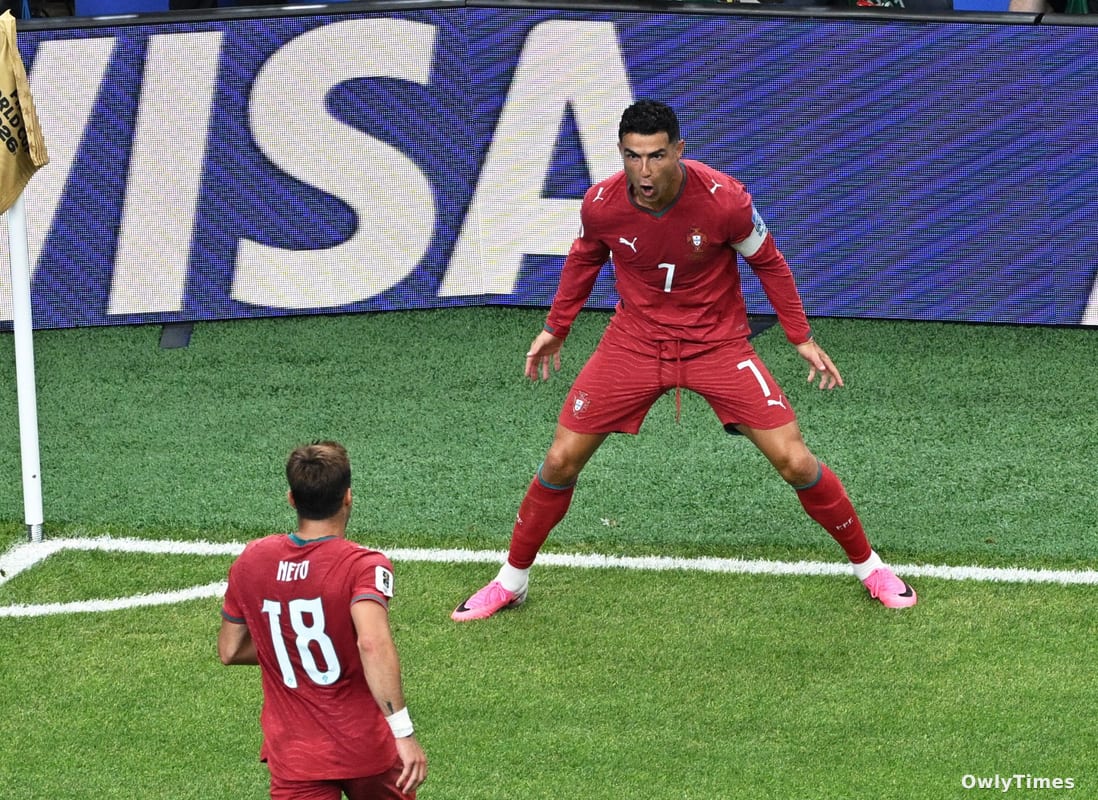
Ronaldo’s response was a masterclass in recalibration. Within six minutes of kickoff, he struck a powerful right-footed volley to break the deadlock. By the 39th minute, he added a second goal off a pass from Bruno Fernandes, effectively putting the match out of reach. As Al Jazeera reports, this performance saw him become the first player in history to score in six separate World Cups, while also surpassing Eusebio to become Portugal’s all-time leading scorer at the global finals.
The Cannavaro Perspective
The tactical reality of facing such an enduring veteran was best summarized by Uzbekistan head coach Fabio Cannavaro. According to Al Jazeera, Cannavaro—who captained Italy to a World Cup win in 2006, the same year Ronaldo made his tournament debut—noted that defenders cannot afford a single moment of lapse. "If you give him even one centimetre, he will score," Cannavaro warned, later suggesting to The Guardian that Ronaldo’s performance should quiet critics who claim that playing in the Saudi Pro League is a "waste of time."
A Lesson in User Retention
Portugal coach Roberto Martinez framed the situation as a necessary byproduct of the rivalry between Ronaldo and Messi. "I believe both players have improved football over the years, and their rivalry is important for themselves to grow," Martinez told Al Jazeera. Despite the external noise, Martinez maintained that Ronaldo remains a "role model" for the squad, a sentiment echoed by the player himself, who told The Guardian that while records are nice, his primary objective is the team's advancement.
For the average user watching this unfold, the takeaway is less about football and more about the shelf life of expertise in a world obsessed with the new. We are witnessing a transition where experience is being tested against raw, youthful output. With Portugal now sitting on four points, the team’s next hurdle will reveal whether this "I'm back" moment is a genuine resurgence or just a temporary spike in a declining trendline.