
Beyond the Coastline: A New Spinosaurus Challenges Assumptions About Ancient Ecosystems
The story of dinosaur paleontology isn’t simply about unearthing bigger skeletons; it’s about constantly revising our understanding of ancient worlds. The recent discovery of Spinosaurus mirabilis in Niger isn’t just another large predator added to the roster – it’s a geographic anomaly that forces us to rethink where, and how, these massive reptiles lived. While headlines proclaim “new dinosaur species found,” the real significance lies in where it was found: hundreds of kilometers inland, challenging the long-held belief that spinosaurids were primarily coastal hunters. This isn’t a case of simply extending a known range; it suggests a fundamentally different ecological role for these dinosaurs than previously imagined.
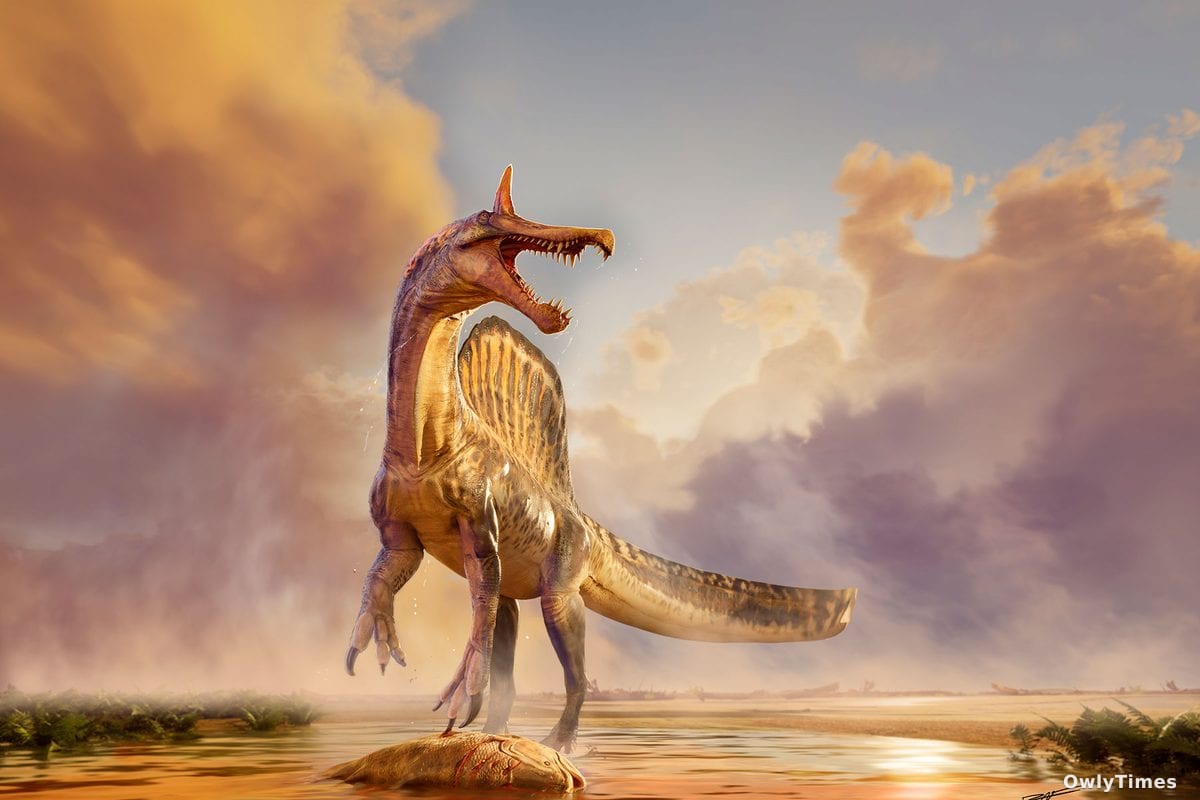
The find, led by Paul Sereno, a professor of organismal biology and anatomy at the University of Chicago, centers around a remarkably distinct feature – a scimitar-shaped crest adorning the skull of S. mirabilis. The team initially unearthed fragments in 2019, but didn’t grasp the crest’s importance until a return expedition in 2022 yielded more complete specimens. As Sereno recounts, the moment of realization, facilitated by 3D digital modeling of the bones, was profoundly impactful for the team. The newly described species, living approximately 95 million years ago, is estimated to have been as long as a school bus and weighed several tonnes. What sets it apart isn’t just its size, but the unique morphology of its skull, equipped with interlocking teeth perfectly adapted for trapping slippery fish – a feature shared with ichthyosaurs, crocodilians, and pterosaurs.
This article draws on reporting from sciencefocus.com.
The prevailing image of Spinosaurus has long been one of a semi-aquatic predator patrolling ancient coastlines. Previous fossil discoveries have largely corroborated this, placing them in marine or estuarine environments. This led to ongoing debate about the extent of their aquatic lifestyle, with some researchers proposing powerful swimming capabilities while others suggested a preference for wading in shallower waters. However, the location of S. mirabilis throws a wrench into this narrative. The Niger site wasn’t a coastline; the team posits it was a forested landscape interwoven with rivers. This suggests S. mirabilis thrived in a fluvial environment, actively hunting fish in a network of inland waterways. Sereno paints a vivid picture of this dinosaur as a “hell heron,” comfortable wading in up to two meters of water but primarily stalking prey in shallower areas.
It’s crucial to understand what the study doesn’t claim. It doesn’t definitively prove all spinosaurids were equally comfortable far from the sea. Rather, it demonstrates that at least one species successfully exploited a completely different ecological niche. This raises the possibility that the spinosaur family was more adaptable and diverse than previously thought, capable of colonizing a wider range of environments. The discovery also highlights the limitations of relying solely on coastal fossil deposits to understand the full evolutionary history of these dinosaurs. The fossil record is, by its nature, incomplete and biased towards environments conducive to fossilization – often, these are marine or near-shore settings.
Unearthing the Past: Methodological Considerations
The process of identifying S. mirabilis wasn’t a straightforward case of recognizing a complete skeleton. The initial 2019 finds were fragmented, and the significance of the crest wasn’t immediately apparent. It was the meticulous work of the 2022 expedition, coupled with advanced 3D modeling techniques, that allowed the team to reconstruct the skull and recognize the unique characteristics of this new species. This underscores the importance of revisiting previously excavated sites with new technologies and perspectives. The team’s methodology involved careful stratigraphic analysis to determine the age of the fossils and detailed anatomical comparisons with other spinosaurid specimens. This rigorous approach, published in Science, is what lends credibility to their interpretation.
Limitations to Consider
Despite the excitement surrounding this discovery, several limitations must be acknowledged. The fossil record from this region of Niger remains sparse. While the team proposes a fluvial environment, further geological and paleontological evidence is needed to fully reconstruct the ancient landscape. The sample size is also relatively small; the crests of only three S. mirabilis individuals have been identified so far. This limits our ability to assess intraspecific variation and understand the full range of morphological features within the species. Furthermore, determining the precise hunting strategies of S. mirabilis remains challenging. While the skull morphology suggests a fish-based diet, the exact methods used to capture prey are still speculative.
The Future of Spinosaurus Research
The discovery of Spinosaurus mirabilis isn’t an endpoint, but a catalyst for further research. Future expeditions to Niger and other inland regions of Africa are crucial to uncover more spinosaurid fossils and gain a more comprehensive understanding of their distribution and ecological roles. Researchers will also need to refine their understanding of the ancient environments these dinosaurs inhabited, utilizing techniques like paleobotany and sedimentology. Perhaps the most compelling question now is: how common was this inland adaptation within the spinosaur family? Were there other spinosaurids that successfully colonized freshwater ecosystems, or was S. mirabilis a unique outlier? The answer to this question will not only shed light on the evolutionary history of spinosaurids but also provide valuable insights into the adaptability of large predators and the dynamics of ancient ecosystems. We should watch for further analysis of the Niger site, specifically looking for evidence of other contemporaneous species that might reveal the broader food web S. mirabilis occupied.