
Beyond “Jurassic Park”: Reconstructing the True Life of Spinosaurus mirabilis
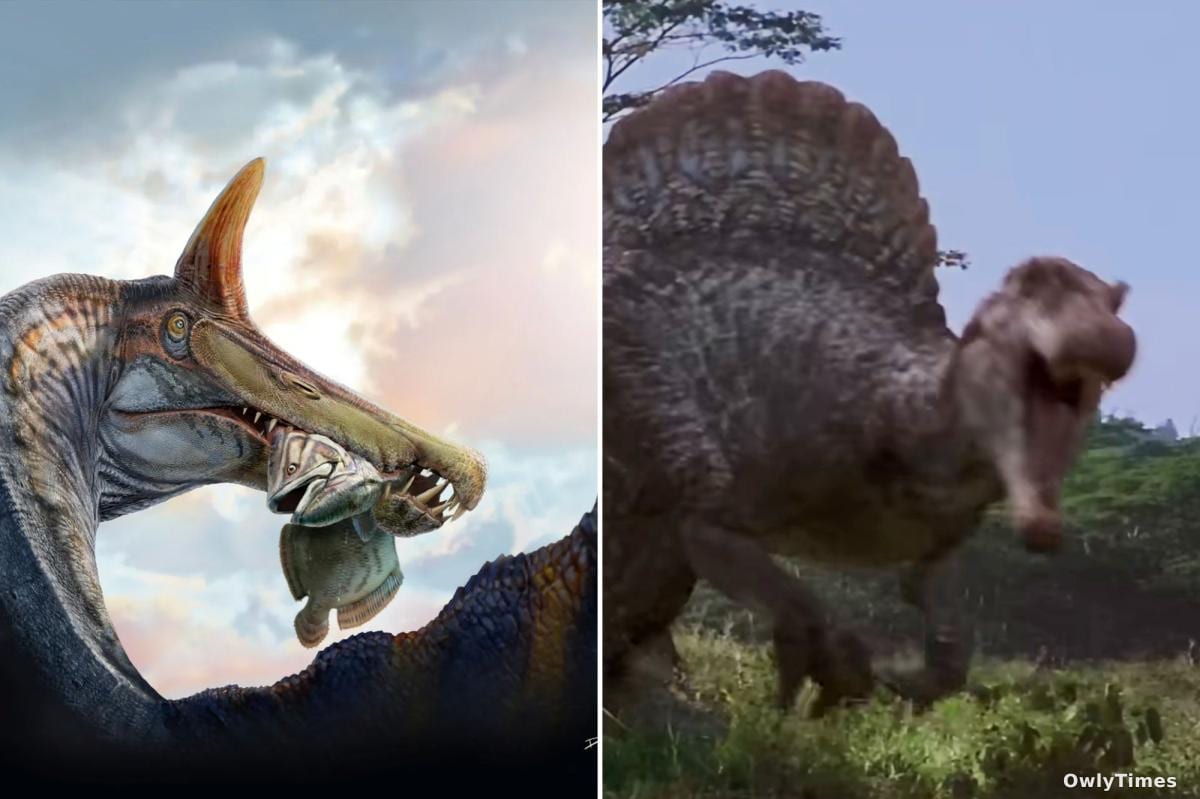
The image of Spinosaurus as a terrifying, T. rex-level predator – cemented in popular culture by its dramatic appearance in “Jurassic Park 3” – is undergoing a radical revision. A recent discovery, detailed in Science this week, isn’t simply adding another piece to the dinosaur puzzle; it’s forcing paleontologists to rethink the entire lifestyle of this iconic, sail-backed carnivore. The find, a remarkably complete skull of a new Spinosaurus species dubbed Spinosaurus mirabilis, reveals an animal far more specialized – and less monstrous – than previously imagined, challenging long-held assumptions about where and how these giants lived. This isn’t just about correcting a movie’s depiction; it’s about understanding the surprising diversity of predatory strategies in the Cretaceous period.
Reporting from the New York Post informs this analysis.
The expedition, led by Paul Sereno, a professor of organismal biology and anatomy at the University of Chicago, took place in Niger in 2022, though the seeds of this discovery were sown in 2019. As Sereno explained, “This find was so sudden and amazing, it was really emotional for our team.” The team unearthed 55 fossils, but it was the incremental assembly of skull fragments – a crest found in 2019, followed by further pieces in 2022, as colleague Dan Vidal discovered “another crest that had a little bit more of the skull on it” – that ultimately revealed the significance of the find. The completed skull showcases a unique feature: a 20-inch, scimitar-like bone projecting from the dinosaur’s dome. This, combined with the distinctive sail-fin and a size comparable to Tyrannosaurus rex (16-20 feet tall), makes S. mirabilis a truly remarkable specimen. However, the skull’s structure tells a story far removed from brute force.
The most striking revelation isn’t the size or the ornamentation, but the dentition. S. mirabilis possessed a unique arrangement of teeth, with the lower jaw teeth protruding between the upper set. This feature was previously known only in pterosaurs, marine ichthyosaurs, and semiaquatic crocodilians – a strong indication of a highly specialized diet. Analysis suggests the dinosaur used its long snout and interlocking teeth as a prehistoric fish trap, wading in rivers and ambushing prey. Sereno paints a vivid picture: “I envision this dinosaur as a kind of ‘hell heron’ that had no problem wading on its sturdy legs into two meters of water but probably spent most of its time stalking shallower traps for the many large fish of the day.” This contrasts sharply with the image of a land-based apex predator battling a T. rex, as portrayed in fiction. The team’s analysis also suggests the crest was brightly colored and rich in keratin, likely used for display.
Perhaps the most disruptive aspect of this discovery is the location of the fossils. Unlike previous Spinosaurus remains found near coastal environments, these were located 310 to 610 miles inland, in a forested region crisscrossed by rivers. This challenges the prevailing theory that Spinosaurus was primarily a coastal hunter. The skeletal structure further supports this conclusion. Sereno emphasizes, “It’s not an aquatic animal. It is not a diver, it is not an adept ocean traveler.” The dinosaur’s bird-like skeleton, filled with air spaces, and relatively inflexible body and tail were ill-suited for deep diving or extensive ocean travel. This suggests S. mirabilis thrived in a fluvial environment, a network of rivers and swamps, rather than the open sea. This is a significant shift in understanding, demonstrating that large predators could successfully exploit freshwater ecosystems during the Cretaceous period.
Limitations to Consider
While the discovery of S. mirabilis is groundbreaking, it’s crucial to acknowledge the limitations. The fossil record for Spinosaurus remains incomplete. We have skulls from two distinct species now, but the postcranial skeleton – the bones excluding the skull – is still poorly understood. This makes it difficult to definitively reconstruct the animal’s locomotion and full range of behaviors. Furthermore, interpreting diet solely from tooth morphology can be misleading. While the teeth strongly suggest a piscivorous (fish-eating) diet, it’s possible S. mirabilis supplemented its diet with other prey available in its environment. Finally, determining the exact coloration of the crest relies on inferences based on keratin composition and comparisons to modern animals, introducing a degree of uncertainty.
The next steps in research will focus on uncovering more complete skeletal remains of S. mirabilis and other Spinosaurus species. Researchers will also employ biomechanical modeling to better understand how the dinosaur moved and hunted. Crucially, future expeditions will target inland fluvial deposits in Africa, seeking further evidence to support the hypothesis that Spinosaurus was primarily a riverine predator. Understanding the ecological role of S. mirabilis – its place in the food web, its interactions with other species – will provide valuable insights into the dynamics of Cretaceous ecosystems. Will further discoveries confirm this shift away from the “river monster” archetype, or will new evidence reveal a more complex and adaptable predator than we currently imagine? The ongoing exploration of these ancient landscapes promises to continue reshaping our understanding of these magnificent creatures.