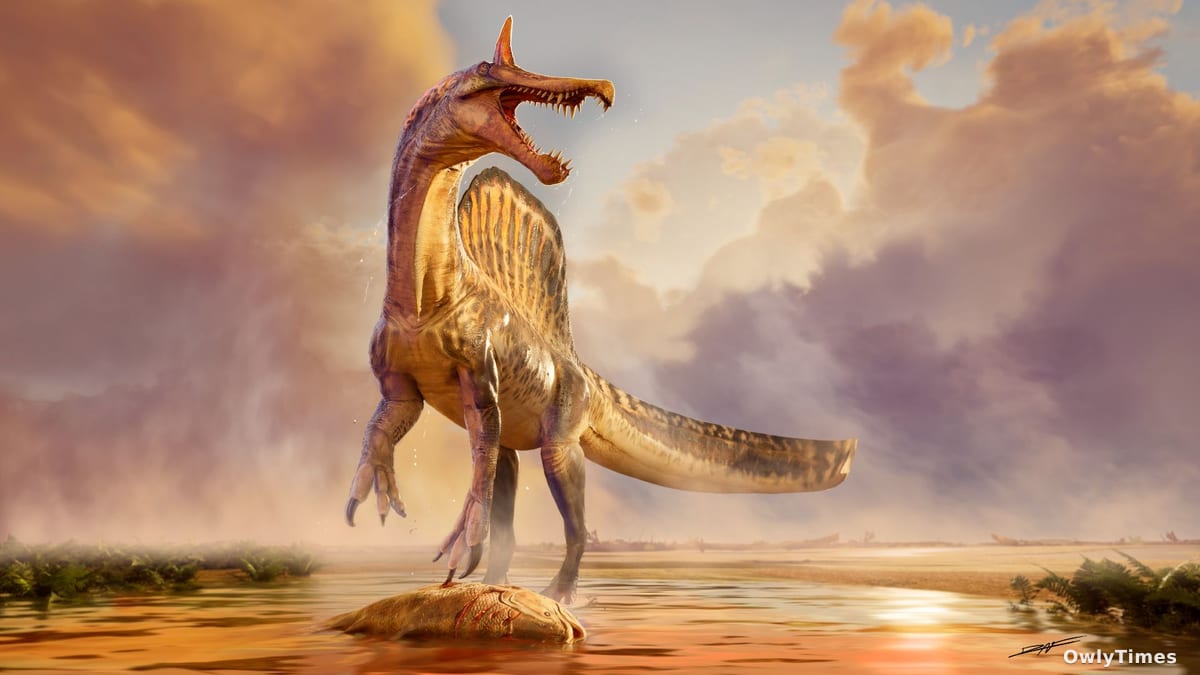

The question of what exactly Spinosaurus was – a terrestrial predator, a semi-aquatic wader, or a fully marine hunter – has captivated paleontologists for decades. Recent headlines proclaiming a “swimming Spinosaurus” often oversimplify a complex debate, and even misrepresent the core findings of a new study published this week in Science. The discovery of Spinosaurus mirabilis, a newly identified species from Niger, isn’t necessarily a nail in the coffin for the swimming hypothesis, but it does dramatically shift the weight of evidence towards a more grounded, river-dwelling lifestyle for these iconic dinosaurs. This isn’t about disproving previous ideas; it’s about adding a crucial piece to a puzzle that’s been assembled from fragmented fossils and competing interpretations for years.
The story begins in 2019, with a trek led by Paul Sereno, a paleontologist at the University of Chicago, and guided by a member of the Tuareg people, a nomadic population of the Sahara Desert. The remote site yielded unusual fossils – bones stained a deep black due to a high concentration of phosphate, a coloration Sereno notes he’d never encountered in 25 years of fieldwork. Initially, the team struggled to place some of the bones within the existing Spinosaurus framework. The key turned out to be a remarkably tall, blade-like crest, unlike anything previously seen in the genus. By 2022, the discovery of a skull with a partial crest attached allowed the team to reconstruct the full structure, revealing a crest that could have reached nearly 20 inches in height, covered in keratin like modern bird beaks. Detailed CT scans revealed a complex network of fossilized blood vessels within the bone, further supporting the presence of a substantial keratin sheath.
This crest isn’t just a striking feature; it’s the defining characteristic of Spinosaurus mirabilis (“astonishing Spinosaurus” in Latin). The researchers argue the crest served a primarily decorative purpose, likely used for visual signaling – attracting mates or intimidating rivals while wading in shallow waters. This interpretation is bolstered by the fossil’s location: buried within a river deposit alongside the remains of long-necked sauropods. As Sereno pointed out to Live Science, “There’s just no way that you’re going to find… essentially an aquatic animal hundreds of miles from the shoreline, buried… right in a river deposit.” This inland location is a critical point, directly challenging the notion of Spinosaurus as a dedicated marine predator.
However, the debate isn’t entirely settled. Spinosaurus mirabilis shares characteristics with other Spinosaurus species, including S. aegyptiacus, that do suggest an affinity for aquatic environments. The dinosaur possesses the specialized teeth of a fish hunter – lower jaw teeth that protrude and interlock with those in the upper jaw. The researchers acknowledge this, and their analysis doesn’t entirely dismiss the possibility of Spinosaurus occasionally pursuing prey in deeper water. Instead, they propose a model of a “hell heron” – a large, sturdy-legged predator comfortable wading in up to six and a half feet of water, primarily targeting fish in shallower traps. The large back sail, while potentially cumbersome, is seen as an important feature, perhaps for display or thermoregulation, rather than an impediment to swimming.
Original reporting: Live Science.
Limitations to consider are inherent in the nature of fossil evidence. The Spinosaurus mirabilis fossil is incomplete, and the reconstruction of the crest relies on computer modeling and inferences about keratin coverage. Furthermore, the paleoenvironment of Niger 95 million years ago wasn’t identical to modern river systems, and the dinosaur’s behavior may have varied depending on local conditions. The comparison to modern herons and penguins, while illustrative, is an analogy, not a definitive statement about Spinosaurus’s locomotion. It’s also important to note that the debate surrounding Spinosaurus is fueled by a relatively small number of fossil specimens, making broad generalizations challenging.
The discovery of Spinosaurus mirabilis doesn’t simply resolve the swimming debate; it reframes it. The next crucial research steps involve finding more complete Spinosaurus skeletons, particularly those preserving the limbs and pelvic region, to better understand their biomechanics. Detailed analysis of the bone structure could reveal clues about muscle attachments and swimming capabilities. Perhaps most importantly, researchers need to investigate the isotopic composition of the bones to determine the dinosaur’s diet and the salinity of the water it inhabited. If future analyses consistently point to a freshwater diet and a terrestrial or semi-aquatic lifestyle, we may finally be able to retire the image of Spinosaurus as a prehistoric crocodile, and embrace a vision of a truly astonishing river monster. But for now, the question remains: will future discoveries confirm this new picture, or will the Spinosaurus continue to surprise us?