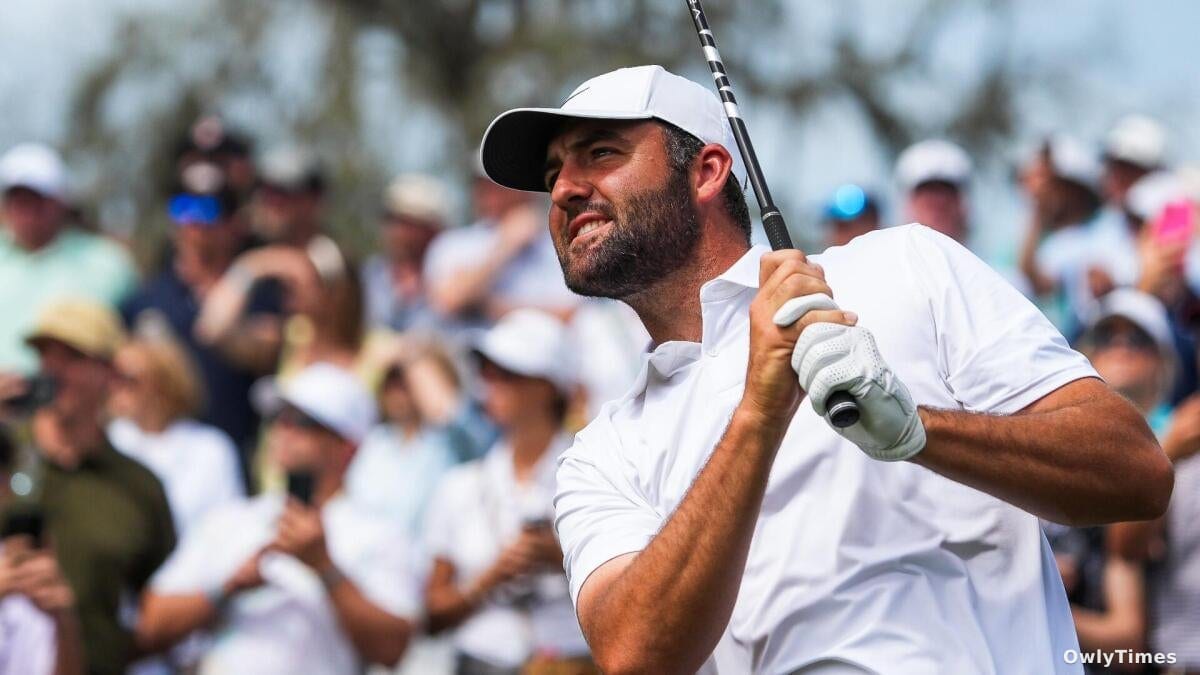

The azaleas were barely in bloom, the scent still tentative in the Georgia air, when the whispers started. Not about Scottie Scheffler’s form, despite a recent withdrawal for a deeply personal reason – the birth of his son – but about the quiet consistency of a man who’s become synonymous with Augusta National: Jordan Spieth. Eleven years after claiming his first, and so far only, green jacket in 2015, Spieth isn’t the favorite, not by a long shot. But his career scoring average of 70.98 at the Masters, the best all-time among golfers with at least 25 rounds played, is a statistic that refuses to be ignored. It’s a reminder that in a sport obsessed with peak performance, sustained excellence can be just as potent, and that the narrative of “past his prime” doesn’t always align with the cold, hard data.
This isn’t simply a story about golf; it’s a reflection of how we treat champions in the age of instant gratification. Spieth’s fall from absolute dominance after 2017, a period marked by erratic play and visible frustration, was dissected with a fervor usually reserved for political scandals. The narrative became one of a player who couldn’t recapture the magic, a cautionary tale of youthful exuberance fading into mediocrity. Yet, even during those lean years, he remained competitive at Augusta, consistently finishing in contention. Now, despite being a +4500 longshot – a stark contrast to Scheffler’s +500 – his underlying performance at this course suggests a potential for a resurgence that few are willing to bet on. The odds, frankly, feel like a cultural dismissal, a collective memory that prioritizes the flash of a single victory over years of steady play.
The contrast with Jon Rahm is particularly striking. Entering the 2026 Masters, Rahm boasts the second-lowest scoring average (71.00), and is second on the odds board at +950. But the model at SportsLine, which has accurately predicted 16 majors including four straight Masters tournaments, projects him to not even crack the top five. This isn’t a case of a player declining; it’s a case of a champion struggling to maintain the momentum of a single, spectacular peak. Rahm’s 2023 victory feels distant, overshadowed by a string of underwhelming finishes in major championships – four finishes at 34th or worse since that win. The market, initially captivated by his power and charisma, is now recalibrating, recognizing that sustained success requires more than just a single moment of brilliance. It’s a brutal lesson in the cyclical nature of athletic dominance.
Based on the original CBS Sports report.
The reliance on predictive modeling, like the one employed by DFS pro Mike McClure at SportsLine, speaks to a broader trend in sports analysis. We’re moving beyond gut feelings and anecdotal evidence, towards data-driven projections that simulate thousands of scenarios. McClure’s model, which simulates each PGA Tour event 10,000 times, isn’t about eliminating the human element; it’s about quantifying it, identifying patterns and probabilities that might be invisible to the naked eye. This year, the model is even pinpointing longshots – players with odds of +4000 or greater – who could make a surprising run at Augusta. It’s a reminder that in a sport defined by unpredictable variables – wind, course conditions, and the ever-present pressure of competition – even the most sophisticated algorithms can’t guarantee a win, but they can certainly refine our understanding of the possibilities.
But beyond the headlines about odds and projections, the story of the 2026 Masters is about the enduring power of consistency, the fickle nature of fame, and the evolving relationship between data and intuition. Will Spieth defy the odds and remind everyone why he once reigned supreme? Will Scheffler overcome his recent personal challenges and add another green jacket to his collection? Or will a dark horse emerge, proving that even in a sport steeped in tradition, there’s always room for surprise? The question isn’t just who will win the Masters; it’s what this tournament will tell us about how we value champions, and what it takes to stay relevant in a world that demands constant reinvention. The real story unfolding at Augusta isn’t just about golf; it’s about the human drama of ambition, perseverance, and the relentless pursuit of excellence.