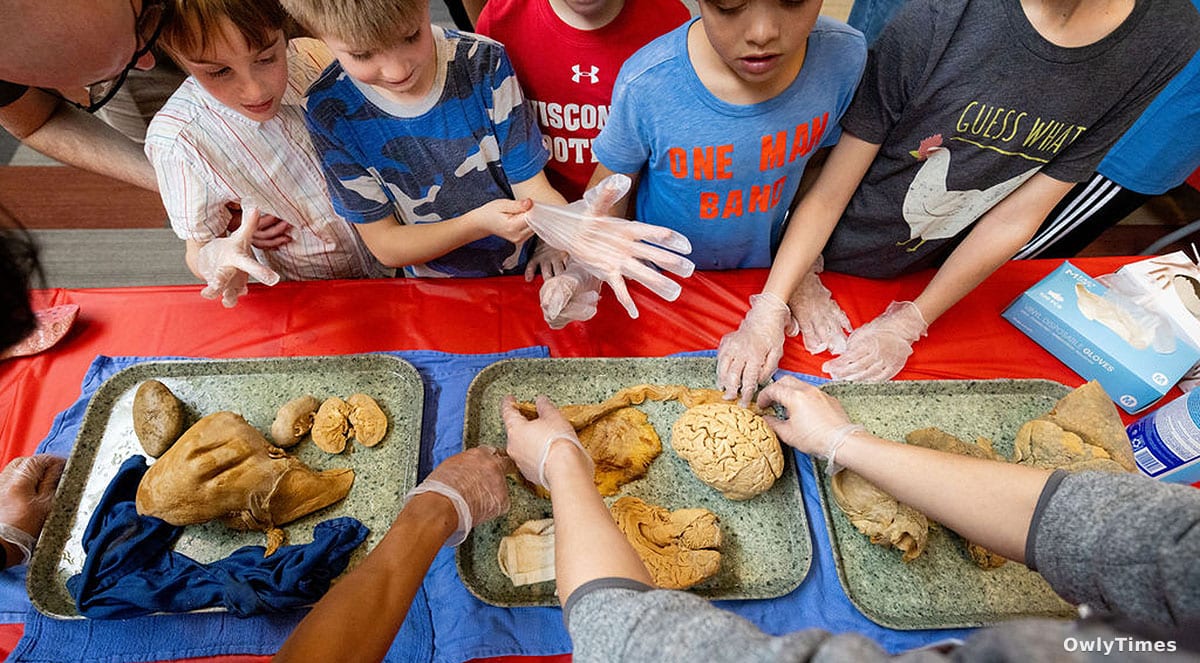

How do we bridge the gap between complex laboratory research and the public’s perception of science? While academic institutions often operate behind closed doors, the true measure of scientific progress is not just in the data published in journals, but in the accessibility of that knowledge to the next generation. On April 11, the Morgridge Institute sought to address this by hosting Exploration Stations at the Discovery Building, serving as a focal point for the 2026 UW–Madison Science Expeditions Campus Open House.
The event featured 49 different interactive booths, a substantial scale that required the coordination of a nearly twenty-person organizing group spanning multiple schools and departments. Felipe Gomez and Val Blair, both members of the Morgridge Community Engagement Team, served as key organizers for this initiative. Rather than focusing on abstract theory, the stations provided hands-on demonstrations across a wide spectrum of fields, including horticulture, rocket science, and sleep health.
Headlines surrounding such events often frame them as simple "outreach," but the underlying methodology here is rooted in psychological accessibility. By moving beyond lectures and into tactile environments, the program aims to dismantle the intimidation factor often associated with higher education. As Gomez noted, the primary goal is providing accessibility to those not typically present at the university, allowing students to see themselves within these programs.
It is important to distinguish the reported impact from the anecdotal nature of these interactions. While the success of the event is framed through individual stories—such as an elementary school visitor expressing an interest in attending the university or a child overcoming their hesitation toward a preserved human brain—these narratives serve as proxies for engagement. The scientific rigor of the event lies in its ability to transform passive observers into active participants who ask questions about real-world applications, such as the neurological effects of video games.
Limitations to consider include the inherent selection bias of such open houses. While the event successfully drew hundreds of visitors, including families and youth educational groups, the participants are often those who already possess a baseline interest in science. The challenge remains for institutions to reach populations that are not already predisposed to engage with campus environments. Scaling this level of personal interaction—like the one-on-one dialogue between volunteers and students—remains a logistical hurdle for large-scale public science initiatives.
Moving forward, the effectiveness of these efforts will be determined by the sustained curiosity of the attendees. The next reading of participation metrics from subsequent Science Expeditions will show whether these high-touch, interactive models lead to long-term academic engagement or if they remain isolated, albeit positive, experiences. For the Morgridge Institute, the focus stays on the conversion of momentary interest into a persistent, informed connection with the scientific community.





