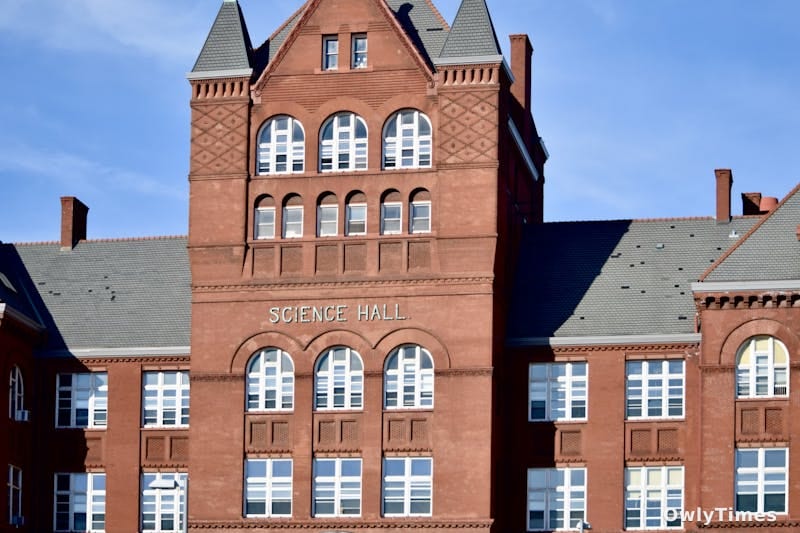

The intersection of historical preservation and modern scientific infrastructure presents a persistent challenge for aging academic institutions. When a facility as storied as the 139-year-old Science Hall at the University of Wisconsin-Madison requires a comprehensive overhaul, the question becomes how to balance the structural integrity of a building on the National Register of Historic Places with the high-tech requirements of contemporary environmental informatics.
On May 21, the university announced a $85.2 million donation from John and Tashia Morgridge to address this exact tension. This capital infusion acts as the financial anchor for a $163.2 million renovation project scheduled to break ground in February 2027. By bridging the gap between the $80 million allocated in the state’s 2025-27 operating budget and the project's total cost, the Morgridges have ensured that the renovation can proceed with the scope required for modern research.
Headlines regarding this donation naturally focus on the sheer scale of the contribution, yet the scientific significance lies in how these funds will be deployed. The project is framed as “critical” by the university, aiming to modernize the facility while maintaining its red-brick exterior. Beyond superficial updates like roof replacement and the addition of an outdoor courtyard, the plan prioritizes functional upgrades such as accessibility compliance and the restoration of open, collaborative floor plans.
A primary scientific goal of this project is the integration of a new Geographic Information System lab and educational center. This facility is designed to serve as a hub for remote sensing and environmental informatics, fields that require specialized spatial environments far removed from the architectural constraints of an 1884 reconstruction. The challenge here is whether such a "cutting-edge" facility can truly coexist with a space that has functioned as the university’s geographic and cartographic core for over a century.
There are limitations to consider regarding how this modernization will be perceived by those who use the space daily. While the university emphasizes the necessity of the project, some students, such as master’s student Isabella Lutowski, have expressed uncertainty about how a modern aesthetic will integrate with the building's historic character. Similarly, former District 8 Alder MGR Govindarajan highlighted the tension between the need for more study spaces and the desire to maintain the building’s traditional "vibe." These perspectives underscore the difficulty of updating legacy infrastructure without alienating the community that relies on its unique atmosphere.
The Morgridges’ history of philanthropy—including a $25 million donation to the Phillip A. Levy Engineering Center in April, $140 million toward the construction of Morgridge Hall, and $100 million in matching funds for faculty positions—suggests a long-term commitment to the university’s physical and intellectual growth. However, the success of this specific project will not be measured by the donation amount alone.
The next signal for the project’s trajectory will arrive in September 2026, when developer bids for the construction are scheduled for release. Monitoring these bids will reveal whether the technical requirements for the new GIS lab can be successfully synthesized with the constraints of the historic structure, providing a clearer indication of whether the completed facility will meet the high expectations for environmental discovery set by both the donors and the administration before the project’s expected completion in February 2029.